
Cisco: Concerns over AI are not holding back business: orders worth 9 billion. “It’s time for Italian businesses to make the digital leap too”
The company’s senior management, led by CFO Mark Patterson, are in Italia for meetings with businesses and institutions

Key points
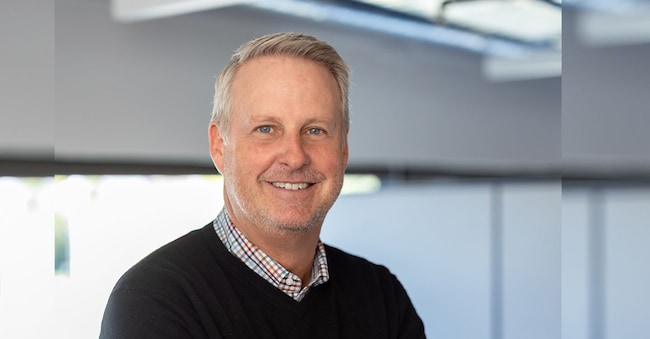
A series of meetings in Rome and Milan. Institutions, businesses, partners, employees. Today: investors in Milan, followed by economics students at Luiss. Mark Patterson, Chief Financial Officer (CFO) at Cisco, is in Italy as the country’s ‘executive sponsor’: the group assigns its top managers a market to monitor closely. ‘Every part of the world is different,’ he explains. ‘You can’t just sit in California: you have to understand what customers really need.’
Patterson has been with Cisco for 27 years and has been CFO since July 2025. He takes over at a time when the company’s financial results are on the rise: in the last financial year, revenue was up 12 per cent and profits up 14 per cent; for the current financial year, the forecast is for growth of 15 per cent and 17 per cent respectively. He calls it the ‘supercycle’ of networking: a market that has always been cyclical, linked to GDP, but which, with AI and security, is said to be shifting towards structural growth. ‘We still have to prove that,’ he admits.
Comprehensive business in Italia
Italia, he says, is unique. Like any country, but with one difference: ‘We have a sales office in many places. Here, there’s a fully-fledged business’, with innovation in cybersecurity, quantum computing and optics. The hub is in Vimercate, in the Brianza area, and was established following the acquisition from Pirelli: Cisco’s first ever venture into the optics sector. Today, it is one of the areas in which the group is prioritising investment: in the last quarter alone, it secured orders worth over a billion dollars. The rest is down to the people: entrepreneurial spirit, start-ups and universities.
Italian businesses are not lagging behind
Beside him is Agostino Santoni, who heads up Cisco for Southern Europe – a region that has for years been among the group’s fastest-growing. Santoni mentions the new office in Piazza Gae Aulenti, Milan, and dismisses the notion that SMEs are lagging behind: ‘We’re no longer behind. This is our moment.’ He cites the Politecnico di Milano: 67 per cent of entrepreneurs say they need to focus on artificial intelligence. The next phase – physical AI – favours those who know how to develop industrial products and processes. And here, according to Santoni, Italia has a head start: it knows how to connect machines to the network. This expertise gave rise to Fluidmesh, founded by researchers from the Politecnico di Milano and MIT, specialising in wireless technology for trains, underground railways and ports. It has grown to compete on the global stage. In 2020, Cisco acquired the company.
Training takes centre stage
But the starting point remains training. The academy in Naples, the partnerships with the Polytechnic Universities of Milan and Turin, and a total of 76,000 people trained each year in Italia – and not just young people. Are Italian students lagging behind? “No,” they reply categorically. And on the subject of the brain drain, Santoni shifts the focus: it is right to count those who leave, but we must also consider those who arrive. “We need a plan to attract talent from all over the world. That way, the Italians will stay too.”

