
Climate: asset managers concerned about the effects of El Niño
The asset management group T. Rowe Price has warned of the economic consequences of likely severe weather events this autumn

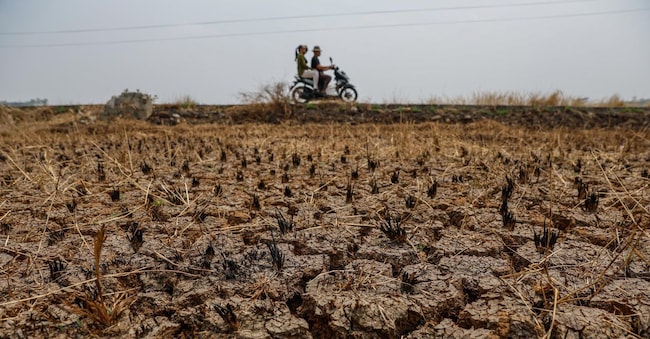
The probability of a severe weather event occurring between autumn and winter is over 90 per cent. This is due to the El Niño phenomenon, which could pose investment risks, although it is important to understand how this weather disruption affects inflation, growth, public finances and the markets. In any case, the alert issued by the US asset management group T. Rowe Price – drafted by Tongai Kunorubwe, CFA, Director of Research for Responsible Investing – is worth noting. It draws on data from the US National Oceanic and Atmospheric Administration (NOAA), which suggests there is a 75 per cent chance that the October–December quarter alone will exceed the intensity of any El Niño recorded since 1950.
There is no certainty of a severe shock
A high-intensity event, Kunorubwe explained, ‘does not mean that every country will suffer a severe shock. The economic and financial impact will depend on where and when the weather anomalies occur, as well as on the ability of individual economies to absorb them. Consequently, El Niño should be interpreted as a factor leading to greater differentiation amongst sovereign markets’. Thus, as the analysis states, an intense phenomenon is not synonymous with a shock.
However, according to analyses carried out by T. Rowe Price in collaboration with Johns Hopkins University, ‘drought, extreme heat or unusually heavy rainfall can disrupt agricultural production, inflows into reservoirs, hydroelectric power generation, infrastructure and supply chains. Such physical shocks can in turn affect food and energy prices, economic growth, trade and public finances, before ultimately impacting monetary policy, currencies, local interest rates and sovereign spreads. When El Niño is associated with extreme heat, the transmission channel can extend beyond the agricultural sector. Increased demand for cooling can put pressure on electricity grids and drive up operating costs, whilst heat stress risks reducing productivity.”
According to the United Nations World Food Programme, El Niño could lead to an increase in the number of people facing ‘severe food insecurity’ by 2027: it is estimated that this increase could amount to 49 million people, concentrated in 45 countries already considered to be at risk. ‘Public policies,’ observed Kunorubwe, ‘can absorb, amplify or redistribute the shock. Additional food imports can bolster domestic supply, but at the same time they increase the import bill and, all other things being equal, put a strain on the balance of payments. Subsidies can cushion the impact of price rises in the short term, but they increase fiscal or quasi-fiscal costs. Drawing on foreign exchange reserves can support imports, whilst reducing the buffers for financial protection against external shocks. For investors, the question is therefore not simply whether governments intervene, but where the economic and financial costs will ultimately fall.”
Focus on cocoa
T. Rowe Price’s in-depth analysis of cocoa is interesting. It explains that El Niño ‘may increase the risk of lower cocoa production in West Africa, but this does not imply that there will be another price shock similar to that of 2023–2024’. The outcome will, in fact, depend on actual rainfall, the likelihood of disease, stock levels, demand and the ability of other markets to make up for any shortfalls.

