
Climate crisis: 11 coastal locations monitored every half hour using buoys and sensors
This is the Aspim project, promoted by the Ministry of the Environment and ISPRA, and implemented by ETT as part of the NRRP. It is vital for the protection of marine ecosystems

Key points
What do Capo Caccia-Isola Piana, Capo Carbonara, the Egadi Islands, Miramare, the Sinis Peninsula-Isola Mal di Ventre and six other locations have in common? They are wonderful Italian places. From the seabed off Sardinia to the waters of Liguria, from Sicily to the Adriatic: these marvellous, unique places are, by definition, worth protecting. This is where Aspim comes in – the integrated and systematic monitoring system for Italy’s marine protected areas developed by Ett, a company within the Deda Group.
How
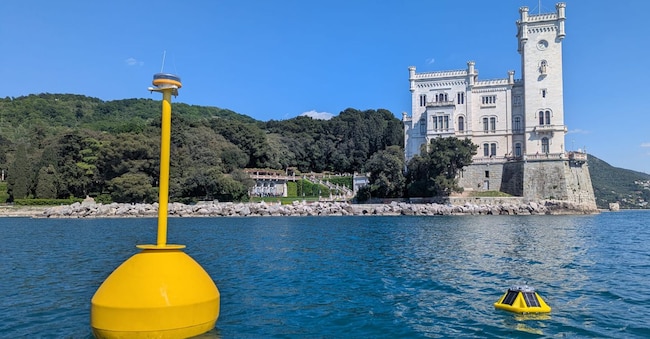
monitoring worksE EThis is the first time that a single, integrated, systematic and data-driven infrastructure has been able to monitor the evolution and changes in marine ecosystems in real time. The project was launched as part of the PNRR DigitAp programme, promoted by the Ministry of the Environment and Energy Security with technical support from the Higher Institute for Environmental Protection and Research (ISPRA). The monitoring, which began last May, will continue throughout 2026 and 2027. Sensors have been installed at various depths throughout the water column down to a depth of approximately 40 metres: every 30 minutes, the system updates the data, monitoring key parameters such as temperature, dissolved oxygen, salinity and chlorophyll . The data is aggregated on a web platform developed by Ett: this enables analyses and comparisons to be carried out, providing an overview of the marine ecosystems in the Mediterranean. The fact that the data is updated every half hour enables timely decisions to be made, based on reliable data: just as with the tree monitoring system in Prato, which relies on satellite data; here too, speed plays a central role in understanding negative or positive developments in marine areas. The system is capable of sending notifications. And it does not merely respond to the present: integration with artificial intelligence enables prevention. To date, 11 areas are being monitored, with over two million measurements per year: however, Aspim is capable of handling even larger volumes of data.
Sensors
The sensors are active 24 hours a day and, as explained by Sante Francesco Rende, senior researcher at ISPRA and technical lead for the PNRR DigitAp project, ‘in a context of increasingly rapid climate change, having sensors active around the clock means being able to capture real-time signals that would once have gone unnoticed between one survey campaign and the next. Water temperature, salinity, currents: these are parameters that are now changing faster than traditional scientific research can document through periodic surveys alone. The buoys and underwater sensors installed in the eleven specially protected areas of Mediterranean importance enable the creation of continuous time series of chemical and physical data, which are essential for distinguishing natural fluctuations from the structural effects of global warming on marine ecosystems».
“It is the difference,” added Rende, “between a one-off measurement, taken once a year, and a constantly updated data set: only a continuous stream of data allows us to identify phenomena such as marine heatwaves, ocean acidification or changes in chemical balances – which precede shifts in the ranges of sensitive species – in good time, enabling timely conservation measures rather than belated reactions to damage that has already occurred.”
Giuseppe Guerrisi, CEO of Ett, emphasised that ‘the climate crisis is altering our seas at an unprecedented rate: having access to reliable and up-to-date information means being able to make more informed decisions and take effective mitigation action. Aspim demonstrates how digital innovation can become a practical tool in the service of sustainability, strengthening our ability to observe, understand and protect our natural heritage, and contributing to a more timely response to the challenges affecting the marine environment”.

