
Climate, UN alarm: '1.5 degree threshold unavoidable'
UN Secretary-General Antonio Guterres: 'Threshold breached in the next five years' Independent report: extreme events in the US causing over 100 billion in damage in the first half of 2025

Key points
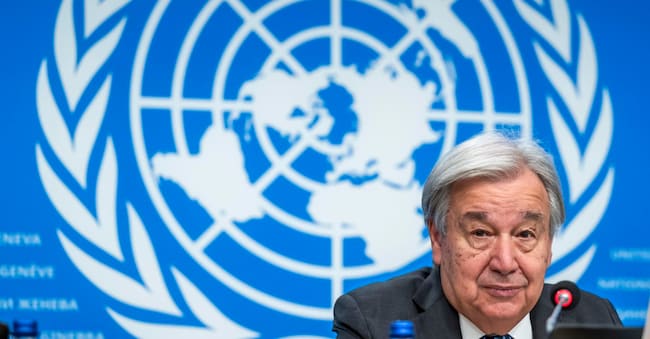
"One thing is clear: we will not be able to contain the global temperature increase to below 1.5 degrees Celsius in the next five years." For the UN Secretary-General, Antonio Guterres, the threshold indicated by science and the 2015 Paris Agreement as the surest way to limit climate disasters will be breached. In a speech to the World Meteorological Organisation (Wmo), Guterres said on 22 October that the "overshoot is now inevitable, which means that in the next few years we will have a phase" of global average temperatures "1.5 degrees higher" than in the pre-industrial period (1850-1900).
Countdown
The alarm comes less than a month before the Cop30, the world climate conference to be held in Brazil from 10 to 21 November, which promises to be very complicated. The 1.5 degree threshold has already been breached in 2024, the hottest year ever recorded. By convention, the limit is considered breached when the breach is sustained over the long term, so a single year is not enough. However, more and more scientists are warning that it could be a few years away. 2025 will mark a rise in temperatures slightly lower than 2024, but will also be among the hottest years ever recorded. The decade 2015-2024 was the hottest ever recorded.
There is a precise amount of carbon dioxide that can still be injected into the atmosphere without its warming effect pushing the planet's thermometer above 1.5 degrees by the end of the century: it is called the carbon budget and at current rates it will be exhausted in about three years.
Not only that, but more and more scientific studies show that the second threshold indicated by the Paris Agreement, the 2 degree Celsius threshold, will also be exceeded. Temperatures are expected to rise by an average of even more than 3 degrees Celsius, as the measures implemented by governments to combat global warming are not considered sufficient. Greenhouse gas emissions, instead of decreasing, continue to rise. According to Wmo, from 2023 to 2024, the average global CO2 concentration has seen the largest increase since modern measurements began in 1957. The carbon budget associated with the 2 degree threshold is expected to be exhausted in just over 20 years.
The spiral that is triggered is now well known and under everyone's eyes: temperatures rise, extreme phenomena (hurricanes, droughts, heat waves, floods) become more intense and more frequent and in turn, contribute to altering the climate: the case of fires is the most striking.


