Interview

Meteorologist Betti (CNR): ‘With this heat, there’s a risk of thunderstorms’

At the last Cabinet meeting, a provision was introduced allowing companies to make use of the short-time working scheme in the event of exceptional heat

by Lorenzo Pace

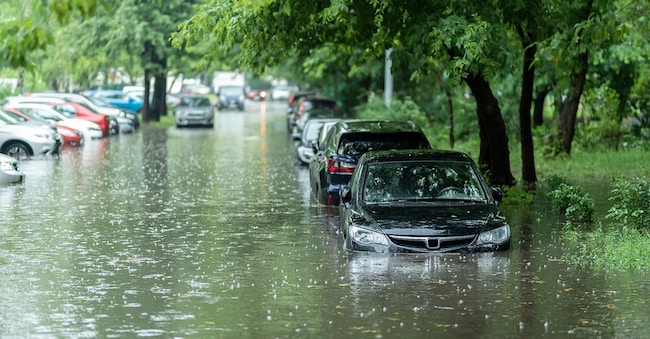
Auto allagate sulle strade della città. Una strada dopo una forte pioggia.  (Adobe Stock)

4' min read

Translated by AI
Versione italiana

4' min read

Translated by AI
Versione italiana

If heatwaves are becoming a recurring phenomenon, then measures to protect workers must also become a permanent feature. This refers to the legislation presented to the Council of Ministers on Monday, which allows companies to make use of the wage subsidy scheme in the event of exceptional heat. This view, however, is that of Giulio Betti, a meteorologist at the CNR and the LaMMA Consortium.
Giulio Betti/Cnr

At the heart of his thinking lies a key concept: high temperatures – which, he warns, portend ‘extreme events’ – have now become the norm.

Loading...

Professor, is it fair to describe this heatwave as exceptional? Or has it now become the norm?

It can be described as historic and exceptional for France, as the 2003 records have been broken, so it is truly unprecedented. As for central and northern Italia, historical records have not been broken, but the heatwave can be described as unusual, as we have now had 10 days with temperatures 7–9 degrees above average. We are, to some extent, getting used to these heatwaves: in the Po Valley, for example, 33–34°C almost feels cool to us, but in reality this is a false impression. We are getting used to a climate that was not our own, and this is easier than in the past thanks to ways of coping, such as air conditioning.

Following these waves, experience in recent years has shown that torrential downpours and flash floods follow...

It is clear that all this excess heat will be converted into excess energy and water vapour. At present, the Mediterranean – particularly the western Mediterranean – is experiencing the most pronounced anomalies in the world. There is a marine heatwave which will result in increased evaporation and greater energy intensity in the atmosphere, thereby increasing the likelihood of disturbances and extreme weather events.

As he has already emphasised, El Niño has little to do with it at the moment...

I can confirm that. The El Niño phase has only just begun, and its indirect effects will start to be felt between late summer and autumn, with the peak expected in winter.

Let’s talk about the heatwave measures introduced by the Government on Monday: from a climate perspective, is this measure set to become a permanent feature?

In my view, yes. During the summer months, these measures will need to become permanent. But that’s not all: we will need to consider the management of working hours and the suspension of certain activities in the construction or agricultural sectors, for example. We can no longer work in these temperatures, because whilst they used to be sporadic – and so could be dealt with on a one-off basis in legislation – given the current climate trend, I believe these measures must become permanent. In this regard, I would like to highlight the World Climate project, on which my colleagues at the CNR were working, which moves in that direction, as it identifies, on a daily basis, the conditions under which it is safe to work or carry out outdoor activities during periods of extreme heat.

Could you be more specific about the sectors or areas that might be affected? There might also be indoor environments with poor air conditioning...

Of course. Take a warehouse, for example: it’s clear that the indoor environmental conditions can be unfavourable, partly because more moisture builds up, there is less air circulation, and there is also the issue of carbon dioxide, which tends to accumulate in enclosed spaces. Let’s say that all work requiring physical exertion and fluid intake must be properly protected against the heat, which, as mentioned, is no longer an anomaly.

On the water front, the Government has extended the drought commissioner’s mandate. How much worse could the situation get between now and the end of summer?

The situation is not ideal overall, because this winter has seen heavy snowfall in parts of the Western Alps, whilst there has been less snow in the Aosta Valley and the Central-Eastern Alps. Consequently, some tributaries of the Po and other rivers are suffering from low water levels, partly because there has been a lack of sustained spring rainfall. We must bear in mind that, between now and September, careful management of water resources in the north will be essential.

Do you think there might be more critical issues in the North?

In my view, the South is slightly ahead of the North when it comes to reservoirs and drought management. Even taking into account all the problems the South may face, including water wastage, it is actually slightly more resilient. Just consider the amount of water used in the North by businesses, industry and agriculture, which is not comparable to the demand in Central and Southern Italy. Therefore, from an economic point of view, the North is much more exposed to the risks of drought.

The summer of 2003 is the recurring point of reference, but what has changed since then? And what else can be done?

Compared to 20 years ago, we are a little better prepared. For example, there are ‘climate shelters’, where the public can find relief provided by local councils. There are early warnings – alerts that inform you of an approaching heatwave many days in advance. In terms of healthcare, we are better prepared and there is a tendency to protect workers a little more. However, much more can be done, for example by redesigning cities, but with projects that must be structural in nature. Such projects have been carried out in some places – Stuttgart is a prime example – and these have led not only to improvements from a health perspective, but also to economic benefits, as they have made cities more attractive.

Copyright reserved ©
Loading...

Brand connect

Loading...

Newsletter

Notizie e approfondimenti sugli avvenimenti politici, economici e finanziari.

Iscriviti