

As cold as gold: sensors and traceability open up new avenues for the food sector in the EU and the Gulf
IoT sensors measure changes, monitor door openings and the load on compressors. Cloud platforms apply predictive models and routes are recalculated. Zanframundo (Thermo King): “The aim is to help fleets reduce emissions without compromising on operational efficiency, performance or flexibility.”

Key points
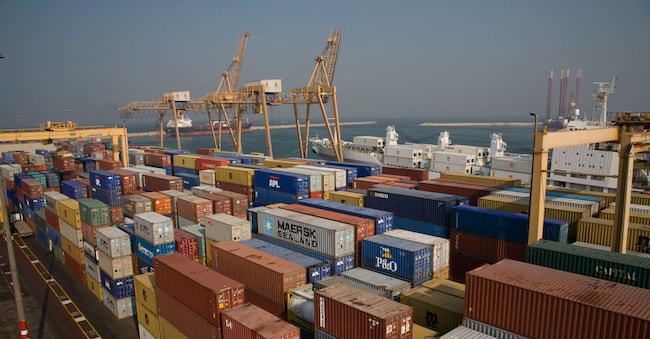
The Po Valley, three o’clock in the morning. A container leaves a field laden with crates of ripe tomatoes. Each pallet is fitted with sensors that record temperature, humidity, vibrations and ethylene levels. The data is transmitted to the cloud and ends up in a distributed ledger that no one can alter. The algorithm adjusts the ventilation to slow down the ageing process. When the shipment docks at Jebel Ali, the mega-port near Dubai, the code on the container tells the whole story: variety, harvest date, treatments, transit times, and maximum temperatures never exceeded. Customs do not take samples: the certification is in the data. It is the tangible embodiment of a revolution that is transforming ‘cold’ from a cost into a commercial guarantee.
For decades, the cold chain has been reactive: spot checks, isolated records, issues uncovered at customs or – worse still – on the shop counter. The results are well known: up to 40 per cent wastage of fruit, vegetables and fish in warmer countries, and a heavy environmental footprint. Today, the paradigm is shifting. Low-cost IoT sensors continuously measure fluctuations of just a few tenths of a degree, monitor door openings and compressor loads; cloud platforms apply predictive models based on degradation kinetics; routes are recalculated on the fly to preserve freshness and margins. The supply chain is becoming proactive: it anticipates spoilage rather than recording it after the damage has been done. ‘In refrigerated transport, connectivity is transforming the cold chain from reactive to proactive. It is no longer just a matter of tracking assets, but of using real-time data to improve temperature control, reduce waste, ensure regulatory compliance and respond more quickly to emergencies,’ explains Claudio Zanframundo, Thermo King’s President for the EMEA region, “Advanced telematics and monitoring systems provide end-to-end visibility, helping to identify inefficiencies, optimise operations and reduce emissions. Digital solutions are increasingly central to the efficiency of the cold chain.”
The technological and regulatory turning point
In Europe, traceability requirements extend across the entire supply chain, and the Digital Product Passport is gaining ground: origin, composition, impact and compliance are becoming market attributes, not bureaucratic formalities. In the Gulf, where 80–90 per cent of food is imported, Saudi Arabia, the UAE and Qatar are investing in refrigerated hubs, specialised ports and ‘cold corridors’, raising the bar on microbiological safety and temperature control. GSO standards are gradually aligning with international ones, whilst maintaining stringent requirements for the highest-risk categories. EU–GCC harmonisation is proceeding at varying speeds, but interoperable data is bridging the gaps: a sensor knows no borders, and a distributed ledger has no language.
The effects across three dimensions
The first is the reduction of waste: in EU-GCC trade corridors, monitoring systems and predictive logistics cut post-harvest losses by 20–30 per cent in sensitive product categories. The second is customs efficiency: clearance times have been reduced from days to hours thanks to ‘data-based’ checks rather than paper-based ones. The third is access to premium channels: major buyers demand continuous traceability, digital certifications and contractually guaranteed temperature integrity, with penalties for interruptions and shortfalls. Agronomic quality alone is not enough: it must be demonstrable in real time.
It isn’t free. Sensors, IT/OT integration, training and maintenance require capital, which presents a significant barrier for SMEs and micro-enterprises. But the support ecosystem is growing: European funds, development banks and ‘as-a-service’ models for renting sensors and platforms reduce the initial outlay. Some issues remain unresolved: the energy used for cooling in a warmer climate risks undermining the benefits unless accompanied by renewables and heat recovery; mutual recognition of digital systems is not yet universal; and differences persist in microbiological thresholds and phytosanitary protocols.

