

“Cold War-style blockades are making a comeback. Submarine cables face the risk of having providers imposed on them by countries such as Yemen”
Interview with Mediterra’s CEO, Emmanuel Becker: “Geopolitical tensions mean that there is now increasing talk of diversifying routes. But when it comes to data infrastructure, it is not easy to bypass choke points. Consequently, the alliance between certain anti-Western states and powers makes it difficult to maintain security.”

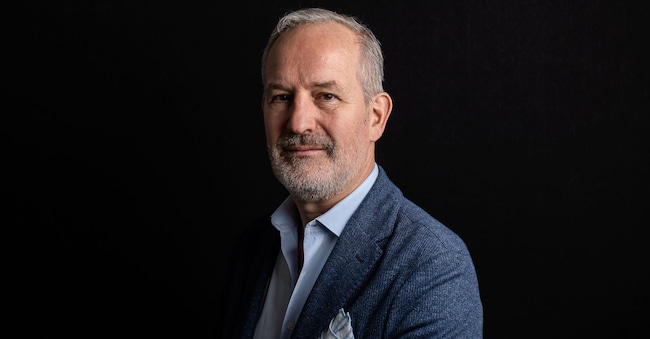
From the Straits of Hormuz and Bab-el-Mandeb to the Black Sea, the Baltic and the Mediterranean, it is difficult to imagine a period in recent history when the seas have been more turbulent than they are today. But all the tensions churning the surface are also reflected in the depths: this is demonstrated by the at least eleven ‘incidents’ that have occurred over the last three years in the Baltic Sea, where damaged cables and gas pipelines have caused internet blackouts and disruptions to energy supplies, whilst reports from Baltic and Scandinavian intelligence agencies explicitly accuse Russia of deliberate sabotage. An submarine cable is a piece of civilian infrastructure, but it is now of fundamental strategic importance to any country, and targeting it means causing enormous damage: what risks does the wider Mediterranean face today due to the war in Iran and all the other ongoing conflicts? According to Emmanuel Becker, CEO of Mediterra – a leading company in the construction of data centres in Southern Europe – the impact of the current geopolitical situation is threefold: ‘The first relates to the projects themselves; the second concerns new projects; the third pertains to operations in general.’
Plan your journeys
“We already have a whole network of existing cables running through the areas affected by the current crises. I’m thinking of the Red Sea, the Suez Canal and, of course, the Strait of Hormuz,” explains Becker. In such scenarios, any submarine cable could be the target of targeted sabotage – acts that are often relatively easy to pass off as accidents and for which compensation is extremely difficult to obtain. The second aspect concerns future projects: ‘Geopolitical tensions mean that there is now increasing talk of diversifying routes. The aim is to duplicate routes in order to have a Plan B to fall back on in the event of a crisis.’ But those who plan the routes of submarine cables do not have to contend solely with diversification; the work is increasingly akin to diplomacy: “Until recently, the aim was to lay a cable close to a country’s territorial waters, as this reduces the risks posed by storms or other damaging natural events,” says the CEO of Mediterra. “But now the issue has changed. If I’m near or within the territorial waters of a particular country, then I’m also dependent on its political will. It might impose a toll. If my cable is in Yemen’s territorial waters, then I am dependent on Yemen both for day-to-day operations – because only they can authorise me to enter that area – and also when it comes to choosing which company is to carry out repairs in the event of a fault.”
Territorial waters
There are only five major companies in the world capable of carrying out underwater cable repair operations; the others are not only smaller, but often unsuitable for large-scale projects. The ‘Big Five’ are North American, European or Chinese, and in the current climate of tension, it is easy for those who control territorial waters to impose a company more aligned with their political views: ‘A Cold War-style bloc mentality is re-emerging in this area too. A country like Yemen could very well say: ‘Dear providers, for maintenance you must use my Chinese friend.’”
Sensitive data
Finally, there is the issue of sensitive data: if the provider belongs to a power with hostile intentions, it is likely that attempts will be made to extract information during maintenance operations. ‘The battle has become complex, because I don’t just attack the cable itself, but I try to obtain information and perhaps cause trouble for other countries.’ In this political context, the Mediterranean presents risks similar to those already seen in the Baltic, despite the many differences. “The Baltic is a shallow sea, so it’s easier to operate there, whereas in some areas the depth of the Mediterranean exceeds 5,000 metres,” explains Becker. “Furthermore, in the Baltic there is very concentrated shipping traffic, so it is very easy to conceal a vessel that wants to cause disruption or even attack a cable. Finally, in the Mediterranean, the cable network is much more widespread and we have many more landing stations spread across Europe,” explains Becker. But we mustn’t forget that the real gateways for the continent’s digital traffic come from southern Europe: “Bordeaux, Bilbao, Girona, Lisbon, Marseille, Palermo. Everything is increasingly heading towards Southern Europe, once again to achieve diversification.” “The instability in North Africa, the instability in the Middle East or in the Suez Canal all have an impact on our data traffic,” concludes Becker. “Submarine cable projects require five years of planning and five years for construction. In ten years, the geopolitical landscape of a region can change everything.”

