
EU Commission: War in the Middle East slows growth, Italia among the most vulnerable countries
Economy Commissioner Valdis Dombrovskis: 'The conflict in the Middle East has caused a serious energy shock, further testing Europe in an already unstable geopolitical and trade environment'
From our correspondent Beda Romano
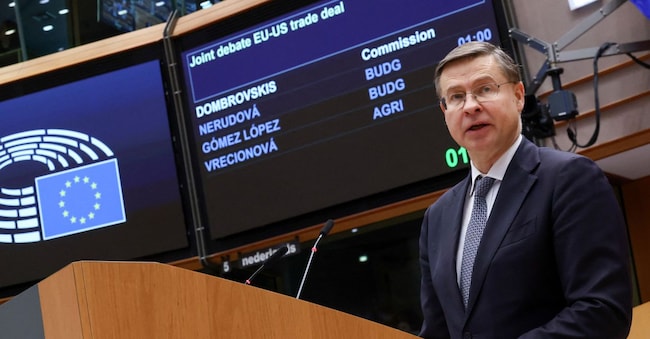
BRUSSELS - The European Commission predicts a slowdown in the eurozone economy due to the war launched by the United States and Israel against Iran, but does not expect (for now) an economic recession. According to forecasts published today, Thursday 21 May, the situation - barring prolonged uncertainty - is expected to improve in 2027, both in terms of growth and inflation. Meanwhile, Italia continues to be one of the most fragile countries in the monetary union.
"The conflict in the Middle East has caused a severe energy shock, further testing Europe in an already unstable geopolitical and trade environment," commented Economy Commissioner Valdis Dombrovskis. The EU must learn lessons from past crises by maintaining temporary and targeted fiscal support as well as further reducing its dependence on imported fossil fuels.
Key Data
Here are the main forecasts of the EU executive. Growth in the eurozone is expected to be 0.9% in 2026 (it was forecast before the war in the Middle East of 1.2%). In 2027, the economy is expected to rebound and grow by 1.2% (compared to 1.4% previously forecast). On the inflation side, the situation reflects the energy shock of recent weeks. Consumer prices are expected to rise by 3.1 % on average this year and by 2.4 % on average next year.
Il malato Italia
The Italian figures are in line with the European ones, but worse. According to Brussels, the economy in Italia will grow by 0.5% in 2026 (compared to the 0.8% forecast last autumn). Inflation will rise by 3.2% this year and 1.8% next year. The situation is rosier, if that adjective is the most appropriate, on the side of public accounts. The deficit is expected to be 2.9% in both 2026 and 2027, compared to 3.1% in 2025; debt is expected to rise from 138.5% to 139.2% of GDP.
In its estimates, Brussels also considers a less positive scenario, marked by a prolongation of the crisis in the Middle East. In this case, "inflation would not decline and economic activity would fail to recover in 2027" as predicted in the most likely forecast. Moreover, the European Commission also warns, "rising prices could lead households and businesses to reduce consumption and investment more sharply".


