

Care homes without doctors or nurses: how the regions are trying to avoid a disaster
The crux of the matter is clear: without staff, many sites risk remaining on paper or operating at only half capacity, caught between trade union resistance and political disputes.
Key points
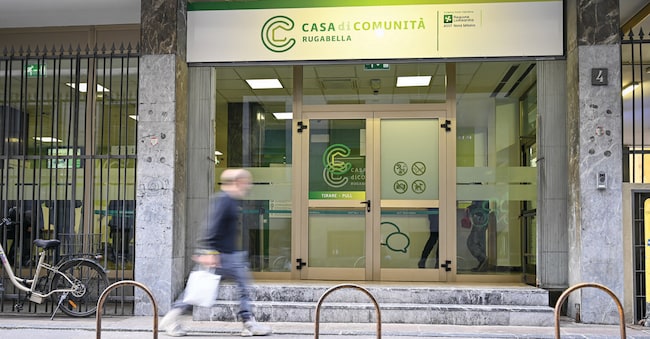
Are the community health centres (CdC), funded with 2 billion euros from the NRRP and set up to provide consultations, initial tests and preventive care, at risk of failing? The Ministry and the Regions are seeking viable solutions, but the crux of the matter is clear: without staff, many centres risk remaining on paper or operating at only half capacity, amid trade union resistance and political disputes. The NRRP originally envisaged 1,350 Community Health Centres, later reduced to 1,038 following the 2023 restructuring. However, the plan agreed with the Ministry of Health has risen to 1,715 facilities; the extra-PNRR portion is expected to be covered by funds under Article 20 of Law 67/1988, cohesion funds, the Fund for Urgent Works, and regional or provincial resources.
Shortages of doctors and nurses in community care homes
The latest Agenas survey, less than a month before the PNRR deadline of 30 June 2026, shows that 781 Community Centres have at least one active service. However, only 204 have medical staffing levels compliant with Ministerial Decree 77/2022 and 216 have nursing staffing levels: hence the estimate of a shortfall of over 2,500 full-time doctors and nearly 7,000 full-time nurses. The risk is not automatically that of losing European funds, as many facilities are outside the PNRR or funded through other channels. The real risk is healthcare-related and organisational: buildings open but without effective patient care, doctors, nurses, specialists, single points of access (PUA), home care and a stable link with the local area. The regions are therefore seeking room for manoeuvre. The responses vary, but the point remains the same: the success of the Community Centres depends on staff, not just on construction sites.
The regions' race to find doctors
Following Minister Schillaci’s proposal to deploy GPs employed by the NHS in Community Care Centres – a proposal rejected by the unions and the government majority – the Veneto region has put forward another suggestion: making greater use of doctors already employed by the National Health Service, both in hospitals and in the community, including those working in local health authority clinics, for certain activities in community care centres. This approach has also been rejected by hospital trade unions, due to contractual constraints and the risk of weakening hospitals that are already understaffed. The idea, however, is not to permanently transfer doctors out of hospitals, but to allow them to work on an hourly basis in Community Centres, provide specialist services in the local area and foster greater integration between hospitals and the local community. The logic is simple: if new recruits do not arrive in time, we try to make better use of professionals already within the system. Other regions are moving in the same direction, with solutions that are at various stages of development and often still to be tested in practice.
Initiatives already underway and decisions taken by the regions
Emilia-Romagna and Tuscany build on a strong regional tradition. The former integrates GPs, paediatricians, outpatient specialists and Community Centres (CdC) into a well-established multi-professional network. The latter makes use of health centres, AFTs, outpatient specialists and family nurses: many GPs remain on the National Health Service, but work partly within the health centres. Veneto and Lombardy rely more on organisational levers. Veneto is also focusing on telemedicine and remote specialists. Lombardy is exploring AFTs (territorial functional groupings), general practice agreements, cooperatives, external professionals and accredited private providers: a flexible platform, but one with a risk of fragmentation. Friuli-Venezia Giulia is working on hospital-community continuity and community nursing, with nurses playing a greater role in the management of chronic conditions and in coordination with GPs, specialists and social services. Piedmont is trialling shared teams between districts and specialists across multiple care centres, to avoid having permanent staff at every site. Trento is looking to nurses with advanced skills for follow-up care, chronic conditions and, where possible, limited prescribing, and declares that the PNRR targets for community homes and hospitals have been met. Bolzano has planned 10 community centres with phased openings, though there remains the issue of staffing in peripheral and bilingual areas. Liguria, Lazio, Campania, Marche and Valle d’Aosta offer specific examples: telemonitoring and nursing services even in pharmacies; the ASL Roma 2 network with 22 community centres and 2 community hospitals completed; the Campania operational model adopted by the ASLs; Health Centres and IFeC (family and community nurses) training in the Marche; walk-in clinics in Aosta and Châtillon. Puglia and Sardinia are focusing on family nurses and multi-site models incorporating telemedicine.
The table below summarises the regional situation as at 1 June: some initiatives are already up and running or at an advanced stage, whilst others remain at the policy stage. The key difference lies in whether the facilities are backed up by staff, shift patterns, services and patient care arrangements.

