

'Community Houses are an achievement from which there is no turning back'
For the new president of the Federation of Healthcare and Hospital Companies and managing director of the ASL Rm 1 with 1.2 million patients, it is necessary to ensure that the regions that are poorer in terms of resources and stimuli come into line thanks to the driving effect of those that are 'ahead'

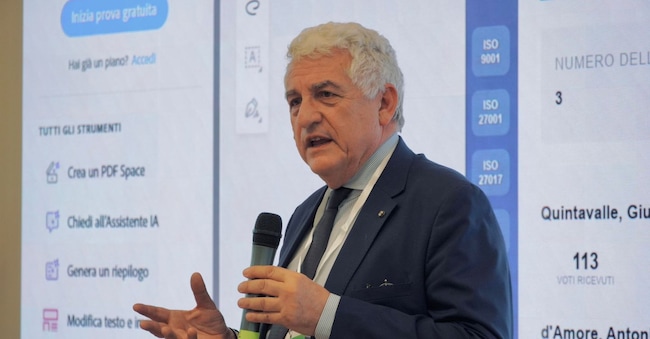
'There is no going back from the community homes model and more generally from the reorganisation of care in the territory. But we must ensure that the poorest regions in terms of resources and stimuli are brought into line thanks to the driving effect of the more advanced ones, and a national pilot project would be useful to understand which improvement tools to activate'. Giuseppe Quintavalle, director general of the ASL Roma 1 - a basin of 1.2 million inhabitants that brings together wealthy districts and deprived areas of the capital - and freshly elected president of the Federation of Healthcare and Hospital Companies (Fiaso), gives the recipe for 'gluing' the care of Italia. Which remains split between North and South even when looking at community homes and hospitals, a bet for the future sustainability of Italian public healthcare.
What's in the carnet of community houses?
There is primary prevention, attention to chronic conditions, an appropriate range of services by type of user, and integration between health and social care. This is why we range from vaccinations to general medicine to the promotion of co-housing for the chronically ill and the fight against loneliness in the elderly, also thanks to the third sector. The model is a 'tailor-made suit' for each territory capable of developing a proximity medicine that combats inappropriate accesses to emergency rooms and speeds up responses to citizens.
Meanwhile Agenas certifies an Italia full of holes
From April, I am certain that there will be a change of pace: all colleagues are pushing for Pnrr fulfilments so that the administrative part will be completed by March as required. It is in everyone's interest to pursue economic sustainability that passes through an optimal utilisation of care settings, while a well-organised territory reduces waiting lists.
Where are you?
By March, as Asl Rm 1 we will have 12 active community homes - of the total 19 operational by June - with all the services provided. In the 'hub' centres the user will find a doctor at his disposal and an advanced nursing clinic for 12 hours a day, night-time continuity of care in separate spaces, outpatient specialisation that is being implemented, and diagnostic therapeutic services for 'pathology trajectories': heart, diabetes, and lung. The Pdta go from the bottom up, i.e. from the patient's and GP's request to the hospital, because integration of care is fundamental. Then, in a One Health vision, screening and vaccinations, targeted prevention programmes 'from zero to 100 years of age' are active, as well as the 'fragility desk' to intercept discomfort, connected with the Department of Mental Health, but also telemedicine and teleassistance.
But do citizens know you?
The community house works if we are able to make people understand that healthcare is changing, that the territory is being enriched with structures capable of welcoming. That is why we organise 'Open Days' with many associations, including those on rare diseases. In general, we are not prepared for a territory that assists: that is why an incredible effort is needed to readjust the culture of assistance.

