

Stagnant community houses and the risk of wasting 28,000 ultrasound scanners and diagnostic equipment
Here comes Consip's announcement of the diagnostics tender worth EUR 300 million for the new facilities, which, however, according to the latest monitoring, are still closed or inoperative

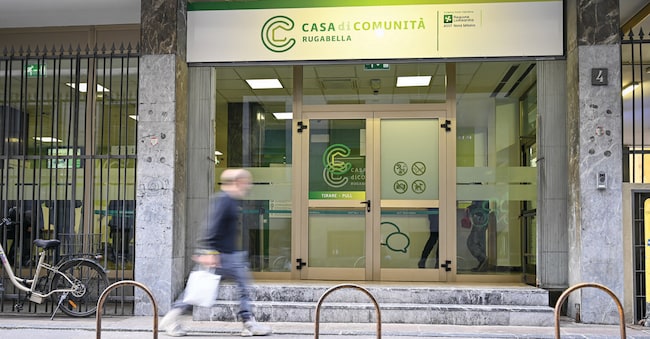
The community centres are being equipped to provide blood tests, ultrasound scans, spirometry tests, and many other diagnostic examinations, a breakthrough for citizens who would have closer and more accessible services, and also for hospitals, which would thus be able to reduce the many often non-urgent accesses to emergency rooms thanks to the new facilities in which the National Research Programme is investing no less than two billion lire. In fact, today Consip will announce the awarding of a maxi tender for 11 lots worth EUR 300 million, which will enable over 28,600 items of equipment - from ultrasound scanners and spirometers to electrocardiographs and dermatoscopes - to be delivered within a few weeks to 1,430 community centres, which could thus guarantee over 15 million services a year in the fields of cardiology, ophthalmology, pneumology and dermatology, and at least 10 million samples a year for coagulation, haematology, clinical chemistry and immunochemistry tests. In short, a significant impact on territorial medical care, which has always been a weak link in our National Health Service.
It is a pity that the risk that a good part of these facilities will remain unused for a long time is practically certain, at least if we look at the latest official data published a few weeks ago by Agenas, the Agency for Regional Health Services, which monitors the state of implementation of the National Reform Programme also with regard to the new territorial health service: on 30 June last, only 660 Community Homes were operational with at least one active service, with four Regions - Abruzzo, Basilicata, Campania and Bolzano - which, according to the latest monitoring that provides a snapshot of the situation, still had zero facilities open. And with several other Regions doing little better, namely Calabria (2 active Community Homes out of 63 planned overall), Molise (2 out of 13), Apulia (1 out of 123), Sardinia (27 out of 80) and Sicily (9 out of 161). In short, if the facilities that are to receive the new equipment are largely closed because they are still real open-air construction sites, it is really difficult to imagine that the local health authorities to which they belong can proceed with the orders on the Consip platform, which guarantees deliveries within 30 days, with the first lots already available, while the others will be by the end of the year.
The equipment, as mentioned, is essential to develop outpatient services for widespread diseases in cardiology, ophthalmology, pulmonology and diabetology with more than 28,600 state-of-the-art medical devices, including dermatoscopes, electrocardiographs, ultrasounds, defibrillator monitors, spirometers, OCT and retinoscopes. And here comes the second problem: because to run all these services you also need staff, from nurses to doctors, to be able to do the examinations and make the diagnoses. Only the Agenas report on the monitoring of community centres shows that on 30 June 2025 only 46 facilities had activated all the services envisaged, i.e. from blood sampling to vaccinations, from home care to service bookings and integration with social services, but above all telemedicine visits and the first diagnostic examinations. The law outlining the identikit (Ministerial Decree 77/2022) provides for a medical presence 24 hours a day, 7 days a week in 'hub' community homes and at least 12 hours a day, 6 days a week in 'spoke' community homes. These hours are currently hardly respected even in the facilities already open, since only 172 are respected.
Hence the strong doubt as to whether the new diagnostic equipment can also be used at full capacity in the Community Homes that are already in operation. This front is weighed down by the unsuccessful reform of family doctors - it was assumed that there would be an hourly constraint for them (at least 16 hours a week) to be spent in the community homes - which now seems to have ended up on a dead end. While reasoning is going on about the more massive use of outpatient specialist doctors. But time is running out.


