
Concerts: just 368 events account for half of the revenue in 2025
Major live events account for 1.6 per cent of the total: audience numbers are rising, but ticket prices are not

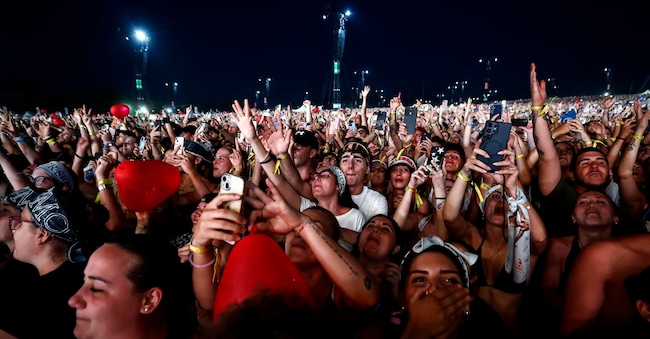
47% of ticket takings from concerts is generated in June and July, and almost 60 per cent is concentrated in the North. Lombardy alone accounts for one in every four euros. The geographical distribution of music events, which for the first time have generated over one billion euros in revenue, is revealed by data from the SIAE 2025 report: the seasonal and local dynamics linked to the ‘infrastructure’ of major concerts are reflected in the figures.
The infrastructure issue
“The North,” says Bruno Sconocchia, president of Assoconcerti, “has a wider catchment area and is less affected by seasonality. Then there is an infrastructure issue: in the South, there are no indoor venues for large concerts. The arenas that can accommodate more than 15,000 people are only found in Milan, Turin and Bologna. Florence can accommodate 7,500, Rome even fewer’. The lack of suitable venues, according to Assoconcerti, requires investment: ‘We are calling on politicians and the government to support this type of initiative. Across the country there are stadiums, arenas and historic venues: sometimes marvellous locations where, however, it is not always possible, for example, to get lorries in to set up the necessary staging’. The authorities are becoming aware of the benefits of major events, but live music requires spacious venues, investment, production, logistics and a large audience base.
The spectators
In 2025, there were a total of 368 concerts with more than 10,000 attendees (1.63 per cent of the total), up from 269 in 2024. These events attracted 8.2 million attendees (over 40 per cent of the total audience) and generated approximately 549 million euros in box-office takings, accounting for 54.7 per cent of total concert box-office revenue. This represented more than half of the concert sector’s revenue in 2025.
Ticket prices
Meanwhile, the average ticket price for these major events has risen from 65.6 to 66.8 euros in 2025. An increase of one euro in a year, whilst for all other concerts with fewer than 10,000 attendees, the average ticket price has risen from 37 to 49 euros. Whilst it is normal for major events to cost more (production and staging costs, artists’ fees, logistics, security, energy, technological investments and so on), it is therefore true that the higher takings are not due to price rises: ‘Major live events,’ explains Sconocchia, ‘have increased in absolute terms and the number of attendees has grown: two million more in a year. Demand is stronger than ever and the public perceives the ticket price as fair; otherwise, we wouldn’t be selling out.’
As for all the other ‘smaller’ concerts, the gradual rise in prices observed is accompanied by demand that still outstrips supply. In this context, greater differentiation of the market could help to keep costs down, whilst ensuring accessibility and participation.

