
Confindustria: Plan for affordable housing for workers
President Orsini: 'It is not only a social measure, but above all a great economic policy project to accelerate the development of the country. Territorial mobility must be guaranteed'.

4' min read
4' min read
A grand economic policy plan capable of accelerating the country's development. And overcome that 'mobility trap' that suffocates the economy and keeps structural unemployment high, with negative repercussions on both the labour market and the country's overall efficiency. To explain: there is a strong mismatch, in many areas of the territory, between the cost of renting or buying housing and the level of labour productivity and therefore of average wages. This is a brake on territorial mobility, which instead is a fundamental process in facilitating the matching of labour supply and demand.
Economic Policy Plan
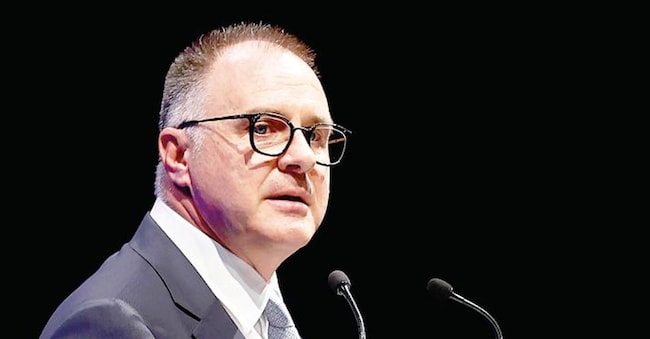
.From this need comes the Confindustria Sustainable Workforce Plan, a priority on the agenda of the president, Emanuele Orsini, who launched it at the beginning of his term of office. "Our companies have been experiencing a record shortage of personnel for some time now; almost 50 per cent of the profiles sought are hard to find. We have a huge problem of workers that we are unable to hire because there is a lack of housing at rents compatible with salaries," is Orsini's analysis. "It is therefore a priority to create the conditions for the most fragile classes in our society to have access to quality housing at a sustainable price. This is not just a social measure,' the Confindustria chairman emphasises, 'it is also and above all a great economic policy plan to accelerate the country's development. This is where our project stems from'. Orsini explains that it is a matter of "activating all the players in the system, government, local authorities, companies, banks, real estate investment funds and institutional investors with the aim of evaluating guarantees and financial instruments needed to activate patient capital and ensure housing at a sustainable cost. It is an essential plan to ensure territorial mobility and labour inclusion'.
Staff Shortages and Mobility
The shortage is greater than in the pre-pandemic period and, without intervention, the problem may grow. A demographic issue (according to Bankitalia there will be 5.4 million fewer people of working age between now and 2040) aggravated by imbalances in the housing market due to high housing prices, when a sustainable cost is estimated by Confindustria at 25-30% of net salary. This leads to the paradox that some geographical areas with high labour demand, especially in the North, are experiencing labour shortages, while areas with lower productivity and fewer job opportunities suffer from high unemployment rates. The same problems affect the mobility of workers arriving from abroad.
Confrontation with government and political forces
Hence the urgency of a Plan, which Confindustria has drawn up as a basis for discussion with the government and political forces. "It is a series of measures," Orsini explains, "to promote the construction of new buildings, also using available areas with different intended uses, and the redevelopment of existing buildings. It is necessary to remove obstacles of a town-planning and administrative nature, to stimulate public entities, including investee companies, to make buildings and areas available, to introduce fiscal and financial measures to activate investments, and to strengthen measures to protect private property'. The budget law has envisaged an initial intervention, proposed by Confindustria: to de-tax the sums paid by employers to employees up to EUR 5,000 per year, for those whose income does not exceed EUR 35,000 per year and who have moved their residence beyond a radius of 100 kilometres. The hope is that it can be extended to seasonal workers. But the 'Piano casa Italia' envisaged by Article 71 of the manoeuvre must be defined immediately.
In order to speed things up, 'we now need to team up and activate all the players in our system, starting with the financial ones. Confindustria has called for the manoeuvre to include guarantee measures for access to credit, including through Sace, and to encourage savers to invest in initiatives aimed at providing housing for workers at a sustainable rent. With the same objective, it is necessary to involve institutional investors,' explains Angelo Camilli, vice president for Credit, Finance and Taxation.


