
Consob: Market capitalisation on the Milan Stock Exchange is rising, but the number of listed companies is falling
In 2025, 529 investigations into illegal activities were launched (a record high) and 322 illegal websites were taken down

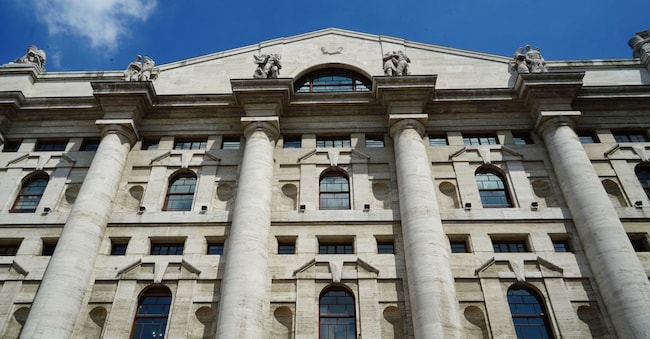
In recent years, Italia has seen, on the one hand, a veritable boom in market capitalisation, driven by record-breaking index performances; on the other hand, there has been a worrying decline in the number of listed companies. This is accompanied by the major transitions currently underway: technological innovation, with the integration of artificial intelligence and the full implementation of regulations governing crypto-assets; and the transition towards sustainability, characterised by a process of gradual simplification of ESG reporting rules for companies. As usual, the Consob Annual Report for 2025 is packed with topics and also highlights the authority’s strong commitment to protecting investors, in response to an exponential rise in digital fraud and unauthorised financial activities carried out online.
Delistings
As mentioned, 2025 marked historic milestones. The main FTSE MIB index rose by 31.5 per cent, recording its best performance in the last twenty years and outperforming most European benchmarks. At the end of 2025, the market capitalisation of the regulated market (Exm) reached €1,042 billion, to which must be added the €10.1 billion of the market dedicated to SMEs (Egm). This growth trend did not stop on 31 December: by 30 June 2026, total market capitalisation had reached the impressive figure of 1,209 billion euros. Seventy-two per cent of this growth was driven by the financial and banking sector. However, at the end of May 2026, the ratio of market capitalisation to GDP in the European Union stood at just 75 per cent (51 per cent for Italia), in stark contrast to the 247 per cent figure for the United States.
Yet, as mentioned, these record figures are counterbalanced by a reverse trend: the exodus from the stock market. By the end of 2025, the number of companies listed on the main market had fallen to 198. Throughout 2025, there were no new IPOs (Initial Public Offerings) on the Exm market; a critical issue that continued into the first half of 2026, a period in which there was only one translisting from the Egm segment to the main market.
In an attempt to stem this outflow, the reforms set out in the Consolidated Law on Finance (TUF) were introduced. Counterbalancing this ‘withdrawal’ of equity was activity in the debt segment: the number of approvals for bond prospectuses (non-equity) almost tripled in 2025 (from 24 to 69), highlighting a positive trend of bond reshoring that has brought back to Italia issues totalling €108 billion.
The cryptocurrency market
As regards technological innovation, Consob has been working towards the completion of the European regulatory framework, primarily through the MiCAR Regulation on the management of crypto-assets. Whilst the 2025 Report states that the Authority had received 33 applications for authorisation, the most recent figures provided verbally confirm that, by the end of the transitional period in July 2026, Consob will have formally authorised 8 CASPs (crypto-asset service providers) as well as one banking intermediary. At the same time, the Authority has embraced the potential of artificial intelligence, developing and testing in-house algorithmic prototypes capable of analysing vast amounts of data to proactively detect market anomalies, instances of greenwashing relating to sustainable bonds, and online fraud schemes.

