
Eurostat data

Costs and then waiting times: that’s what worries Italians when they seek medical treatment

The report focuses in particular on three key factors: waiting lists, the cost of healthcare services and distance from healthcare facilities

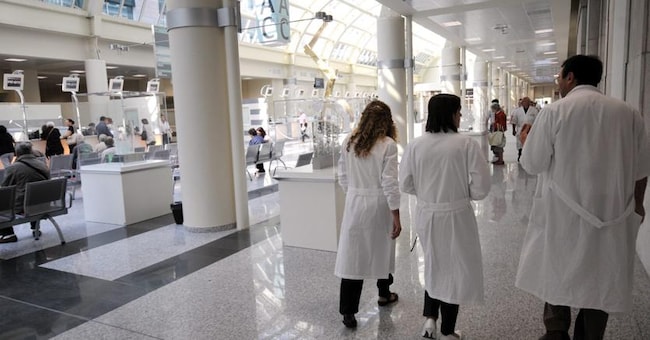
BLOCCO SUD DELL'OSPEDALE NIGUARDA, SPORTELLI PRENOTAZIONI, PAGAMENTO TICKET, ACCETTAZIONE, MEDICI DI SPALLE (Silvano Del Puppo, MILANO - 2010-09-14) p.s. la foto e' utilizzabile nel rispetto del contesto in cui e' stata scattata, e senza intento diffamatorio del decoro delle persone rappresentate FOTOGRAMMA

4' min read

Translated by AI
Versione italiana

4' min read

Translated by AI
Versione italiana

In 2025, in Europe, 95.6 per cent of the population aged 16 and over stated that they had no grounds for dissatisfaction with the way medical examinations were carried out. However, at European level, the main source of dissatisfaction is waiting lists (average dissatisfaction of 1.8 per cent), followed by costs (1.2 per cent) and the distance to the place of treatment (0.2 per cent).

The analysis comes from Eurostat, the European statistical office – whose counterpart in Italia is Istat, with which it collaborates on data collection – which has just published (at the end of July 2026) a new database updated to the end of 2025 for all European countries. It is based on individuals’ own assessment of whether they require an examination or treatment for a specific type of healthcare, but which they have not received or requested.

Loading...

Eurostat’s analysis focuses in particular on three key factors: waiting lists, the cost of healthcare services and distance to healthcare facilities. The data reveals that the main critical issue for Italia concerns the cost of healthcare services.

IL CONFRONTO TRA I PRINCIPALI PAESI EUROPEI

Loading...

A snapshot of Italy according to Eurostat

In 2025, 2.4 per cent of Italians aged 16 and over said they were dissatisfied with the costs, a figure higher than the European average (1.2 per cent) and the fourth highest among EU countries after Greece (9.7 per cent), France (3.1 per cent) and Latvia (3.0 per cent).

This figure highlights a structural problem linked to high private healthcare expenditure, exacerbated by inflation and economic hardship. The risk is that many households will forgo necessary treatment for financial reasons, thereby exacerbating inequalities in access to care. The debate on reforming the patient contribution scheme and introducing social protection measures, such as supplementary health funds, is therefore crucial to ensuring equity.

When we add up those who complain about at least one of the three main problems (waiting lists, costs, distance), Italia has a 3.3 per cent dissatisfaction rate – a figure below the European average (6.5 per cent) but still significant. By comparison, countries such as Malta, Romania and Cyprus are below 1 per cent. Although the Italia figure is better than the EU average, it highlights the need for action, particularly with regard to costs.

The least alarming figure regarding waiting lists

Despite the objective data, there remains a strongly negative perception of waiting lists in Italia, which are often at the centre of public and media debate. This discrepancy between data and perception can affect citizens’ trust in the healthcare system and the pressure on institutions to make further improvements.

Contrary to perceptions regarding the severity of the problem, Italia stands out positively for its low percentage of citizens dissatisfied with waiting lists: just 0.9 per cent, compared with a European average of 1.8 per cent. The country ranks 18th out of 28, well below Finland (7.3 per cent), Estonia (6.7 per cent), Latvia (4.6 per cent) and the United Kingdom (4 per cent).

In Belgium and Malta, however, according to Eurostat data, the proportion is almost negligible (0.1 per cent), whilst Bulgaria and Cyprus stand at 0 per cent. This figure for Italia is particularly significant when compared with public perception, which is often more negative.

The issue of distance from healthcare facilities

The distance to healthcare facilities is a minor issue in Italia: 0% of respondents reported difficulties in physically accessing healthcare services, a figure shared with 14 other European countries. In Latvia, the figure rises to 1.3 per cent, and in Croatia to 0.8 per cent. This positive result reflects the effectiveness of policies governing the geographical distribution of healthcare facilities, which ensure widespread access even in less central areas, although the risk of healthcare desertification in some rural areas remains to be monitored.

Loading...

By contrast, 97.4 per cent of Italians report no cause for dissatisfaction with access to medical examinations, a figure in line with the EU average (97.7 per cent) and higher than that of France (94 per cent) and the United Kingdom (92 per cent). Only Greece (87.7 per cent) and Denmark (88.7 per cent) have lower figures.

Other reasons for dissatisfaction

There are also other reasons for dissatisfaction highlighted in the survey; however, with figures that do not reach 0.5 per cent on average – such as lack of time, fear of the doctor, lack of knowledge about specialists or hope for improvement – these account for residual percentages (never exceeding 0.5 per cent, in fact).

Eurostat’s analysis confirms a generally positive picture for Italia, with the main concerns centring on the cost of healthcare services. Future challenges include reducing private expenditure, strengthening social protection and maintaining comprehensive territorial coverage, particularly in outlying areas.

At European level, the priorities are to reduce waiting lists in the Nordic countries, to contain costs in Italia and France, and to strengthen the regional healthcare network in Eastern European countries.

According to Eurostat, future challenges will centre on the ability of healthcare systems to adapt to demographic, technological and economic changes, whilst ensuring that all citizens have fair and sustainable access to care.

Copyright reserved ©

Brand connect

Loading...

Newsletter

Notizie e approfondimenti sugli avvenimenti politici, economici e finanziari.

Iscriviti