


Borse, dividendi mondiali oltre i «rumori di fondo»: primo trimestre da record
di Maximilian Cellino


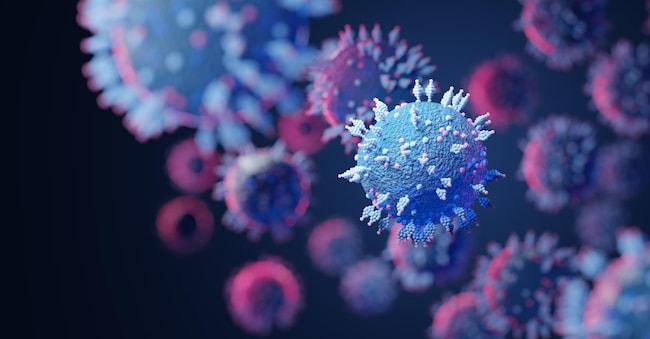
A software 'made in Italy' could change the way the world prepares for the new variants of Sars-Cov-2. It is called ConvMut - short for Convergent Mutations - and has been developed by a team of researchers from the Azienda Ospedaliero-universitaria di Pisa, the Politecnico di Milano and the Inmi Spallanzani in Rome.
Based on the principle of convergent evolution, i.e. the process whereby different organisms develop similar traits in order to adapt to the same environmental conditions, ConvMut makes it possible to predict the virus mutations that are most likely to emerge and spread. A tool that could allow the evolution of the Spike protein, the target of vaccines and monoclonal antibodies, to be anticipated by months.
The idea came from Daniele Focosi, a haematologist and virologist from Pisa, and was developed together with the teams of Fabrizio Maggi, director of the Department of Epidemiology and Preclinical Research at Spallanzani, and Anna Bernasconi, a researcher at the Milan Polytechnic. 'Today, the Covid-19 pandemic mainly concerns immunocompromised patients,' explains Focosi, 'but the virus continues to mutate. Months pass between the choice of the dominant strain and the distribution of vaccines, and often the preparations cannot keep up with the pace of evolution.
ConvMut, now publicly available on the international platform Gisaid, exploits more than 17 million viral sequences shared by laboratories around the world. The software automates analyses that previously required weeks of manual work, grouping lineages according to common mutations and providing near real-time updates.
"Predicting in advance which strain will be the 'winning' one," Maggi emphasises, "means being able to develop more targeted vaccines and reduce response times. In addition to guiding the development of seasonal vaccines, ConvMut may also serve to optimise monoclonal antibodies, a crucial therapeutic resource for the most fragile patients.

