
Covip Chairman Pepe: ‘Tax incentives for pensioners who are breathing new life into villages’
‘With the Budget Act, we are making it financially attractive to choose Italia and move to inland areas’

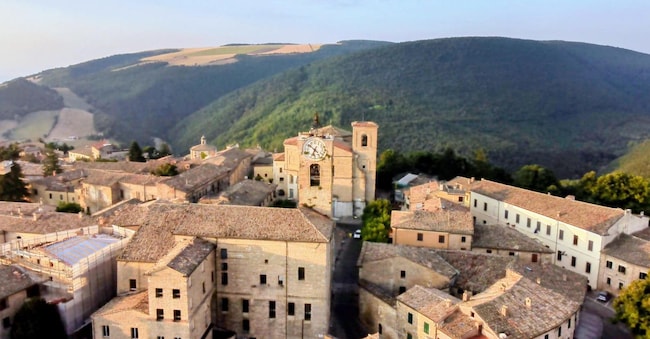
“A thousand pensioners, each with a tax benefits, to breathe new life into a hundred villages. We must halt the demographic decline of inland areas, as well as the impoverishment and marginalisation of small towns. A pilot scheme is needed to help bring about their revival. Italian pensioners can be exempt from paying tax when they move abroad. Many move to live in Portugal, Tunisia or Albania. Their take-home pay doubles. And they benefit from a cost of living that is, on average, lower than in Italia. These are entirely legitimate individual choices, but they result in the country losing residents, consumer spending and tax revenue. The answer is not to hinder mobility, but to make choosing Italia fiscally attractive. Let us make it possible for those who wish to move to the Alps, the Apennines, the most remote coasts untouched by tourism, or the centre of the islands.”
Mario Pepe, born in 1951, is chairman of Covip, the Supervisory Commission for Pension Funds. At the age of 24, he was the local GP in Colonna, in the province of Rome. In the 1980s, he was an entrepreneur in the early days of the private healthcare sector. Pepe is putting forward his ideas on pension funds and supplementary healthcare, which he hopes will come fully under Covip’s remit under the Meloni government: ‘Supplementary healthcare benefits from significant tax breaks and has been without a comprehensive supervisory system for far too long. Those tax breaks represent a loss of revenue for the State and must therefore be justified by an effective, verifiable and transparent social function. Supplementary healthcare must complement the public service, not duplicate or replace it. Tax benefits, the function actually performed and the regulatory controls must be consistent with one another.”
Alongside his professional career, Pepe has also been involved in politics: he held a series of political offices during the First Republic in the Liberal Party and, during the Second Republic, in Forza Italia. This is one of the reasons why he combines political and social awareness with an understanding of finance and social security: ‘In uninhabited areas, many local councils sell empty, dilapidated houses in need of renovation for the symbolic price of one euro,’ he repeats. ‘This is the case in my home town, Bellosguardo, with a population of six hundred in the province of Salerno. The combination of local re-urbanisation policies and national tax relief schemes for pensioners can be revitalising. A project of this kind has the potential to transform the face of the country and could even alter the balance of Italy’s social security system.”
Pepe adds: ‘The forthcoming Budget Bill offers an opportunity to tackle some of the structural issues facing our welfare system with a vision that looks beyond the annual horizon of public finances. Healthcare, pensions, demographics and growth are closely interlinked: falling birth rates, increased life expectancy, fragmented careers and the depopulation of large areas of the country mean we must rethink the ways in which we protect people and utilise the resources allocated to the welfare system.”
The pilot scheme involving a thousand pensioners across a hundred villages is one element in a series of changes proposed by Pepe. There are the elderly and there are the young: ‘Pension provision cannot begin only when retirement becomes a concern: it must be built up over time. For this reason, it is worth considering the introduction of a genuine pension savings scheme from birth, through an individual account funded up to one hundred euros a month, with a mechanism to which both the state and the family can contribute, and with particular attention paid to the most economically vulnerable households. A 60- or 70-year accumulation horizon allows returns to compound, transforming sustainable contributions into a significant nest egg. Furthermore, this would help to make the pension fund industry less vulnerable. Today there are ten and a half million members, with an average age of 47. This average age needs to be lowered to strengthen the entire sector. Furthermore, for those on high incomes, the tax relief linked to minor children needs to be increased. For those on more modest incomes, it would be more effective to increase the tax relief available on payments made for children against personal income tax.’


