The painting

From cities to villages: when culture becomes a resource, beyond tourism

In 2025, trips to places of artistic interest generated 57 billion euros. To consolidate this trend, investment is needed in seasonality management and synergies. Minister Mazzi said: “In Italia, our heritage is spread throughout the country.”

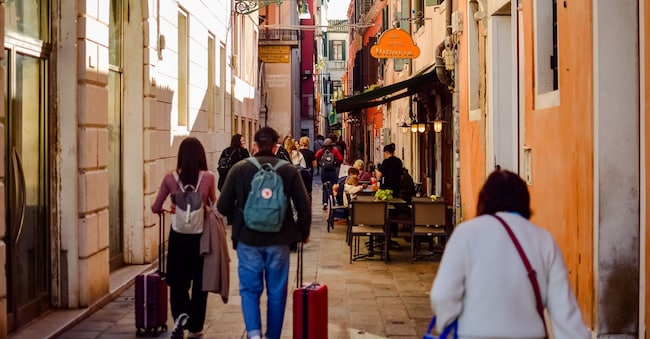
Credits: Vinicìus Vieira ft (Pexels)

4' min read

Translated by AI
Versione italiana

4' min read

Translated by AI
Versione italiana

Whilst July and August were the months in which cultural experiences, due to heatwaves, were often enjoyed in the evening – so much so that people are starting to talk about noctourism – September has been known for years as the season for cultural festivals. Whatever the month, what remains clear is the economic boost of cultural tourism in Italia, which, in 2025, reached 56.6 billion euros, accounting for approximately 52 per cent of the total tourism-related economic output.

The latest figures from the Ministry of Tourism highlight how this type of tourism – the International Day of which is celebrated on 27 September at the Temple of Venus in Rome – generates both a high number of visitor arrivals and significant economic benefits for the local service sector. Culturally-oriented municipalities, for example, account for over 63 per cent of total visitor numbers. ‘The success of Italian cultural tourism rests on an objective fact: we are a cultural superpower, the leading nation in the world https://in terms of the number of UNESCO sites”, notes Gianmarco Mazzi, Minister for Tourism. ‘No other country has such a density and spread of heritage as ours. We are the only nation where culture is not concentrated in a capital city, but is spread throughout every village, church and landscape.’

Loading...

International competitiveness

Even in terms of international competitiveness, the country’s historical and artistic heritage provides a significant boost. 57 per cent of foreign travellers choose Italy, driven by cultural interests, generating annual expenditure which, in cities of art alone, exceeds 19 billion, equivalent to 56% of the total figure. ‘For foreigners, Italia offers not only beauty, but also a way of life. This combination of cultural richness, charming villages, food and wine combined with a warm welcome is irresistible’, explains Mazzi, adding that Italians are currently experiencing a very strong rediscovery of their identity. ‘The appetite for culture – as we have seen with the special openings of monuments – is insatiable.’

Weekend culturali

La spesa. Risposte in percentuale

Loading...

The appeal of cultural weekends

The growing interest in cultural weekends – typically short breaks that are not tied to specific seasons – further highlights the appeal of this segment. According to the ‘Observatory on Cultural Experiences in Italia’, compiled by Impresa Cultura Italia-Confcommercio and SWG, over the last 12 months 46 per cent of Italians have taken at least one cultural weekend break, mainly outside their own region (34%). And the average per capita expenditure exceeded 286 euros (in 2025 it stood at around 235). Among those who have not yet travelled – 54 per cent – a willingness to spend in excess of 215 euros is evident. In short, demand is set to rise.

Necessary synergies

But whilst the data show that turning cultural tourism into a driving force for local areas is the way forward, there are still issues to be resolved and synergies to be pursued.

“Culture and tourism are two sides of the same coin: when culture is strong, tourism benefits, and when tourism is mindful and informed, it supports culture,” notes Carlo Fontana, president of Impresa Cultura Italia-Confcommercio. “The Observatory tells us that 74 per cent of Italians believe that cultural initiatives make their cities more attractive and that 71 per cent recognise their role in promoting traditions. These figures are significant because they show that culture stems from history, communities and the identity of places. The true protagonist remains the local area, which makes every experience authentic. This awareness, however, struggles to translate into a concrete ability to work as a cohesive system: collaborations between operators remain, for the most part, occasional’.

A vulnerability which can be addressed, for example, the public sector, “by facilitating collaboration between these stakeholders, streamlining procedures and encouraging partnerships and long-term projects capable of making the most of public and private resources”, comments Fontana. ‘Events are essential provided they are not isolated. And to avoid “hit-and-run” tourism and attract new audiences, we need to build a year-round offering, distribute visitor flows more evenly throughout the year and promote smaller towns. In this way, culture can foster sustainable development and tourism, whilst also improving the quality of life of communities”.

Challenges for the future

Over the coming years, the challenge will therefore focus on organising the phenomenon. ‘Our philosophy is: the whole of Italia, all year round. The ‘four Ds’ strategy: deseasonalise, decongest, delocalise and digitise. We cannot envisage an Italia that only works 90 days a year. That is why we have invested over 700 million in the mountains, walking trails, villages and outdoor tourism. ‘In this regard, our decisions are proving effective and the results have been improving since 2025,’ emphasises Minister Mazzi.

I SOSTEGNI

Loading...

But that’s not all: among the goals to be achieved is also “the conquest” the younger generations. With regard to whom, to date, cultural trips seem to be less successful. “The survey we carried out shows that those most interested are people with higher education qualifications, the over-55s and women,” concludes President Fontana. “There are, therefore, economic, social and generational divides that need to be addressed: engaging young people requires flexible formats, opportunities for active participation and a programme of activities tailored to their interests, which helps them recognise culture as a fundamental part of life’s experience, rather than a luxury for the few.”

To broaden participation, we therefore need to take action on several fronts: ‘Make cultural consumption affordable, including through tax relief; invest in training; adopt contemporary forms of expression capable of engaging with different audiences, thanks in part to technology, without compromising on the quality and value of the content.”

Copyright reserved ©

Brand connect

Loading...

Newsletter

Notizie e approfondimenti sugli avvenimenti politici, economici e finanziari.

Iscriviti