The supply node

Critical raw materials and rare earths under the Defence lens. Here are Italy's moves

The indications contained in the Position paper 'For a national security strategy' promoted by the Associazione Futuri probabili and the Fondazione Leonardo Civiltà delle macchine

by Andrea Carli

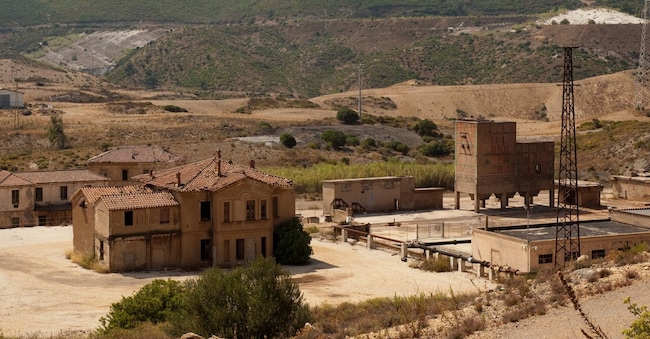
La miniera Monteponi a Iglesias, in Sardegna.

5' min read

5' min read

The issue is strategic in terms of security. Minister Guido Crosetto has repeatedly emphasised the impact that critical raw materials and rare earths have on the defence supply chain, and thus on costs. At a time when NATO is pressing its allies to reach the fateful threshold of 2% of GDP for defence spending, the dossier is anything but irrelevant.

Crosetto is aware of this. 'Apart from wars,' he said last month, during a speech at the Made in Italy Summit, 'competition is increasing and Europe is living a crazy dependence, it is 100% dependent on China on rare earths. Some production has to go back to the places where it was lost, this changes geopolitics. Most raw materials are in the south of the world, the relationship between states is changing, technology but also natural resources will count,' he added.

Loading...

Again: at the 'European air and missile defence conference', which took place in Rome on 17 September, the minister dwelt on 'what lies at the heart of production: which are the supply chains, which are the technological and industrial capabilities, those that we have outsourced and perhaps moved to Asia because they cost less, which are the supply chains of raw materials. We,' he said at the time, 'are 90% dependent on China for rare earths. For lithium 78% as Europe. So to ask ourselves the question of European defence is to ask ourselves the question of when the Sevarstels will come out, when the Samp/T battery will be ready, but also to ask ourselves the problem of where to locate the lithium reserves for the next thirty years, of how to think of supplying ourselves with rare earths in the next thirty years, of how to think of exploiting the deposits of the future at a European level, not a national level, which are the submarine ones, where a single deposit has perhaps 7,000 times all the material that there is on the entire earth. How to exploit space from this point of view. These are the challenges of the future'.

The Studio

.

In order to understand the scope of the issue, it is useful to take up a few passages from the Position paper entitled 'For a national security strategy', presented on Friday 8 November in the Chamber of Deputies of the Chamber of Deputies, in the presence of the minister himself. The focus, promoted by the Associazione Futuri probabili and the Fondazione Leonardo Civiltà delle macchine, both chaired by Luciano Violante, devotes a few pages to this topic.

Critical raw materials

.

Access to critical raw materials, the document explains, is considered essential for the EU economy and the functioning of the internal market. Critical raw materials' are defined as those non-energy and non-agricultural raw materials that are of great economic importance and are exposed to a high supply risk, often caused by a high concentration of supply in a few third countries. The most recent statistics," the report goes on to remind us, "show that demand for MPCs is set to increase exponentially in the coming decades, in light of their fundamental role in the realisation of the technologies required for the dual green and digital transition and their essential use in the defence and aerospace sectors.

The weak point

.

The European Union, and thus also Italy, is almost totally dependent on imports, which makes it vulnerable to supply risks: suffice it to say that 97% of magnesium comes from China; heavy rare earths, needed for the permanent magnets used in wind turbines and electric vehicles, are only refined in China; 63% of the world's cobalt comes from the Democratic Republic of Congo, and 67% of the latter is refined in China. Raw material value chains are transnational. Raw materials are mined in different regions of the globe, transported for processing and sold in the domestic market.

Strong international competition for supply

.

The geopolitical hyper-concentration of mining and industrial plants can lead to easy and frequent supply disruptions and induce strong international competition to secure their supply.

The EU move: the Critical Raw Materials act

.

The European Union, it is recalled in the Position paper, adopted Regulation 2024/1252 Critical Raw Materials (CRM) act on 11 April, which entered into force on 23 May. The regulation establishes a list of 34 critical raw materials, 17 of which are recognised as strategic as they are crucial for the dual green and digital transition and for the defence and aerospace industries, and sets some benchmarks to which the Union must aspire to reach by 2030. From increasing its mining capacity to cover at least 10 % of annual consumption of strategic raw materials (MPS) to increasing its processing capacity to cover at least 40 % of annual MPS consumption; from increasing its recycling capacity to cover at least 25 % of annual MPS consumption. to diversifying the Union's MPS imports so that no third country covers more than 65 % of the Union's annual MPS consumption.

... and that of Italy

.

For its part, the Italian government approved a decree-law (dl 84/2024), bearing 'Urgent provisions on critical raw materials of strategic interest'. The 17-article measure introduces into the Italian legal system the first measures to implement the European strategy for a governance system for the safe and sustainable supply of critical raw materials, with interventions on the demand and supply sides. On the demand side, the creation of a National Register of strategic companies and value chains is envisaged. The objective is to monitor CRM flows; collect data and information essential for estimating national CRM needs; and conduct stress tests and identify any vulnerabilities in supply chains.

76 active mines in Italy

.

There are 76 mines still active in Italy, the Position Paper goes on to explain, 22 of which are related to materials on the EU's list of 34 critical raw materials. In 20 of these, feldspar, an essential mineral for the ceramic industry, is mined and in 2, fluorspar (in the municipalities of Bracciano and Silius), which is widely used in the steel, aluminium, glass, electronics and refrigeration industries. In particular, the fluorspar mine in Genna Tres Montis (South Sardinia), which will be back in full production once the rehabilitation work is completed, will be one of the most important in Europe. Of the 91 other fluorspar mines that were active in the past, some very important ones - to be re-evaluated with today's prices quadrupled since 1990 - are located in the Bergamo, Brescia and Trentino areas, in addition to those in Sardinia and Lazio. Feldspar and fluorspar, therefore, are the only critical raw materials currently being mined in Italy, but current research permits, data on past and recent active mines document the potential presence of various critical and strategic raw materials such as lithium, discovered in significant quantities in the Tuscan-Lazio-Campania geothermal fluids, and such as various other minerals from which metals are produced (copper, cobalt, antimony, manganese, titanium, strontium, tungsten, aluminium, rare earths, gallium, germanium, etc.) that are indispensable for the dual transition between the two worlds of mining.) indispensable for the dual green and digital transition. Finally, an important source of critical raw materials is provided by the large deposits of mining waste, i.e. the waste from past mining activities, potentially rich in raw materials that were not sought after at the time. In Sardinia alone, we have about 80 million cubic metres. Their mapping and characterisation will be the subject of a specific Pnrr project by Ispra.

Copyright reserved ©

Brand connect

Loading...

Newsletter

Notizie e approfondimenti sugli avvenimenti politici, economici e finanziari.

Iscriviti