

Cybersecurity on the ward: how to protect patients from a borderless hybrid war
From the management of hospital admissions to intensive care units and laboratory refrigerators: an update on the alert in Italia

Key points
The warning had come just a few days ago from Health Minister Schillaci, whilst visiting the Biotecnopolo Foundation in Siena, a hub for national security: ‘An attack on a healthcare facility could jeopardise the continuity of care,’ was the warning. This is exactly what nearly happened in France on 4 November, with the sensational cyber-attack – foiled just in time – on several blood banks, aimed at raising temperatures to extremely high levels in order to damage blood products or samples. The French incident, which – against a backdrop of hybrid warfare in which aeroplanes and supermarkets are being targeted – has set off alarm bells in the healthcare sector, is certainly not far removed from what happens every day in Italia.
The painting
In the first six months of 2026, there were 4,911 particularly serious cyber incidents reported worldwide, the highest number ever recorded in a half-year period. In six months, as stated in the report by Clusit, the Italian Association for IT Security, 93 per cent of the incidents recorded in the whole of 2025 were reached, with an average of 819 per month. This represents a surge, against which Italia stands out as a slight exception: in Italia, there were 245 known incidents, down from the peak of 280 in the first half of 2025, and they account for 5 per cent of the global total.
However, it is the National Cybersecurity Agency that provides the most up-to-date figures for Italia: the 485 cyber incidents recorded in September 2026 represent a 57 per cent increase compared with the 309 recorded in August. Incidents are also on the rise, standing at 235 compared with 196 the previous month. Which sectors suffered the highest number of cyber incidents? Technology, healthcare and manufacturing. The technology sector was mainly affected by the exploitation of vulnerabilities and system failures; the healthcare sector by data breaches; and the manufacturing sector by ‘defacement’ attacks.
What are the risks to healthcare
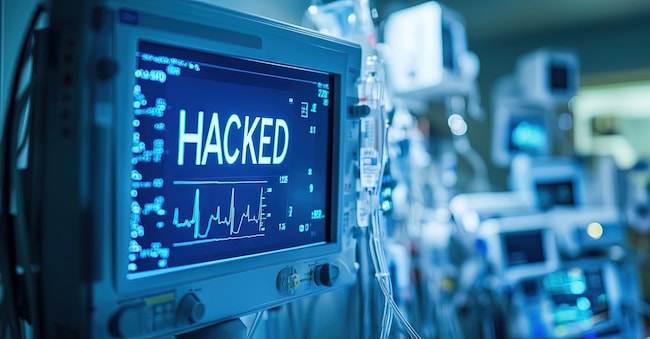
And whilst disrupting the cold chain in the retail sector – as has happened in recent days – poses serious economic problems, as well as issues regarding food supply security and, potentially, consumer health, the risk and consequences of a cyberattack on the healthcare sector could be incalculable. It is not just our health data that is at risk, then – ‘stolen’ and sold on the dark web, as the Clusit Report confirms every year – but also, potentially, intensive care units, neonatal wards and emergency department equipment: if these were to be severely compromised, they could cease to provide life-support to patients.
This is a highly topical issue that raises questions about risk management within organisations. Indeed, they are on high alert: ‘Cybersecurity is no longer just an IT issue, but a component of clinical safety,’ warns Giuseppe Quintavalle, president of Fiaso, the Federation of Healthcare and Hospital Organisations. The cyberattack that hit the French blood transfusion system calls on all healthcare organisations to exercise the utmost vigilance and to fully implement the security protocols already in place, with the active involvement of those responsible for corporate cybersecurity. The European NIS2 Directive, transposed into Italian law by Legislative Decree 138/2024, reinforces obligations regarding prevention, risk management and staff training. Digital security requires close collaboration between strategic management, cybersecurity officers and healthcare professionals.”

