

Damaged heart: child hospitalised in Naples would still be transplantable
The outcome of a consultation of the Monaldi hospital's head doctors announced by the mother. Schillaci: 'Ministry inspectors in Bolzano and Naples, we must clarify'

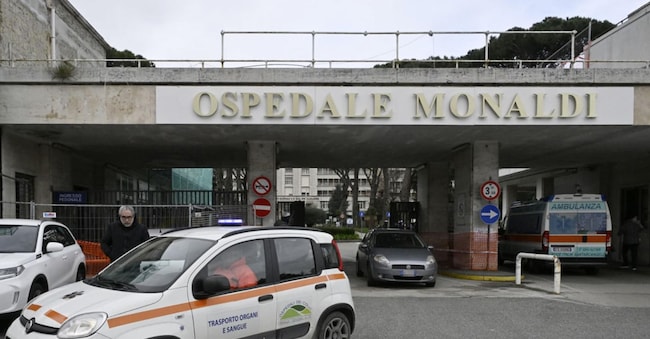
The child who has been hospitalised in a very serious condition for two months at the Monaldi hospital in Naples after a damaged heart transplant 'would still be operable today, if an organ were available'. This is the outcome of the meeting of the head doctors, who will make a new assessment tomorrow, as reported by the child's mother immediately after the consultation.
In recent days, the Bambino Gesù hospital in Rome had made it known that the child hospitalised in Naples 'would no longer be transplantable'.
Schillaci: 'We need to provide clarity'
'We absolutely have to clarify,' emphasised Health Minister Orazio Schillaci. 'We owe it to the child, to the family, but we also owe it to all Italians, because ours is a national public health service of excellence, it is a health service that is able to handle complex situations and almost always resolve them. So I believe that citizens must not lose confidence'.
The minister recalled that investigations are underway by two public prosecutors' offices while the Nas have already been to the two sites involved in Bolzano, where the heart started, and Naples, where it was transplanted." And then there are the ministry inspectors who are on their way to the two sites involved,' Schillaci added. 'So we are waiting for the work of the investigators, the Nas and then also that of the ministry inspectors before drawing conclusions. We have confidence in the judiciary, in the Nas carabinieri. The ministry inspectors will do their duty, as they have always done in so many situations. Then we will draw conclusions. For now, I reiterate that we are close to the child, to his family, and we still hope that a solution can be found for this little patient who is suffering'.
The heart transported in a common plastic box
According to initial investigations, the damaged heart transplanted at the Monaldi hospital had travelled from the San Maurizio hospital in Bolzano to Naples in a common plastic container to which dry ice had been applied. According to an initial hypothesis, however, the problem was not so much the use of a plastic container instead of a technological box, but the application of dry ice (which reaches temperatures of -80 degrees) instead of classic ice (-4 degrees). The significantly lower temperatures could have caused the injuries to the small heart.

