

Casual workers are still in hospital wards: over a billion spent in two years
The rush to recruit outsourced staff continues. Busìa: ‘Costly contracts for the public sector, inadequate services, risks for patients’

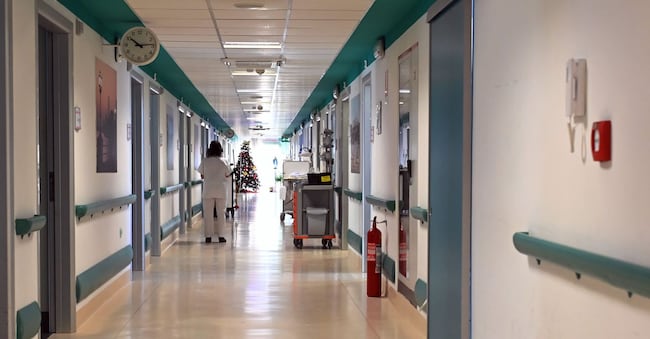
The emergency, which is becoming structural, has evolved from a stopgap measure introduced during the Covid era to bolster wards and has now become the norm. This is the backdrop against which, for years now, the use of temporary staff – doctors and nurses on short-term contracts – has been the norm, keeping Italian hospital wards running. And their numbers tend to swell year on year.
This is set out in black and white in the new ANAC report, ‘National Health Service Demand for Medical and Nursing Staff Supply Services’, which *Il Sole 24 Ore* is able to preview. In the two-year period 2024–2025, National Health Service organisations and bodies generated public expenditure of €1.064 billion on the procurement of outsourced staff. And the most significant finding is that in 2025, this trend is not slowing down: it is accelerating.
“Unfortunately, the trend towards outsourcing healthcare staff remains high,” warns ANAC President Giuseppe Busia. A trend which, according to the Authority’s head, results in “costly contracts for the public administration, inadequate services and risks for patients” and ultimately further depletes the staffing levels of public hospitals. The figures highlight the problem. In 2025 alone, public expenditure reached 568 million euros, up 15 per cent from the previous year’s 496 million. The increase in the number of procedures was even more marked, rising from 187 to 255 – a 36 per cent jump. The main drivers of this growth are locum doctors. Contracts for medical staff rose from 31 to 50 million euros in a year, marking a 62 per cent increase, whilst the number of procedures rose by 68 per cent, from 25 to 42. The trend in the supply of general staff was more modest, though still substantial; this sector alone accounted for 947 million euros over the two-year period and grew from 441 to 506 million between 2024 and 2025. On a contrasting trend are on-call nurses. Here, expenditure falls from 24 to 13 million euros (-48 per cent) and the number of on-call nurses drops from 24 to 18 (-25 per cent). This slowdown, however, is not enough to reverse the overall picture of a healthcare system that continues to draw on an external and precarious, ‘à la carte’ market for the necessary resources it is no longer able to recruit on a permanent basis.
“It is essential that the National Health Service resumes investing in its own staff, through transparent, merit-based open competitions that guarantee fair remuneration,” continued Busia. Public administrations have excellent professional resources at their disposal which, however, in many cases are not adequately valued and, indeed, are often driven towards other opportunities, depriving the administrations of their most precious asset.” The head of the Anti-Corruption Authority condemns “the growing outsourcing of healthcare staff, characterised by contracts that are particularly costly for public administrations, in exchange for inadequate services, often posing risks to patients’ health”. The situation is no better when it comes to procurement procedures and recruitment rules. The ANAC report shows, in fact, a growing preference for faster and less competitive methods. In the two-year period 2024–2025, the predominant approach was to adhere to existing framework agreements and contracts, utilising their remaining financial capacity without launching new tender procedures. This type of procurement accounts for almost 60 per cent of the contracts awarded during the two-year period and exceeds 61 per cent in 2025 alone. Its economic impact is also significant. Adherence to framework agreements and conventions accounted for 43.9% of the total amount transacted over the two-year period, a share that rose from 36% in 2024 to over 50% in 2025.
And then there are direct awards: seven out of ten procedures, explains the Authority, are awarded without a tender process. Over the two-year period, these accounted for 70 per cent of the total number of contracts, and in 2025 they saw particularly sharp growth: a 41 per cent increase in the number of procedures and a 59 per cent rise in economic value, reaching almost 290 million euros. The result is that procedures awarded without a tender process end up exceeding, in terms of value, open tender procedures. Finally, the geographical distribution of this phenomenon confirms a significant regional imbalance. More than half of the procedures are concentrated in Northern Italia, which accounts for 54 per cent of the total, followed by Southern Italia and the Islands with 29 per cent, and Central Italia with 17 per cent.


