
De Matteis (Pasta Armando) is investing 45 million in its factories
Flumeri (Avellino) will see a rise in production capacity of around 30 per cent, and Giano (Perugia) by 10 per cent. The Armando Pact with the supply chain is central to this, with plans for initiatives on renewable energy and sustainability

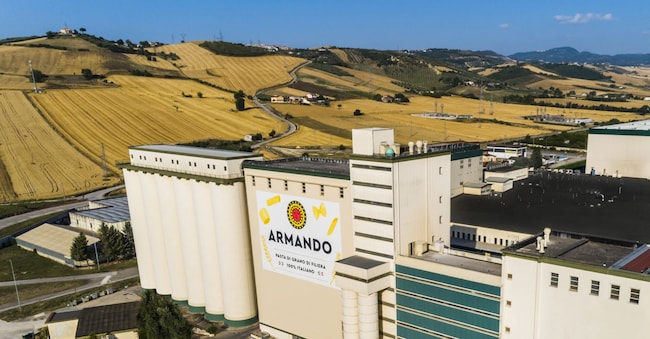
A €45 million investment plan to reorganise and upgrade the group’s two production sites: in Flumeri (Avellino) and Giano (Perugia). The announcement was made to *Il Sole 24 Ore* by De Matteis Agroalimentare, one of the leading players in the global dried pasta market, which closed 2025 with a turnover of 236 million euros and is targeting an 8 per cent increase in volumes for 2026.
The Flumeri plant – covering 90,000 square metres – will see a “increase in production capacity of around 30 per cent”, comments the CEO, Marco De Matteis, who, together with the chairman Armando Enzo De Matteis, recipient of the ‘Cavaliere del Lavoro’ honour, leads the company. “At the same time, work will begin on a solar power plant to support the company’s ecological transition, as it operates as a benefit corporation,” he adds.
For the Umbrian site – 19,500 square metres – “a 10 per cent increase in capacity is planned, with a strong focus on specialising in special formats and high value-added products, such as nidi and lasagne”, he says.
The two hubs currently have an annual production capacity of 190,000 tonnes: the investment plan aims to increase the number of production lines from 16 to 18, with the addition of a new line for short pasta and one for long pasta. “These investments,” adds the CEO, “will also have a very positive impact on employment in both the areas concerned.”
In a sector characterised by a very diverse range of products, De Matteis responds by focusing on the value of the integrated supply chain and on ‘combating the commoditisation of pasta, which stems primarily from foreign competition – which floods the market with huge quantities of lower-quality products at very low prices – and from the highly aggressive pricing policies seen in the domestic market’.

