
150 Italian scientists write to the government to strengthen the Ets system to combat climate change
Appeal to the government not to weaken decarbonisation tools to combat climate change and extreme phenomena. Among the signatories is physics Nobel laureate Giorgio Parisi

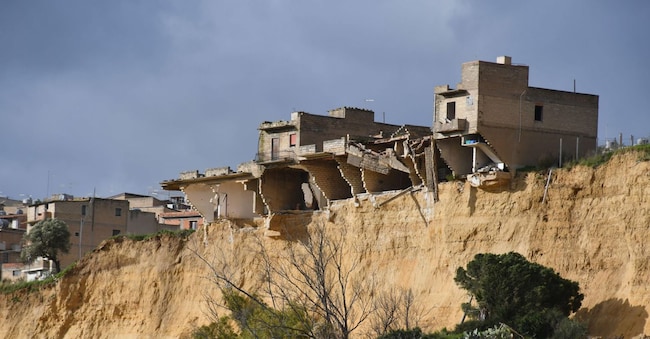
Open letter from 150 Italian scientists and economists to the government on the Bill Decree. The group of climate science and energy transition scholars appeals to Prime Minister Giorgia Meloni, Environment Minister Gilberto Pichetto Fratin and the government not to weaken European decarbonisation instruments and to strengthen adaptation policies.
At the heart of the letter is the call for the need to tackle the climate crisis with science-based and long-term oriented measures. Among the first signatories are Nobel Prize winner for Physics 2021 Giorgio Parisi, economist Carlo Carraro and CNR climate physicist Antonello Pasini.
"We consider it a mistake for the Italia government not to show full support for decarbonisation tools such as the Emission Trading Scheme (Ets), now also adopted in China, which has contributed significantly to reducing emissions in regulated sectors, demonstrating that ambitious climate policies can produce concrete results, stimulate innovation and drive industrial transition at sustainable costs," the letter reads.
More frequent extreme phenomena
According to the signatories, the recent extreme events that have affected southern Italy confirm a well-established trend: rising global temperatures are resulting in an increased frequency and intensity of extreme weather phenomena.
"We, scholars engaged in research on climate change, mitigation and adaptation policies, and complex systems," they write, "express our deep concern about the way in which the Italia government is tackling the climate crisis, in particular for its recent stances aimed at weakening the main instruments of European climate policy. The recent extreme events that have affected vast areas of southern Italia with the passage of Cyclone Harry are not isolated episodes, but signals consistent with what the scientific community has been documenting for years: a changing climate increases the frequency and intensity of extreme weather events. The Niscemi disaster appears to many as a dramatic metaphor for an entire country at risk. It is no coincidence that for years Ispra has been placing Italia at the top in Europe for exposure to the risk of landslides'.


