
Defence, maxi-tender for renewable plants in military areas
Announcement of Defence Services published: bids expected by 15 October. CEO Andreoli: 'Important and positive spin-offs for the country system as well

3' min read
Key points
3' min read
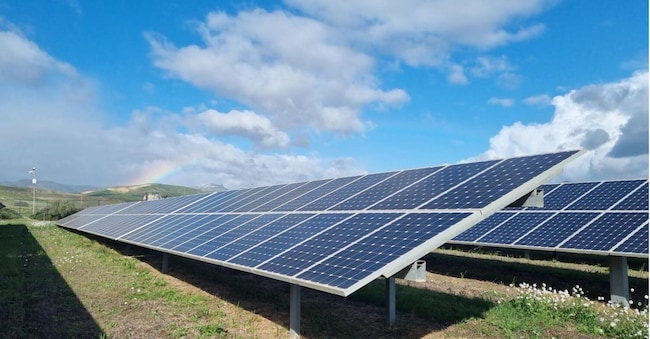
The main course was reiterated by Defence Minister Guido Crosetto, who, in line with Italy's need to speed up the achievement of green targets, outlined a stringent path to achieve, even in the defence world, a breakthrough in this direction with a view to energy independence. This last piece of the puzzle will now receive a big assist from the maxi tender launched by Difesa Servizi, the in-house company of the Ministry of Defence, headed by Luca Andreoli, which manages and enhances its assets. The procedure, which has just been published in the European and Official Gazette, aims to enhance the value of 23 military sites (900 hectares in all) for the installation and management of plants for the production of electricity from renewable sources through a 25-year concession to private investors who will be able to submit their bids by 15 October. This is the first mega-tender launched by the company, which will most likely be followed by others to achieve the energy self-sufficiency outlined by Crosetto in his strategy.
Andreoli: important and positive spin-offs also for the country system
"The production of energy from renewable sources is a necessary step to provide greater energy autonomy to Defence and will also have important and positive repercussions for the country system," explains Luca Andreoli, the number one of Defence Services, to Il Sole 24 Ore, which, he adds, "will play its part, again using private investment, in a much broader process that concerns the development of a new energy-oriented mentality within the entire sector.
The numbers of the maxi race
.It has to be said that the tender that has just been published - the value of which amounts to around EUR 770 million - represents an important junction of a path that started, however, some time ago, as the manager himself clarifies: "The company has become the interpreter of this need and, together with important business partners, enhancing the assets of the Ministry of Defence, has contributed to the implementation of photovoltaic systems already since 2012, involving barracks and military areas. Today, in addition to improving those installations, it is committed to building new ones, exploring the implementation of systems to contribute to the best use of green energy. It is estimated, in fact, that with the currently known technology, photovoltaic systems with a total power output of around 500 megawatts could be installed, capable of generating more than 650,000 megawatt hours annually.
The postponement of the Energy Decree
.No small boost, therefore, from the maxi ban. The grounding of which is also in line with Article 20 of Decree 17 of 2022 (the Energy Decree). With that measure, in fact, it was established, as you will recall, that the Ministry of Defence, also through Difesa Servizi, could grant concessions or directly use, in whole or in part, the assets of the military state property or for any reason in use by the same department, to install new green plants. Being able to fall by right into the classification of suitable areas - by virtue of the provisions of Decree 199 of 2021 - and thus being able to benefit from faster procedures.
The Cost Reduction Strategy
.Returning to the tender, the sites involved are organised in three blocks and the investments for the construction of the photovoltaic fields will be the responsibility of the private economic operators who will be awarded the contract (the tender specifications estimate an average investment of €700,000 for each lot/sediment for each hectare of useful area). The sites will include areas and building roofs where photovoltaic fields can be installed and managed, with the green energy produced being sold to the Ministry of Defence. And the departmental units affected by the activation of mechanisms for self-consumption of green energy will recognise a reduced value per kilowatt hour to producers compared to what is paid today for the same supply, with the result of containing the energy expenditure incurred annually by the Defence. In this way, the acceleration of the green turnaround will be combined with a reduction in costs.


