
Kessler-Iss Study

Dengue and Chikungunya: the risk map in Italy and experts' advice

Coastal areas and urban suburbs, which have the most suitable conditions for the development of tiger mosquito outbreaks, are more exposed to infection

by Ernesto Diffidenti

4' min read

4' min read

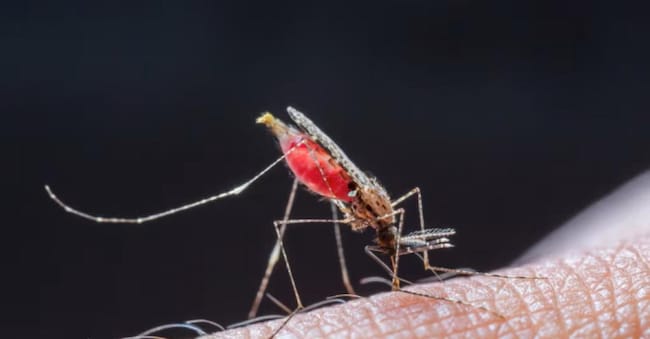
In recent years in Italy there have been localised episodes of autochthonous transmission of dengue and chikungunya, especially in the northern and central regions, but there is a risk of further outbreaks in coastal areas and urban suburbs throughout the peninsula, which have the most suitable conditions for the development of outbreaks of the so-called 'tiger mosquito' (Aedes Albopictus the scientific name). Mapping the risk in Italy is a study coordinated by the Fondazione Bruno Kessler and the Istituto Superiore di Sanità in collaboration with the Ministry of Health and the Regions/Autonomous Provinces that has just been published in the journal Nature Communications.

'The risk is widespread,' the authors emphasise, 'and it is desirable to increase clinical knowledge of these infections, to maintain a high level of surveillance attention, and to strengthen the awareness of those returning from places where these infections are present or endemic.

Loading...

The contagions associated with the resumption of international travel

.

Autochthonous cases of dengue and chikungunya, diseases that were previously only imported, have been on the rise in recent years throughout southern Europe, due to the resurgence of international travel, the spread of insect vectors, and increasing epidemics in tropical and sub-tropical climates. The researchers analysed local transmission episodes between 2006 and 2023, applying mathematical models to analyse Italian outbreaks and to estimate the risk of transmission in Italy, taking into account both human population density and entomological and climatic data. A total of 1435 imported cases of dengue and 142 of chikungunya were confirmed during the period. The infections were mainly contracted in Thailand, Cuba, India and the Maldives for dengue, and India, the Dominican Republic, Brazil and Thailand for chikungunya. During the same period, 388 indigenous cases of dengue and 93 of chikungunya were diagnosed.

'All the areas where local and focal transmission of the two viruses occurred in Italy were among those identified as high risk in our analysis,' the authors write. 'However, many other areas with similar ecological conditions were also found, and could therefore be equally at risk if cases were imported from abroad. This implies that prevention and surveillance measures should be oriented towards areas with favourable environmental conditions, whether they have already had outbreaks or have not yet identified cases in the territory'.

According to the study, once indigenous outbreaks were identified, the transmissibility index was brought below the epidemic threshold in a short time, about two weeks, supporting the quality of reactive control interventions. There remains, however, some delay in the identification of cases: 'In non-endemic regions, such as Italy, it is important to increase awareness of emerging vector-borne diseases because delayed or missed diagnosis slows down the detection of outbreaks and thus the possibility of controlling them'.

In Italy, 68 cases of Dengue and 22 of Chikungunya

.

From 1 January to 30 June 2025, the Iss national surveillance system had 68 confirmed cases of human Dengue virus infection in Italy, all associated with travel abroad, (median age 41 years, 51% male, no deaths). Most of the infections were contracted in Central and South America and in South East Asian countries. On the other hand, there were 22 confirmed cases of human infection with the Chikungunya virus in Italy, an increase compared to previous years and all associated with travel abroad (median age 49 years, 50% male, no deaths). Most cases were contracted in Madagascar and Reunion Island and in Sry Lanka. Four confirmed cases of Zika virus were also reported, all imported. Among endemic arboviruses, 12 cases of TBE (all autochthonous, no deaths) and 5 cases of Toscana virus infection (no deaths) were reported as of 30 June 2025. Although a confirmed sporadic case of West Nile has been reported in months of low transmission, the first reports of viral circulation in mosquito pools have begun, with the activation of transfusion control measures in the provinces of Oristano and Venice.

Rezza: epidemic possible in many areas of the country

Gianni Rezza, former director of Prevention at the Ministry of Health and now extraordinary professor of Hygiene at the Vita-Salute San Raffaele University in Milan, confirms the study's data: 'Wet areas, where the presence of vegetation and residual water around homes is greater, are at greater risk, but the likelihood of outbreaks in the summer period is also directly proportional to the number of people arriving from tropical areas where the virus is actively circulating'. Thus, in the eyes of the expert, the possibility of epidemics in many areas of the country is evident. 'Of course,' Rezza points out, 'the earlier a virus is introduced during the hot season, the greater the likelihood that the number of cases will be high, but fortunately, as the authors of the paper point out, pest control interventions and the arrival of the cold season have so far limited the size of epidemics. Climate change, if it were to cause a lengthening of the hot season, could favour an endemicisation of these viruses, which has not happened so far'.

Experts' tips to prevent mosquito bites

.

What to do to prevent the risk of contagion? Here is advice from Iss experts on how to protect yourself from mosquito bites and prevent them from breeding easily:

- use repellents and wear long trousers and long-sleeved shirts when outdoors, especially at dawn and dusk;

- using mosquito nets on windows and staying in air-conditioned rooms;

- Empty containers with standing water (e.g. buckets, flower pots and saucers, basins, bins, etc.) frequently and cover immovable ones;

- treat manholes and water collection grids in private gardens and communal areas with larvicides from April-May, throughout the mosquito-friendly season, with the frequency indicated on the product label;

- change the water in the animal bowls often;

- empty children's pools when not in use;

- avoid peak activity hours: many mosquitoes are most active at dawn and dusk, so it is advisable to avoid outdoor exposure during these hours or use extra precautions.

Copyright reserved ©

Brand connect

Loading...

Newsletter

Notizie e approfondimenti sugli avvenimenti politici, economici e finanziari.

Iscriviti