Dfp

Confindustria: 'If the war lasts until the end of the year, we risk the worst energy crisis in history'

Hearings before the Budget Committees of the House and Senate on the Public Finance Document. Employers' association: 'Deviation for proportionate aid to companies and extension of excise duty'. Anci: "Strong criticality Dpf, at risk the tightness of municipal budgets". Labour consultants: cut tax burden or brain drain

by Rome Editorial Staff

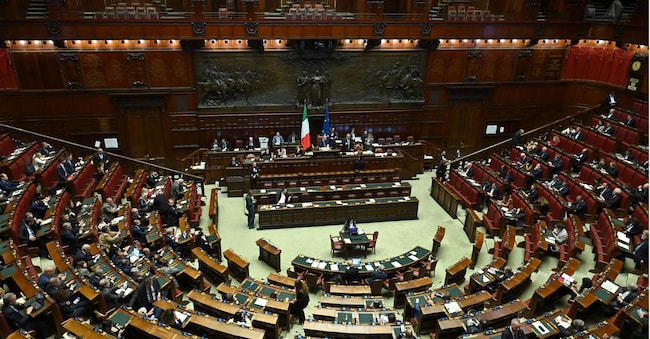
Lunedì 27 aprile sono iniziate le audizioni delle Commissioni riunite Bilancio di Camera e Senato sul Documento di finanza pubblica 2026 ANSA

8' min read

Translated by AI
Versione italiana

8' min read

Translated by AI
Versione italiana

"If it were to end today, the impact of the war would be worth 0.1-0.3 percentage points of lost growth", but if the war were to drag on until the end of the year, there would be a risk of experiencing "the most serious energy crisis in history with systemic impacts". This was emphasised by the director of the Study Centre of Confindustria, Alessandro Fontana, during a hearing at the budget committees of the House and Senate on the Public Finance Document (Dfp).

In addition to Confindustria, the Cgil, Cisl, Uil, Confesercenti, Confprofessioni, Consulenti del Lavoro, Anci and Upi, among others, spoke before the joint committees on Monday 27 April.

Loading...

Confindustria: "Vulnerable on energy, need strategy like Pnrr and emergency plan"

"Our main vulnerability is energy and it will remain so for another few years: it is important now - as this is the second time it has happened in a few years - to ground a strategy to overcome it that is milestone and target-based, such as the Pnrr, setting timeframes and targets, otherwise we risk finding ourselves many more times in situations like this one even if this one were to resolve itself in the best possible way," said Fontana, who also suggested "a contingency plan, because reaction times count a lot, to be able to deal with an emergency with a set" of interventions.

"With partial or total closure Hormuz global autonomy 6-11 months"

"Both partial and total closure of the Strait of Hormuz allow for a global range of 6 to 11 months, 2 of which have already passed," said the director of the Confindustria Studies Centre at the Dfb hearing in Parliament, illustrating the two scenarios analysed of 80% and 100% closure of the Strait. Mr Fontana spoke of a 'very peculiar general picture because we are in a war situation that puts a very important share of world oil at risk. If the war lasts until June, we risk an increase in costs of about 7 billion, if it lasts until the end of the year, we reach almost 7.6 per cent, an increase of almost 21 billion,' he said. "The duration of this war is crucial, if it is short it can be managed, otherwise if it lasts longer" everything would be "more problematic with the risk of becoming a systemic crisis," Fontana said. "Some indication we are already having it on the March data: inflation in Italia rose by 0.2 points, a positive element, but as we have already seen in 2022, in Italia inflation rises a little more with difficulty but then it also rises to higher levels" than the rest of Europe.

"Deviation for proportionate business aid and extension of excise duty"

In the slides shown at the hearing, Confindustria put forward a proposal: "In compliance with the Temporary Framework" a "budget deviation for aid of an intensity proportionate to the increases in gas and electricity costs until December 2026 for all medium, high and extra-high voltage companies" would be needed, as well as "targeted and higher intensity aid for electricity and gas companies". The budget deviation would only be needed if the war continued into the summer.

In addition to this, the industrialists call for the "extension of the fuel excise tax cut due on 2 May and an increase in the tax credit for road haulage, extending its application to passenger transport as well" with "targeted aid for air and maritime transport". Confindustria also calls for the "immediate unblocking of all pending authorisation procedures concerning renewable sources", the "reform of regulations and simplification of procedures to bring renewables to 60% of the Italian mix by 2030" and "to authorise the use of alternative energy vectors until December 2026 for industrial plants in AIA".

"EU institutions inadequate but on our own we would be weaker"

"On the European institutions, we have arrived at a point where they are absolutely inadequate to face the current challenges - common defence, industrial policy, foreign policy: we need to overcome this phase and we cannot do it alone because we would be even weaker," Fontana said. We need to federate with those who are there to recover the timeliness and effectiveness of the size that sovereign states have, but also to have the appropriate size at a global level as China and the US can have

Cgil: with inflation estimate at 2.9% workers risk losing another 1,500 euro

"With price growth at 2.9% - as per the government's forecast - a worker with a taxable income of 35,000 euro would suffer an additional levy of over 1,500 euro in 2026, while a pensioner with a monthly income of 1,000 euro would pay the tax authorities 370 euro more". This was said by CGIL confederal secretary Christian Ferrari at a hearing on the Dfp in Parliament, calling for 'neutralising the tax drain by automatically indexing the entire Irpef structure to inflation'.

Cisl: insufficient measures for crisis in the Dfp, risks for wages and pensions worry

According to CISL confederal secretary Ignazio Ganga, there are still significant weaknesses in productivity growth, delays in the full implementation of investments, the risk that the green and digital transition will unload costs onto families and workers, especially the most vulnerable, and the need for a more incisive intervention on wage redistribution. Of particular concern is the risk of a new squeeze on wages and pensions already severely eroded by inflation in recent years," he added in his speech at the hearing.

Uil: disproportionate taxation on employees and pensioners

Intervening at the hearing on the Dfp, Uil confederal secretary Santo Biondo recalled that "in terms of taxation, a disproportionate burden continues to be placed on employees and pensioners, while both the fight against evasion and the measures of real redistribution remain weak. A reform based on fairness is needed, also through taxation of extra-profits. Moreover,' Biondo continued, 'the Dfp on social security, healthcare and the NRP is still too limited and lacks a long-term vision. Without a strengthening of welfare and public administration, we miss a decisive opportunity to modernise the country and reduce inequalities'.

Confesercenti: risk of endemic no-growth condition

Intervening on the high energy costs, which for the tertiary sector translates into an additional 900 million. This is what the secretary general of Confesercenti Mauro Bussoni said at the hearing before the Budget Committees of the House and Senate on the Dfp. In scenarios of persistent tensions and reduced foreign demand, Confesercenti estimates a risk of a contraction of between 5 and 15% in foreign presences and a reduction in overall tourist spending in the order of between 3 and 10 billion. "The tourism sector in Italia, which accounts for about 10% of the national GDP, and which in recent years has sustained the country's economy," Bussoni pointed out, "is now facing an exceptional situation. In this framework," he added, "we consider it indispensable to intervene first and foremost on energy: the recent trend in energy prices confirms how market volatility and geopolitical tensions are translating, for families and businesses, into an increase in costs that can no longer be managed with episodic measures. What is needed is a structural reduction in system charges and the introduction of a mobile excise tax to compensate for the rise in fuel prices with the extra revenue derived from them. Interventions are also needed to support the adoption of digital technologies: it is proposed to strengthen investment instruments on digital activities and online transactions. We also recall the need to accelerate the interoperability of databases

Anci: "Finance document 2026 has a worsening trend"

"The 2026 public finance document gives us an overall positive picture, but one that has a worsening trend starting from the current year. It presents a strong erosion of financial spaces' of current expenditure and a 'significant contraction of local investments, starting from next year, in particular when the NRP on municipalities will also be completed'. This is what the mayor of Novara and Anci delegate for local finance, Alessandro Canelli, emphasised during the hearing in the budget committees of the Chamber of Deputies and the Senate, regarding the preliminary cognitive activity for the examination of the public finance document. "There is a dynamic that worries us: that of the tendential current accrual balance," the Anci delegate explained, recalling that "municipalities have contributed to the recovery" of local public finance.

"Strong Dpf criticality, municipal budgets at risk"

In his speech, Canelli highlighted that 'Italian municipalities continue to guarantee essential services despite operating within an increasingly complex framework and with increasingly narrow financial margins'. The Dfp 2026 shows, he stressed, "strong criticalities that risk compromising the resilience of municipal budgets already in the three-year period 2026-2028. The pressure on current expenditure is growing due to inflation and higher energy costs'. Anci estimates a loss of 2.2 billion in the three-year period 2026-2028, with about a billion euro annual imbalance in the two-year period 26-27

Upi: deviation to support social spending and investment

The Upi, the Union of the Provinces of Italia, also spoke of a deviation. "The dramatic geopolitical situation requires the country to adopt anti-cyclical economic policies. A possible request to Europe to suspend the Stability Pact should be aimed above all at supporting social spending and programming a structured investment plan in public works from 2026 that sees the protagonism of local authorities, first and foremost the provinces,'. This was said by vice president Angelo Caruso at the hearing on the Dfp. "Thanks to the NRP from 2022 to 2025, investment spending by the provinces has increased by 80%. This boost must continue with targeted programmes on the public assets under management of the provinces. It is then clear that any measures to cope with the economic effects of the energy shock and the increase in raw materials will have to include interventions in favour of local authorities," he added, calling for the next Manoeuvre to exclude "any kind of reduction to the current resources of the provinces".

Confprofessions: focus on training, research and aggregations

Andrea Dili, vice-president of Confprofessioni, speaking at a hearing before the joint Budget Committees of the House and Senate, emphasised that 'the productivity of the future will depend on the ability to update skills throughout working life'. For Confprofessioni, it is therefore necessary to strengthen retraining paths and guarantee the interprofessional funds the full availability of the 0.30 per cent resources, ensuring continuity and quality to training interventions. To close the gap with other advanced countries, resources must be concentrated on innovation, applied research, and technology transfer. "Innovation districts, incubators and collaborations between universities, companies and professionals must become permanent infrastructures of the production system," said Dili, "without research there is no competitiveness, and without competitiveness there is no growth.

Work consultants: cut tax burden or brain drain

Reduce the tax burden to prevent a further brain drain and bring it more in line with that of other European countries. This is one of the proposals put forward by the National Council of Employment Consultants during the hearing before the Budget Committees of the House and Senate on the Public Finance Document. The third Irpef rate, currently standing at 43%, 'burdens an income bracket that in many European countries is still assigned an intermediate rate,' reads the document presented in Parliament in which the consultants propose continuing to make the reduction of the tax wedge structural. Among the proposals are also the stabilisation of the payroll rebates introduced with the Budget Law 2026 (for performance bonuses, allowances and increases deriving from contractual renewals), the introduction, in collective bargaining, of new regulatory tools for greater worker participation in company profits and to protect their purchasing power, and the extension, for at least three years, of the decontributions for young people under 35, disadvantaged women and workers in the single Zes. Looking at the world of the professions, it is proposed to establish by law that the income produced by companies among professionals, regardless of the corporate model chosen, be assimilated to self-employment income; a 'transitional compatibility' regime is also suggested for those professionals who used to benefit from the flat-rate regime and join an associated studio or an stp. Finally, still on the subject of the 'forfetario' regime, the consultants propose introducing an 'outgoing' transition bracket, between 85,000 and 100,000 euros, with a 23% substitute rate instead of switching to the ordinary regime, and the provision of an amount to be deducted from taxation 'according to the number of dependent children and documented expenses for educational services in the 0-2 age bracket'.

Copyright reserved ©
Loading...

Brand connect

Loading...

Newsletter

Notizie e approfondimenti sugli avvenimenti politici, economici e finanziari.

Iscriviti