

Diabetes and coeliac disease: free screening for almost one million children
The campaign with tests to reach almost 1 million five- and six-year-olds is ready. The aim is to intercept pathologies in advance

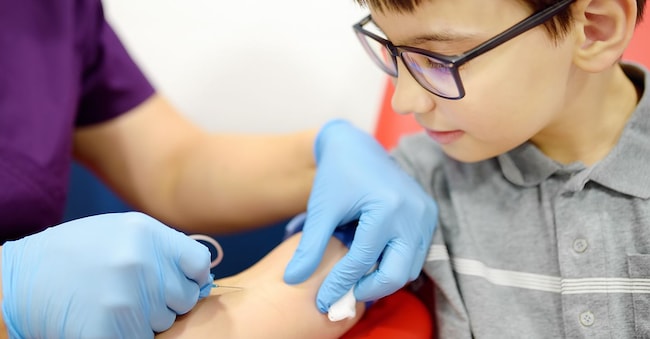
Trying to change the lives for the better of thousands of children who every year are affected by two of the most frequent chronic diseases at their age: type 1 diabetes and coeliac disease, diseases that if not diagnosed in time can manifest themselves late because they remain invisible for a long time without showing any particular symptoms, until complications often even serious ones emerge. That is why it is really good news that soon - hopefully as early as next autumn's vaccination campaign - a massive free and voluntary screening will start, covering some 800-900 thousand children, i.e. those aged between 5 and 6.
After successful experimentation in four regions (Campania, Lombardy, Marche, Sardinia) involving 5,363 children and 429 paediatricians, the State-Regions Conference on 26 February approved the implementing decree that gives shape to this national paediatric screening programme with the aim of intercepting type 1 diabetes and coeliac disease at an early stage. This is the first screening of this kind at national level resulting from an innovative law - 130/2023 - that was approved almost three years ago and promoted by Chamber of Deputies Vice-President Giorgio Mulè (Forza Italia). But how will it work and how can one participate? This possibility will be offered to the 5-6 age group and will be 'proposed,' reads the newly approved decree, 'to all those already involved in the call for vaccination. As we have said, the test will be free of charge and will be very simple because it will be possible to proceed by means of a simple capillary blood sample, usually a finger prick, or by means of a traditional blood sample if one prefers this route. This small blood sample will be used to search for three antibodies specific to type 1 diabetes and two related to coeliac disease. It will be up to each region to decide how to activate the screening through vaccination centres and the paediatricians' network, while the blood samples will be sent to regional reference laboratories. If a test is positive, the family will be contacted and referred to the regional reference clinical centres, which will first of all confirm the result and follow the child over time, taking care of him/her. In fact, knowing in time that a child is at risk of, for example, diabetes makes it possible to monitor the child over time, avoid an emergency onset - so-called diabetic ketoacidosis - and also evaluate possible preventive therapies already available. The trial in the four pilot regions showed 0.97 per cent positivity in the screening test for type 1 diabetes, while for coeliac disease the positivity in the antibody test was 2.8 per cent. The children who tested positive in the screening were then sent to the clinical reference centre for diagnostic confirmation.
"Those who actually showed positivity to two or more antibodies for diabetes became 0.3% and those positive for coeliac disease about 1.7%. These data justify the usefulness of this screening because the earlier these diseases are diagnosed, the more likely it is that complications will be prevented, in addition to the reduction of symptoms, such as in the metabolic management of diabetes, which may be intercepted before its clinical onset, which can also be dramatic, and even serious complications can be avoided for coeliac disease,' warns Marco Silano, head of the project on type one diabetes at the Istituto Superiore di Sanità. He also emphasises the tasks that the Iss will have: "To start this screening programme, the Regions will first have to implement the platform in common with our Institute to collect data at territorial level and then monitor its progress. Adherence to screening will be crucial, and for this reason the information work that paediatricians will have to carry out is crucial,' Silano emphasises, 'but also the Ministry of Health, which together with the Iss will certainly have to carry out communication campaigns. 'Ideally, all children who are offered it should take part. In the future,' concludes the Iss expert, 'the more age groups that are involved, the more effective this screening will be'.


