
The testimony

‘I was diagnosed with breast cancer at the age of 27. Today, I’m expecting my baby.’

Prevention and research are essential to ensure that everyone has a future: this is why initiatives such as the Airc Foundation’s ‘Nastro Rosa’ are so important

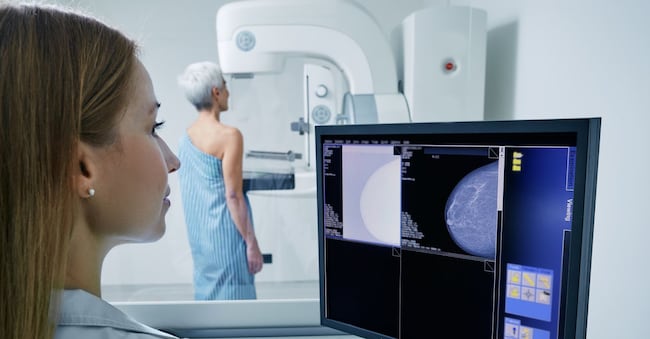
 Adobe Stock

4' min read

Translated by AI
Versione italiana

4' min read

Translated by AI
Versione italiana

At 27, I never thought the word ‘cancer’ would ever come into my life. When it did, I realised that a diagnosis isn’t just about the body. It changes the way you view time, the people you love and the future. And it forces you to realise what really matters.

My story and Giada’s

My breast cancer was diagnosed in 2021. It was small, but it had already spread to the lymph nodes. It was a triple-negative tumour, an aggressive form that I would never have imagined could affect me at that age.

Loading...

Difficult months lay ahead, filled with treatment, fear and change. Chemotherapy, hair loss, being away from work and everyday life. But also something I hadn’t experienced before: the ability to rely on others and to let them help me.

Throughout my journey, I was also looked after by Dr Bruno Perrucci, an oncologist at ASST Cremona. Meeting professionals who are able to support you not only from a medical perspective, but also on a human level, has made all the difference. I realised that behind any treatment there is more than just a medicine: there is a vast amount of knowledge, study and research that makes that treatment possible.

My family history also played an important role. The genetic test revealed a BRCA1 mutation. Receiving that result not only helped me to better understand my condition, but also provided important information for the future and for those close to me.

When an inherited genetic mutation is identified, it is important to share this information with the family, as other family members may also have the opportunity to find out about their own risk and, together with specialists, take steps towards counselling and prevention.

In my case, as my mother is no longer with us, the first person I felt I had to share that information with was my sister Giada.

During those months, Giada was a vital source of support. She stood by me throughout my treatment, tried to brighten up my days and, whenever possible, help me regain a sense of normality.

Then our story took a turn that neither of us could ever have imagined.

Giada has fallen ill too.

Loading...

We found ourselves going through something at the same time that, until very recently, had seemed to belong only to me. Two sisters, two different paths, the same fear.

During those months, I realised that when you’re the one who’s ill, you somehow manage to find the strength to cope. When it’s someone you love who’s unwell, that strength becomes much harder to find.

I achieved a complete response to treatment. After the chemotherapy and the operation, the tumour was no longer present. For me, it was a second chance.

For Giada, however, the illness took a different turn.

The importance of supporting research

That is also why, today, when I think about research, I inevitably think of both. I think about how much it has already done for me and how much more it can still do for everyone who receives a diagnosis.

Research is not something abstract or remote from our lives. It is what enables us to gain a better understanding of diseases, to identify new treatments, and to make treatments increasingly effective and personalised. It is what can turn a diagnosis into an opportunity.

That is why I believe it is important to support organisations such as AIRC, which fund cancer research and help to advance knowledge, prevention and treatment. Donating to AIRC means placing your trust in science and playing a tangible part in building a future in which more and more people can have an extra chance. Even a small contribution can become part of a great journey, made up of studies, discoveries and new hope.

My story is a story of hope, but not because everything turned out well. It is a story of hope because it shows that things can change.

I’m feeling fine today; I’m continuing with my check-ups and, aware of my family history, I’ve also decided to take a preventative approach.

And today there is something even greater that reminds me every day just how precious that second chance is: I’m expecting a baby.

In my child, the future

As I look towards the future that lies ahead, I think of the fear, the treatment, the people who have supported me, and those who didn’t make it. And I think of how extraordinary it is to be here today, imagining a new life.

That is why I believe so deeply in science. Because science makes things possible that, in the most difficult moments, may seem impossible.

I am the part of our story that shows just how much research can achieve.

Giada is the part that reminds us just how important it is to carry on.

The baby I am expecting is, for me, the most tangible form of hope: proof that the future can still be imagined. For that future to be possible for everyone, prevention and research are essential. That is why initiatives such as the Fondazione AIRC’s ‘Nastro Rosa’ are so important.

Thanks to science, treatment, research and AIRC, I now know that anything really is possible!

* a witness to the research carried out by the AIRC Foundation

Copyright reserved ©
Loading...

Brand connect

Loading...

Newsletter

Notizie e approfondimenti sugli avvenimenti politici, economici e finanziari.

Iscriviti