
Diesel, motorway tolls and third-party motor liability policies, these are the price increases that await motorists in 2026
For fuels, it is the effect of the realignment of excise duties desired by the government, which will lead to a tax increase of 4.05 euro cents per litre for diesel

Key points
To motorists who found themselves driving along the Naples Ring Road on the first day of the New Year, the news did not go unnoticed. As of 1 January 2026, in fact, the toll will cost one euro and five cents, following an appeal by motorway concessionaires to the Constitutional Court requesting an adjustment of tariffs in the absence of a government plan. "There were immediately huge queues at the toll booths due to the lengthy payment operations. An increase of 0.5 cents that has provoked vibrant protests among Neapolitan motorists, who travel along what remains Europe's only urban toll ring road," pointed out MP Francesco Emilio Borrelli and regional councillor Carlo Ceparano, who announced a protest demonstration for Monday 5 January.
In fact, the one in Naples is not the only news that 2026 has brought as a dowry to the almost 17 million Italian motorists. The consumer association Codacons has put them all together, so as to understand what the impact on families' pockets might be.
Fuels: excise duty on diesel rises
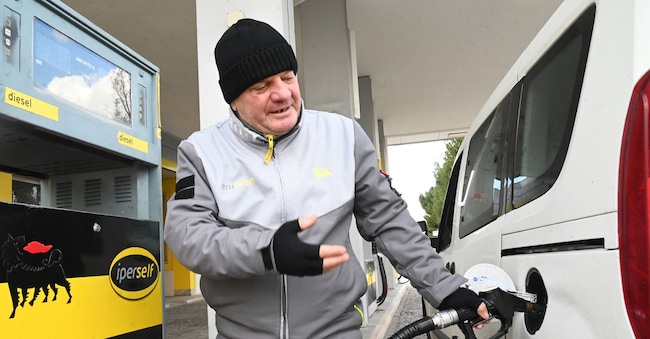
Here the bad news concerns the 16.6 million Italians who own cars powered by diesel. As of today, Thursday 1 January, the realignment of excise duties desired by the government has been triggered, with a taxation increase of 4.05 euro cents per litre for diesel, which will bring into the state coffers a revenue increase of 552 million euro in 2026. If 22% VAT is also taken into account, a 50-litre tankful of diesel will therefore cost EUR 2.47 more from next January than it does today, resulting in a higher annual outlay, assuming two tankfuls per month, of EUR +59.3 per car. If the 1.5 cent increase triggered last May is also taken into account, the total price increase is 3.38 euro per full tank, +81.1 euro per year. The manoeuvre that has just been approved provides for a similar reduction in excise duty on petrol, but the reduction, Codacons observes, risks remaining only on paper: as already observed in May, when the excise duty was increased by 1.5 euro cents, the price of diesel at the pump immediately rose, while for green fuel, despite the 1.5 cents reduction in excise duty, the reductions were minimal.
Meanwhile, Mimit points out that the fall in average fuel prices at the pump that began on 26 November last continues, 'a drop that is particularly significant because it coincides with the Christmas holiday period': the priceof petrol is 'at its lowest level since October 2021'.
Travelling on the motorway will cost more
From January motorway tolls will also increase, with a tariff adjustment for inflation that will be 1.5 per cent. The increase is the consequence of a decision derived from the determination of Art, the transport authority, legitimised by the ruling of the Constitutional Court. The path leading to this outcome started a long way back and was resolved last October when the Constitutional Court in fact determined the legitimacy of the tariff increases repeatedly blocked by the executive starting from 2020, sustaining that the 'provisions that postponed the terms for the adjustment of motorway tolls for the years 2020, 2021, 2022 and 2023, pending the updating of the economic-financial plans, are constitutionally illegitimate because they are in contrast with Articles 3, 41 and 97 of the Constitution'. In fact, the judges upheld the appeal of the Council of State, which complained of the violation of the freedom of enterprise and social utility of two decrees that postponed the terms for the adjustment of motorway tariffs for the years 2020 and 2021. Consequently, it also deemed illegitimate the stop to increases for the following two-year period. The Council of State had in turn been called upon to rule on the appeal, by a motorway concessionaire, of two notes of the Ministry of Infrastructure and Transport that had not recognised the tariff adjustments for 2020 and 2021. From a strictly legal point of view, the Court gave an account of the complex factual and regulatory framework on the subject, which "today sees attributed to the Transport Regulatory Authority the competence both to define the criteria for setting motorway tariffs and tolls, and to express an opinion, with regard to these profiles, on the updates to the motorway conventions". The consequence is therefore that as of 1 January 2026, for all motorway concession companies for which the procedure for updating the relevant Pefs on the managed toll network is underway, there will be a tariff adjustment of 1.5%, equal to the planned inflation index for 2026.


