

Do 5G masts increase the risk of brain cancer? What does the science say?
The team of doctors and fact-checking experts from the National Medical Association addresses the main health concerns

Key points
Fifth-generation mobile phone masts, known as 5G, are the subject of much concern. Alarming claims are circulating on social media linking them to brain tumours and other serious illnesses. Science, however, tells a different story: the electromagnetic fields emitted by 5G fall into the category of non-ionising radiation, meaning they do not have enough energy to damage DNA. To mark World Brain Tumour Day, let’s try to shed some light on 5G and health.
Are 5G waves as dangerous as X-rays?
No, and the difference is fundamental. Radiation is divided into two categories: ionising radiation, such as X-rays and gamma rays, and non-ionising radiation, such as the radio waves used by mobile phones, Wi-Fi and 5G masts. The former have enough energy to break the chemical bonds in DNA, and are therefore a proven health risk if one is exposed to them in excess. The latter do not possess this ability: their energy is too low to alter biological molecules (we discussed this in depth in the factsheet ‘Do microwaves, mobile phones or Wi-Fi cause cancer?’)
5G masts emit radio waves at frequencies ranging from a few hundred million to around 27 billion oscillations per second. These types of waves are well known to scientists: similar effects have been studied for decades in connection with previous generations of mobile networks. The only effect that radio waves have on the body, at sufficiently high levels, is a slight warming of the tissues. However, the levels to which we are exposed in everyday life are much lower than those required to produce even this effect.
There’s an aerial on the roof of the building opposite. Should I be worried?
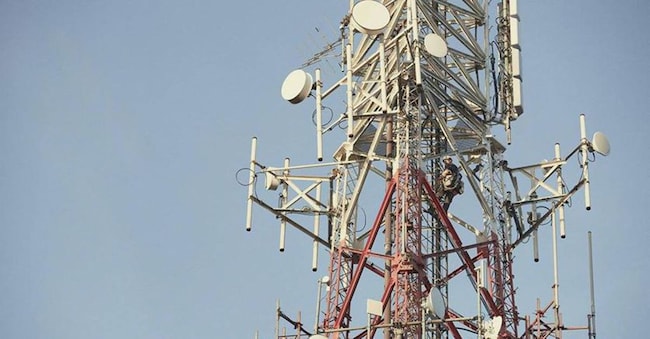
This is the most widespread concern amongst the public, and it is understandable. However, it is worth understanding how exposure actually works. Mobile phone masts – the ones we see on the roofs of buildings, on pylons or on poles – mainly radiate the signal towards the horizon, to cover an area on the ground. The electromagnetic field, however, decreases very rapidly with distance: even just a few tens of metres from the mast – the typical distance between one building and the one opposite – the measured levels are usually a small fraction of the legal limits, which are already very conservative. The regional environmental protection agencies (ARPA) carry out systematic measurements across the region and verify compliance with these limits. Anyone with concerns about an antenna near their home can request an assessment from their local ARPA.
An important – and sometimes counterintuitive – fact: mobile phone masts are not the main source of exposure to electromagnetic fields. Instead, it is the mobile phone we hold in our hand or near our ear, because it is just a few centimetres from our body. When you move further away from a mast, the mobile phone has to transmit at a higher power to maintain the connection. For this reason, having many masts spread across the area – rather than just a few – paradoxically reduces the power emitted by the phones themselves.

