
Doctor, is it true that

Doctor, is it true that I can wear contact lenses at the seaside and in the swimming pool?

The team of doctors and fact-checking experts from the National Medical Association addresses the main health concerns
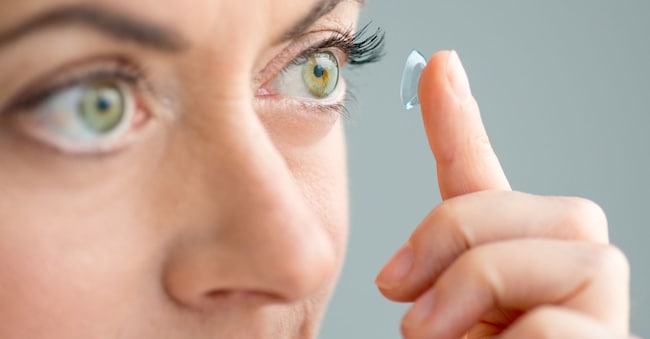
 (Adobe Stock)

4' min read

Translated by AI
Versione italiana

4' min read

Translated by AI
Versione italiana

Contact lenses are among the most widely used medical devices in the world. With the arrival of the warmer months, many people wonder whether it is really risky to go for a swim in the sea or a pool without taking them out. The experts’ answer is clear: water and contact lenses must not come into contact. Understanding why helps you make more informed choices, especially when you’re on holiday and would prefer not to wear glasses.

Doctor, is there any risk associated with sea or swimming pool water if I wear contact lenses?

Swimming goggles left by the poolside are a safer alternative to contact lenses when swimming. The main problem is that water – any water – is not sterile. It contains various types of microorganisms which, if they come into contact with the eye, can cause infections. Soft contact lenses, in particular, become misshapen and swell when in contact with water, and may stick to the cornea, causing minor abrasions. These micro-lesions make it easier for germs to enter the eye.

Loading...

Of all the microorganisms found in water, the most dangerous for contact lens wearers is a parasite called Acanthamoeba. It is found in lakes, the sea, swimming pools and even tap water, and can cause a serious form of corneal infection known as Acanthamoeba keratitis. A systematic review and meta--analysis published in 2025 in the journal *Ophthalmology*, which analysed 105 studies conducted between 1987 and 2022, estimates that in 2023 there were approximately 12,950 cases of this infection worldwide [3]. Between 85% and 90% of cases affect people who wear contact lenses.

Despite the documented risks, contact lenses are frequently exposed to water during everyday or leisure activities: a literature review published in 2019 highlighted that this is partly due to a lack of awareness amongst contact lens wearers, but also to conflicting messages from different organisations and the widespread use of images of water in marketing materials for these devices, which can cause confusion.

Doctor, but if the swimming pool is chlorinated, isn’t the risk lower?

A hand holding a contact lens next to a lens case, symbolising the correct handling and storage of lenses. Chlorine reduces the number of microorganisms in the water, but it is not enough to eliminate the risk. When environmental conditions become unfavourable – such as exposure to disinfectant chemicals – Acanthamoeba is able to transform into a dormant form, the cyst, which has a double-layered wall and is resistant to disinfectant treatments. This means that even in a well-maintained swimming pool, the parasite can survive and come into contact with the contact lenses.

Seawater, for its part, presents a further mechanical problem: it has a different salt concentration to that of tears, which means it can dehydrate soft lenses, causing them to shrink and making them difficult to remove. This causes abrasions to the cornea which, as we have seen, make infections more likely [1]. Sand and particles suspended in seawater can also accumulate under the lens, exacerbating the irritation.

Doctor, is Acanthamoeba keratitis really that serious?

It is a rare but very serious infection. At first, the symptoms may resemble those of a common eye irritation: sensitivity to light, a sensation of a foreign body in the eye, and slightly blurred vision. This is precisely why diagnosis is often delayed, giving the parasite time to penetrate deep into the cornea and reach the corneal nerves, causing very severe pain. Receiving treatment within 14 days of the onset of symptoms is one of the factors that most influences the final outcome.

In the most severe cases, when medical treatments are not sufficient, a corneal transplant may be necessary. In Italia, according to data presented at the 20th Congress of the Italian Society of the Cornea, Stem Cells and the Ocular Surface in June 2022, there are an estimated 400 or more cases of Acanthamoeba keratitis each year, and this figure is rising steadily. Of these, between 12% and 50% of cases do not respond to medical treatment and require surgery.

Doctor, what specific steps should I take to protect my eyes in summer?

A pack of daily disposable contact lenses in a blister pack, a medical device for vision correction. The basic rule is simple: remove your lenses before swimming in the sea, in a swimming pool, or even in the shower. This is also explicitly recommended by the Italian Ministry of Health, which, in its decree of 3 February 2003, advises against wearing contact lenses whilst swimming in the sea or a swimming pool, or whilst showering in public places. Anyone who wants to see clearly in the water can use swimming goggles with prescription lenses, a safe and effective solution.

If, for any reason, water does come into contact with your contact lenses, it is best to remove them as soon as possible, wash your hands thoroughly before touching them and, in the case of daily disposable lenses, throw them away and replace them. Reusable lenses must be disinfected using the appropriate solution [1]. If, in the days that follow, you experience redness, a burning sensation, pain, a feeling of a foreign body in the eye or blurred vision, it is important to consult an optician without delay.

Read the full factsheet on the Fnomceo’s dottoremaeveroche website

Copyright reserved ©
Loading...

Brand connect

Loading...

Newsletter

Notizie e approfondimenti sugli avvenimenti politici, economici e finanziari.

Iscriviti