

Doctors: professional partnerships are ‘useful’ for local healthcare
Healthcare providers in community care homes would have a guaranteed supply of professionals, whilst medical staff would receive tax benefits

Key points
Health Minister Schillaci has recently highlighted how the profession of general practitioner has gradually lost its appeal. The bureaucratic burdens imposed, professional isolation and lack of career prospects have driven young doctors away. Those who remain are holding the fort, often heroically, upholding a model that is no longer suited to current healthcare needs.
Schillaci's proposal
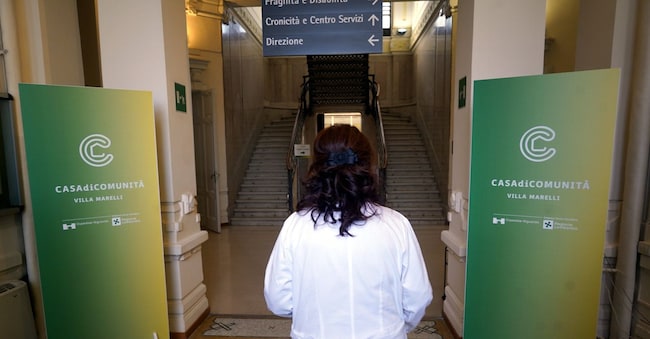
This highlighted the need for a reform proposal that does not do away with the role of the GP, but rather unlocks their potential. The aim is to restore the general practitioner to the centre of the system as the ‘guardian of citizens’ health’, no longer merely as a manager of acute care but as a key player in prevention, the management of chronic conditions and lifestyle education. To achieve this, according to the minister, an appropriate organisational framework would be required, particularly given the now well-established effectiveness of community care homes.
However, the trade unions representing general practitioners immediately rejected the plan to reorganise local healthcare services. According to the Federation of General Practitioners, the reform risks dismantling a model which, on the contrary, continues to deliver positive results for Italian citizens. The unions object, in particular, to the proposal to make general practitioners employees of the National Health Service, taking a negative view of the ‘centralised and bureaucratic’ model, especially given the impact on inland areas and the most vulnerable parts of the country. The climate of institutional and professional uncertainty raises doubts about the desire to superimpose the proposed reform onto existing contractual frameworks, ‘starting with the ACN’. For some, the real aim of the measure was not to address the staffing needs of local healthcare facilities, but rather to fundamentally alter the legal status of the agreement.
Partnerships between professionals
So, why not aim for a national collective agreement that sets out the duties and responsibilities of healthcare professionals? And why not sign an agreement that implements Ministerial Decree 77, allowing general practitioners to work in community care homes through their professional associations? One possible solution could be the establishment of professional partnerships. This corporate model complements existing ones, such as the group practice.
The key principle underpinning the regulation of professional partnerships is the distinction between the practice of the profession and the actual provision of professional services: the practice of the profession may be carried out not only individually, but also in a collective and joint capacity. The performance of the service is reserved exclusively for the qualified professional as a natural person. Therefore, whilst the practice of the profession may also be carried out in the form of a company, which allows for the possible participation of non-professional or investment partners, the performance of the assignment must necessarily be carried out by qualified professionals.
Greater control and assurance
The “shortage” of doctors has forced an increasing number of public healthcare facilities to turn to professionals who are needed both to cover sudden absences and to ensure that care is provided, even though they do not possess the necessary skills and specialisation. And, even more seriously, they are not subject to verification of the qualifications they have provided, as highlighted by the President of the Fnomceo, Filippo Anelli, himself.

