

Donald Trump, there is an official farewell to the WHO: the US prefers partnerships even in the fight against viruses and bacteria
The new diplomacy of direct and bilateral agreements 'results-oriented' and aimed at 'global health security': thus in a lengthy j'accuse the United States leaves the World Health Organisation one year after the president's announcement with the order

Key points
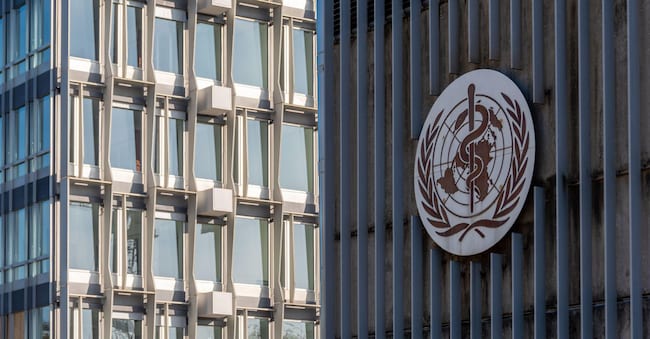
"Today, the United States withdrew from the World Health Organisation (WHO), freeing itself from its constraints, as promised by President Trump on his first day in office." with this joint statement published on the US Department of Health and Human Services portal, Secretary of State Marco Rubio and Secretary of Health and Human Services Robert Kennedy - who in the last year has distinguished himself for having 'reset' the legendary Centers for Disease Control and Prevention (CDC) and for a series of blows to the internationally consolidated vaccination culture in particular - mark the official farewell of the United States to the body set up to protect world health and of which it had been the first (since 1948) and main supporter up to Executive Order 14155. The one with which, on the very day he took office in the White House for his second term, the Tycoon cut ties with the WHO, opening a series of painful rifts with the UN and its Agencies. And - as per the treaty of entry into the organisation - 12 months later it is divorce.
The slammed door
Trump's exit," Rubio and Kennedy explain in their joint memo, "is in response to the WHO's failures during the Covid-19 pandemic and is intended to remedy the damage these failures inflicted on the American people. According to the two ministers, 'like many international organisations, the WHO has abandoned its core mission and repeatedly acted against US interests. Although the US was one of the founding members and the main funder of the WHO," the j'accuse, "the organisation has pursued a politicised and bureaucratic agenda, driven by nations hostile to US interests. In doing so, the WHO obstructed the timely and accurate sharing of critical information that could have saved American lives and then concealed those failures under the guise of acting 'in the interest of public health''.
Point of no return
Trump had in fact walked out of the WHO by slamming the door a year ago, pointing the finger at the difference in treatment with China, which, according to the president, although populated by 1.4 billion people, 300% more than the US, had until the last minute contributed about 90% less than the US. A disproportion from which the US would have felt 'defrauded'. "Even when we had already left the organisation," Rubio and Kennedy again attack, "the WHO has tarnished and destroyed everything America has done for it. The WHO refuses to hand over the American flag that had been hung in front of it,' they continue, 'claiming that it did not approve our withdrawal and, in fact, stating that we owe it compensation. From our days as its main founder, main funder and main supporter until today, our last day, the insults to America continue. From now on, US engagement with the WHO will be strictly limited to implementing our withdrawal and safeguarding the health and safety of the American people. All US funding and staffing for WHO initiatives has ceased'.
A (former) strategic partnership
Since its inception, the World Health Organisation has awarded over $885 million in grants, mobilising an additional $6 billion for investments in pandemic prevention, preparedness and response in 75 countries. In this and many other scenarios, the US has played a role as a 'strong supporter of global security', as the organisation itself hastened to declare at its January 2025 announcement. The US had always been the main supporter of the WHO, contributing more than 15 per cent of the entire funding - $1.3 billion for 2022-2023 and $958 million for 2024-2025 out of a total WHO budget of $6.5-6.8 billion - and providing offices, databases and researchers. The WHO - which in fact had as many as 68 collaborating centres in the US - had immediately after Trump's exit declared itself 'grateful to all US government institutions that contribute funding and expertise'. Until the abrupt interruption, in short, the collaboration was strategic: so much so that the US and the WHO had recently extended to 2028 the Agenda for Global Health Security in support of the International Health Regulations, aimed at supporting one hundred countries
"Alone against bacteria"
The US promises to continue 'leading the world in public health, saving millions of lives and protecting Americans at home'. Not only that: against all evidence of the impossibility of stopping viruses and bacteria at a state's borders, the bold promise is to 'prevent infectious disease threats from reaching our shores'.

