
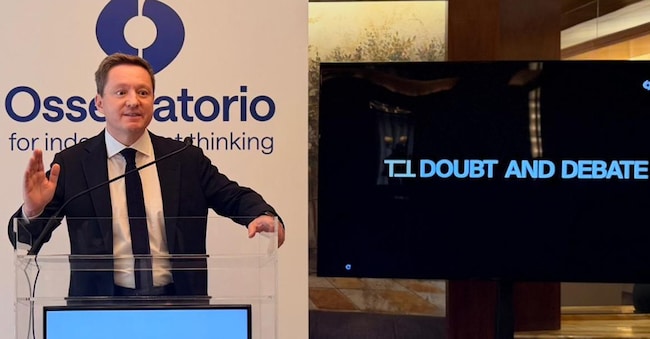
Doubt and Debate: the second edition of the school project gets underway
Training in digital technology and the media is at the heart of the Osservatorio for Independent Thinking project. This runs alongside the ‘Il Quotidiano in classe’ project

Key points
The Financial Times, The Economist and the Süddeutsche Zeitung are the new names set to take part in the second edition of “Doubt and Debate”, the media training project run by the Osservatorio for independent thinking. Joining them are the major Italian and international newspapers that took part last year, including *Corriere della Sera*, *Il Sole 24 Ore*, *The New York Times* and *The Wall Street Journal*.
The content of these and other publishing projects will be presented to secondary school pupils and discussed in class as part of an educational programme designed to help them ‘think, reflect and ponder world events for themselves’, says Andrea Ceccherini, president of the Observatory. ‘We want to train young people to think for themselves, so that they are free from conditioning, manipulation and propaganda,’ he promises.
Italian and international students
The Observatory’s projects continue on an international scale, 27 years on from the launch of the ‘Quotidiano in classe’ initiative, which, the president promises, ‘is being continued and will go on because it still involves tens of thousands of Italian pupils’. That first project brought printed newspapers into schools, but new needs have now emerged: “We want to use the language of young people, which today is largely visual,” continues Ceccherini.
For this reason, ‘Doubt and Debate’ was launched last year, enabling the project to extend its reach to multimedia and the international arena: “Today, the project involves Italian, Spanish and German students, but trials are already underway in France, Portugal and the Netherlands,” for what “within three years will become the leading project in Europe”, says Ceccherini. The team of editorial partners is “a sort of Champions League of quality journalism in the free Western world”, which, alongside the major newspapers already mentioned, also includes CNN, The Washington Post, El País, Cinco Días, ABC, La Vanguardia, SER, RAI, Mediaset, La Repubblica and Il Giornale.
Lessons for over 150,000 students
Last year, the “Doubt and Debate” lessons involved 6,200 classes comprising 150,000 pupils, and for this edition “we have already far exceeded the previous figures”, even though registrations are still open. These lessons, delivered by teachers and schools that have chosen to take part, will focus on raising awareness and providing education on technological issues. This so-called ‘tech literacy’ will cover the responsible use of generative artificial intelligence and introduce topics such as ‘echo chambers’ (digital spaces where people’s beliefs feed into themselves) and online disinformation.

