The parliamentary hearings

DPFP, Giorgetti: new flexibility to help families; if the EU says no, it is wrong. Hyper-depreciation extended and strengthened

The Minister for the Economy: we will continue to apply the 5 per cent flat tax on contract renewals. The budget bill is expected to be approved by the Council of Ministers by the 20th, but discussions with the EU on the energy and spending clause could take a few more days.

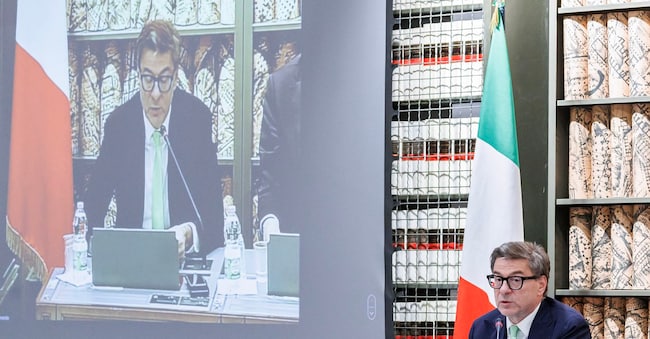
Photo by Roberto Monaldo / LaPresse LAPRESSE

6' min read

Translated by AI
Versione italiana

6' min read

Translated by AI
Versione italiana

‘We would like there to be the option of using the NEC to meet the needs of families who have experienced this sort of shock. If Europe says no, that’s fine – let the families just put up with it – well, in my view, that is the wrong choice.’ This was stated by the Minister for the Economy, Giancarlo Giorgetti, whilst responding during a hearing on the DPFP. “We would like – not because the government wants it, but because you are all asking me – for something to be done for these families. I do not know the outcome; negotiations are currently underway with the EU Commission’s offices.”

Hyper-depreciation is to be extended and strengthened

In his replies to questions from MPs, the minister went on to clarify that the hyper-depreciation scheme will not only be extended but also further strengthened. ‘We believe that, now that Europe has led us to discontinue the Transition 4.0–5.0 scheme, it is the most powerful tool for promoting investment.’

Loading...

The aim is to continue applying the 5 per cent flat tax to contract renewals

Giorgetti said that ‘as regards purchasing power, we have implemented this measure, which has been a great success: the 5 per cent flat tax on contract renewals. Obviously, there is no cost-of-living adjustment or other mechanisms that in the past allowed inflation to be fully offset’. “On the private sector front, we have implemented that measure and will continue –” said Giorgetti – “to support it in some way, because we are convinced that only by joining forces – naturally, with employers, who must also increase wages, and the tax revenue this may ultimately generate for the State – will we find a way to respond to this kind of wage crisis.”

Contributions from banks and energy companies? ‘Those who are able to contribute will do so’

“Anyone who is in a position to contribute at this time will do so,” replied the minister on the sidelines of the hearing, when asked about the possibility of seeking a contribution from banks and energy companies as part of the budget.

Budget bill by 20 October, but it could be delayed

“We will try to have it ready by 20 October, but this matter” concerning NEC “is one that objectively affects us,” the minister replied when asked whether the budget bill would reach Parliament by 20 October. When asked whether it might go beyond that date, the minister confirmed: “It could go beyond” in the Council of Ministers. “I would like to present a budget bill with clearly defined parameters,” he added, “if I don’t know which way to go, it’s a bit more complicated. Discussions with the Commission are ongoing; there will be a European Council meeting this week, and perhaps the leaders will discuss it too.”

Honouring commitments and the country’s credibility

“Italia has demonstrated in recent years that it is able to honour the commitments it has made under the new European fiscal rules and that it is committed to maintaining a sustainable path for public finances, without, however, failing to highlight certain unresolved issues within the new economic governance framework, which could only come to light through its practical implementation,” the minister pointed out. The DPFP (Public Finance Policy Document) forecasts a ‘temporary rise in the debt-to-GDP ratio’. Giorgetti emphasised that ‘the country’s credibility, particularly at a time like this, is an asset that must be preserved with, hopefully, the broadest possible consensus amongst parliamentary groups’. And, in response to questions from MPs, Giorgetti replied that ‘due consideration is not being given – and I say this in all honesty – to the difficulties of planning in a scenario that continues to change and, unfortunately, is changing for the worse. In this context, perhaps too little attention is being paid to the credibility the government has built up over the past four years, which enables us to weather the storm on a more solid footing’.

The golden age of unregulated deviations is over

“We are no longer in the golden age,” said the minister, “when deviations could be made without any problem because there were no rules. Let us not draw comparisons with an era when the Stability Pact did not exist.”

Energy and defence resources for investment and employment

Giorgetti was keen to point out that ‘the increased funding for defence and energy security will be allocated, to a significant extent, to capital expenditure, thereby supporting investment and employment and, consequently, real disposable income and household consumption’.

A wide range of proposals under discussion regarding energy costs

“We are doing our best, step by step, depending on how this matter – which is quite significant within the context of the budget – develops. So, depending on how the NEC’s energy policy is structured and the flexibility they grant us, there will be certain measures – or perhaps other measures. We have quite a wide range of proposals that we are currently discussing,” said Giorgetti.

Nec’s net deficit remains consistently below 3 per cent, if the end of the procedure is confirmed

‘It is important to emphasise that, net of the effects arising from the activation of the safeguard clause, the deficit would remain consistently below 3 per cent of GDP throughout the entire forecast horizon: if – and this is a big ‘if’ – this were confirmed in the forecast update next April, this circumstance would – together with the notification of a deficit below 3 per cent in 2026 – allow the excessive deficit procedure to be closed”, said Economy Minister Giancarlo Giorgetti during a hearing on the Dpfp, which was drawn up at a time when ‘discussions with the European Commission had not yet made it possible to definitively define the scope of the measures attributable to the energy security clause. On 8 October, the Commission took a further step by adopting a recommendation to the Council regarding Italia: it highlights that the limited increase in the deficit and debt linked to the activation of the clause is compatible with maintaining the sustainability of public finances in the medium term’.

Loading...

The figures confirm the trend towards financial consolidation

‘The data contained in the document confirm the path towards the consolidation of public finances’, whilst taking into account the significant risks. The ‘forecast is necessarily subject to changes in certain external variables’ that are beyond Italia’s control. Giorgetti pointed out that these ‘external risks’ could affect growth and public finances.

Growth in line with or exceeding estimates, thanks to a cautious approach

“In recent years, actual growth has remained in line with, and in some cases exceeded, the forecasts set out in previous government documents, confirming that the forecasting approach is characterised by prudence,” Giorgetti pointed out.

Governance issues regarding inflation highlighted to the EU

“Italia has shown that it is able to honour the commitments it has made, whilst still highlighting certain unresolved issues within the new governance framework – issues that could only come to light through practical implementation,” the minister pointed out, referring to the call for attention regarding the rise in inflation compared with the forecast. “We are confident that, with the appropriate technical analysis, it will be possible to interpret the rules in a way that takes these factors into account,” he added. “We have chosen to play an active role in the debate, in which several Member States have joined forces in calling for the recognition of flexibility consistent with the current context, to be used selectively and responsibly.”

Consolidating the accounts is essential for market confidence and selective intervention

According to Giorgetti, there are “two essential requirements: fiscal consolidation to restore market confidence, and the use of available scope for targeted measures” for households, workers and businesses.

Istat paints a more favourable picture for the economy

Giorgetti went on to point out that the recent revision of the national accounts by Istat ‘paints a more favourable picture of the performance of the Italian economy’.

Pressure on interest expenditure, strengthening the primary surplus

‘Changes in the international landscape and external factors are reflected above all in interest expenditure, which is forecast to rise gradually over the forecast period, making it all the more important to maintain the credibility of the public finance path and to strengthen the primary surplus.’

The budget measures will be finalised once the EU process regarding the clause has been concluded

“The European procedure for approving the request to activate the national safeguard clause, as set out in the regulation on the preventive arm of the new governance framework, has not yet been finalised, as we are awaiting the Council’s formal approval: it is in this context and within the framework of this procedure that the policy content of the Dpfp must be interpreted”, said Economy Minister Giancarlo Giorgetti during the hearing. “The composition of the budget will therefore be finalised once the European procedure has been completed, and details will be set out in the Budget Policy Document, which the Government will shortly submit to Parliament and the European authorities.”

Consultation with Parliament essential for finalising the budget

According to Giorgetti, ‘discussions with Parliament will therefore be an essential part of the process leading to the finalisation of the next Budget Bill’

Copyright reserved ©
Loading...

Brand connect

Loading...

Newsletter

Notizie e approfondimenti sugli avvenimenti politici, economici e finanziari.

Iscriviti