
Drones for the urgent delivery of medicines and test tubes: the trial at Niguarda Hospital
Using drones operated by professional pilots, urgent deliveries are completed within a matter of minutes

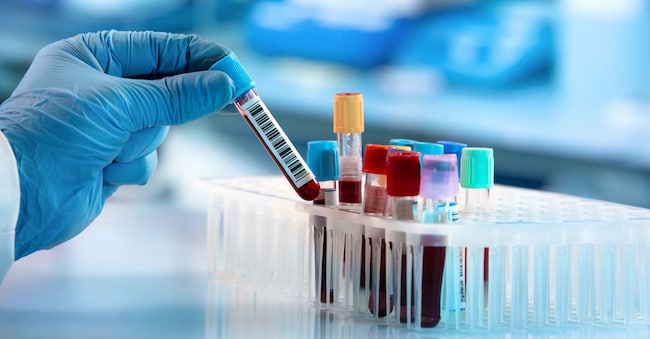
The legacy of the last Winter Olympics could change the lives of thousands of people. Niguarda Hospital in Milan is currently trialling a system for the urgent delivery of medicines and test tubes using drones, and the trial stems from Niguarda’s experience as an Olympic hospital for the Milan-Cortina 2026 Winter Games. This experience has become a ‘legacy – a truly positive legacy that will revolutionise the transport of lightweight medical supplies in the near future’, commented Alberto Zoli, Niguarda’s special commissioner and Lombardy’s medical care manager for the Games.
How do urgent drone deliveries work?
Firstly, the hospital department requiring the service must contact the Command Centre, the operations centre based at Niguarda which is responsible for the comprehensive, real-time coordination of emergencies, patient flows and routes within the hospital. The Command Centre immediately initiates transport by drone: once the sample has been prepared and loaded onto the drone, professional pilots activate the drone – via remote control – and monitor its journey using ‘BVLOS’ mode – beyond visual line of sight. Delivery thus takes place within a few minutes. Zoli emphasises that a project of this kind requires ‘authorisation from the Italian Civil Aviation Authority (ENAC)’, which has demonstrated its support from the outset ‘through the commitment of its Central and Regional Directorates’, as well as collaboration with the Prefecture of Milan. Also essential are ‘the technology and expertise required to pilot aircraft in complex environments’.
Organising light transport using drones makes it possible to increase speed and reduce the risks associated with road transport, as part of a programme of investment in advanced aerial mobility that has been underway for years. This trial also represents the first step towards developing a system for the ‘regular and safe transport of medicines and biological samples between hospitals and healthcare facilities’, as explained by Giulio Segurini, founder and CEO of STRADAai. This will be made possible through the creation of digitally managed airspace, known as U-space corridors.
The nearest target?
“Expanding the drone’s operational range to make light transport a reality even in mountainous areas. We expect to see the first concrete results as early as mid-2027,” says Alberto Zoli.

