
Drought, emergency in the South: yields halved in agriculture
In Apulia, 50 per cent of olive production is compromised, in Sicily half of the wheat will be missing and in Basilicata threshing stops

3' min read
3' min read
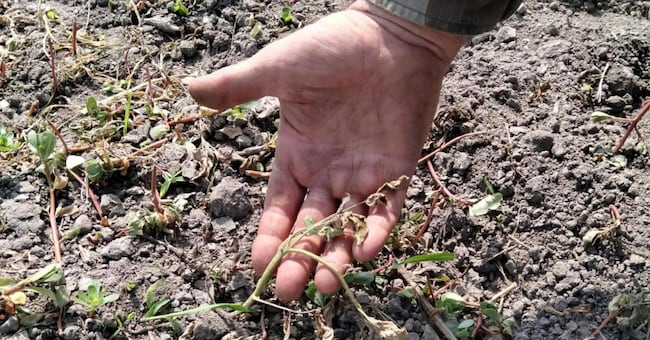
Olive production in Apulia reduced by 50 per cent. Sicily's wheat halved. Farmers in Basilicata who do not even try to thresh, so as not to incur unnecessary costs. While in Abruzzo, those who sowed maize for animal feed could lose their entire harvest this year. On the agricultural front, this is just a first assessment of the drought that has split Italy in two , with southern Italy hit by the absence of rain and a dramatic shortage of water reserves. According to Anbi's data, the red alert concerns over 50% of the territories in Sicily, Apulia and Basilicata, the coastal areas of Calabria and Sardinia and some stretches of the Apennine ridge and the Adriatic strip. "What is being recorded in Sicily, and which is progressively spreading from the South to central Italy, has worse characteristics than the past, great droughts in the North," summarised the president of Anbi, Francesco Vincenzi. "Never had it happened that we had to slaughter animals on farms due to the impossibility of feeding and quenching their thirst.
The figures from The European House - Ambrosetti also speak for themselves: in the European ranking of water shortages, Italy is now the fourth country in terms of water stress. Only Belgium, Greece and Spain have worse values. And the arrival of the Minos anticyclone, which is sweeping Italy from North to South, risks making things even worse.
The case of Sicily is the most striking: the situation is so serious that the Basin Authority is assessing the resumption of water withdrawals from nitrate-contaminated wells, after water purification. According to Coldiretti, in addition to animal husbandry,the worst affected production is wheat, with an estimated drop of at least 50%, causing damage to the island's agricultural economy of about 200 million euros. The drought is also impacting honey (-95%) and national organic production, since Sicily is the second region for organic cereal cultivated areas.
The drought casts gloomy shadows over the national olive growing campaign. In Apulia, Italy's main olive oil producer, Coldiretti calculates a 50% drop in olives, with further drops expected in the coming weeks. The lack of water causes progressive necrosis in the soils; in addition, the high temperatures reached between April and May have compromised the extraordinary flowering promoted by the mild climate, preventing budding.
In Basilicata the worst situation is that of wheat, with farmers giving up threshing because the damage caused by the drought to cereal crops is up to 90%, and harvesting what little remains would only generate additional costs. The collapse in wheat yields in the South is such that, according to Coldiretti, in many areas it is as much as 70%. Among cereals, alfalfa and fodder, but also fruit, vegetables and even grapes from the grape harvest, the drought in the South has already burnt 33 thousand jobs in the fields this year. "Those who sowed maize this year could be gambling their entire harvest," recalled the president of L'Abruzzo in Agris, Marco Finocchio, "maize for animal feed is fundamental, but it cannot be grown in such a dry climate, let alone with empty reservoirs.


