Weather emergency

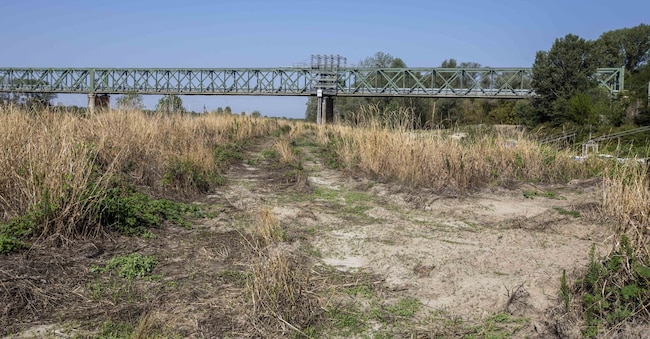
Drought in the north; alarm over the Po’s water level dropping below zero; the Adige has enough water for 10 days; Lake Garda’s water level is also falling

The situation is critical in Veneto, where a state of emergency has already been declared. Both river flows and rainfall levels remain below average.
by Giorgio dell'Orefice

 Imagoeconomica

3' min read

Translated by AI
Versione italiana

3' min read

Translated by AI
Versione italiana

A few thunderstorms are not enough to resolve a severe water shortage. And if we are to avoid further damage, we must not let our guard down. This is the warning issued by the National Association of Consortia for the Management and Protection of the Territory and Irrigation Waters (ANBI) following the spell of bad weather over the past few days, amidst a sweltering start to the summer.

Critical situation in Veneto; state of emergency declared

The situation in northern Italia, and in the north-east in particular, remains critical. The President of the Veneto Region, Alberto Stefani, has signed a declaration of a regional state of emergency. This decision was taken in light of the rainfall deficit that began in March (-21 per cent), worsened in April and remains below the historical average in May.

Loading...

In this regard, the president of ANBI, Francesco Vincenzi, has sent a request to convene the steering committee for the Po river basin to the Special Commissioner for the Water Emergency, Fabio Ciciliano (who is also Head of the National Civil Protection Department), as well as to the Secretaries-General of the relevant district river basin authorities (“Po River Basin” and “Eastern Alps”).

Avoiding the mistakes of 2022: a few storms made people forget the crisis

We cannot repeat the mistake of 2022,” explained Vincenzi, “when a few storms were enough to remove the drought emergency from the political agenda. In fact, a few weather events – however violent and damaging they may be – are not enough to suggest that a serious water shortage, which is hampering the most important region for the Italian agri-food sector, has been resolved.”

Stopping the salt wedge from moving upstream along rivers

“It is above all at times like these,” added the Director-General of ANBI, Massimo Gargano – “that the need for a consultation forum becomes clear, to prevent the areas downstream of the river from being disproportionately penalised, as is currently the case in the Polesine Delta, which has now been contaminated for tens of kilometres by the rise of the saline wedge.”

A saltwater intrusion is a phenomenon that is particularly harmful to the river ecosystem; it occurs when river flow is very low, allowing (sometimes for kilometres) of river channels by seawater, which disrupts the balance of the river habitat.

Optimising water use along the course of the River Po

ANBI’s request is in line with that of the President of the Veneto Region, Alberto Stefani, who, after declaring a regional state of emergency following the abnormal hydrological and hydraulic conditions observed across the region – particularly in the Polesine area – called for an urgent meeting of the Permanent Observatory on Water Use in the Po River Basin, in order to reassess the severity of the water crisis and the further measures to be implemented to mitigate it.

Average rainfall continues to be below normal

The decision was taken in light of insufficient rainfall: so far this hydrological year, there has been a deficit of -28 per cent, equivalent to almost 2.4 billion cubic metres of water. The flow rates of the major rivers in the Veneto region are significantly below historical averages: the Piave, Brenta and Po are down by 23 per cent; the Adige by 21 per cent; and the water level of Lake Garda is also falling significantly.

“The rainfall recorded over the past few hours provides temporary relief, but cannot be regarded as a solution to the problem,” says Carlo Salvan, President of Coldiretti Veneto. “The situation on the Po remains critical and water flows continue to be insufficient to ensure the system’s stability. Structural measures and a shared approach to water resource management are needed: this is what we requested at a recent meeting with the Special Commissioner for the Water Emergency, Mr Ciciliano, whom we hope will be granted the necessary powers and resources to also launch the projects of the land reclamation consortia. The water emergency – concludes Salvan – must spur the accelerated construction of the infrastructure needed to increase the region’s water retention capacity, starting with the Multifunctional Reservoir Plan.”

Copyright reserved ©
Loading...

Brand connect

Loading...

Newsletter

Notizie e approfondimenti sugli avvenimenti politici, economici e finanziari.

Iscriviti