
That is why, despite the rain, northern Italia is suffering from drought
Land reclamation consortia: the lack of reservoirs is taking its toll, with just 11 per cent of rainfall being retained. Between March and May, one billion cubic metres ended up in the sea

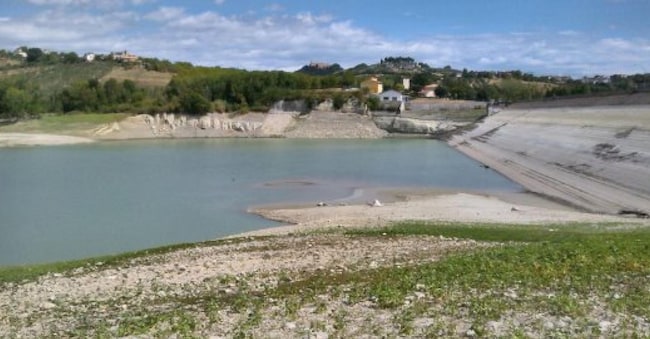
Despite a winter characterised by extreme weather events and torrential rain, Italia – particularly the north-east of the country – is currently suffering from drought. The chronic lack of infrastructure, particularly reservoirs and storage basins, has prevented the water brought by rainfall from being stored; as a result – it is estimated – around one billion cubic metres of water flowed unhindered into the sea between March and May. This is the complaint that ANBI, the National Association of Land Reclamation Consortia, will be making today in Rome during its general meeting. ANBI brings together 141 land reclamation and irrigation consortia and manages over 19 million hectares (around 64 per cent of the country’s territory), mainly in the plains and low hills, as well as over 231,000 kilometres of irrigation and drainage channels; based on these figures, it is able to provide a real-time assessment of the country’s water resources.
One billion cubic metres of water has ended up in the sea
In Italia – as explained by ANBI – the period from last November to the present has been marked by a significant climatic anomaly involving extreme weather events, characterised by torrential rain and drought, unusual temperatures and violent storms; since 1 January, as many as 1,029 (+40%) locations have been affected by severe weather events, with an increase in anomalous meteorological phenomena: in particular, there have already been 584 incidents of exceptional hailstorms, compared with 236 for the whole of 2025, and 80 tornadoes – 10 more than last year.
Vincenzi (ANBI): reservoirs and the water network – a strategic choice for the country
“But the ongoing shortage of reservoirs,” said ANBI President Francesco Vincenzi, “has meant that much of the rainfall in the north during January and February could not be collected. This is particularly true in Veneto alone, where the agricultural sector is already struggling. This is a serious situation that must be addressed. The Multifunctional Reservoir Plan we have proposed with Coldiretti, together with improvements to the efficiency of the irrigation network, must become strategic choices for the country’s future.”
The network is only able to retain 11% of rainfall
This is a critical issue clearly illustrated by the figures, given that, with its current infrastructure network, Italia is currently only able to retain 11 per cent of the rainfall that falls on the country each year.
Not to mention that Italia spends an average of 3.5 billion a year on repairing damage caused by natural disasters, to which, for the past four years, 4 billion has been added to compensate for damage caused by drought. These figures alone should be enough to prompt investment in multi-year adaptation measures.


