
Durum wheat, production grows but cost increases weigh heavily
At the 11th edition of Durum Days in Foggia, organised by Confcooperative, the usefulness of the tool of supply chain contracts and concern about foreign competition on pasta were confirmed
by Vincenzo Rutigliano
 Aggiungi Il Sole 24 Ore
ai preferiti su Google
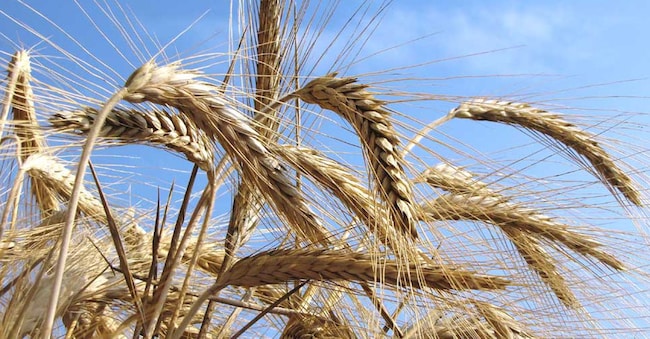
Farmers and industrialists (mills and pasta factories) are still betting on the dough wheat supply chain contracts. Ten years after their introduction, the supply chain contracts are settling down and there is an expectation of growth that should bring them, this year, far beyond the current 150-170 thousand hectares, 15% of the entire national sau of 1.3 million.
From Foggia, from the Durum Days, edition number 11 organised by Confcooperative, emerged the validity of the tool and its pluses - certainty of income for the cereal farmer, production placed on the market, practices consistent with the demands of the industry, constant supply for processing - and its ability to stabilise, also by virtue of the new ministerial regulatory interventions with the relative allocations.
The instrument, which binds the parties for three years and provides ministerial aid per hectare, must however be measured against the increase in production costs (fuels, fertilisers such as urea, passed from 300 to 800 euros) the volatility of prices (very low) and the substantial drop in the crop's profitability. In short, everyone agrees on their usefulness, as well as on the urgency of a change of pace - with adhesions that must be convinced and 'not only to obtain the ministerial de minimis,' warns Pellegrino Mercuri, President of Cia Capitanata - to make them more balanced and competitive, an objective that passes through the active and effective collaboration of the wheat-pasta chain.
Horizontal integration - to be achieved also bycreating the interprofessional table as indicated by the Pastai union, Italmopa and Confagricoltura - and that makes the supply chain competitive and helps, thanks to the protein content of the wheat to be incentivised, the final link with the defence of Italian pasta increasingly attacked abroad, "such as from Turkey," said Margherita Mastromauro, president of the Unione Pastai Food, "which is stealing market share in the Far East with a price differential compared to us of 25%, squeezing our export in the world that this year will grow by only 2% and decrease, in value, by 1%.
A difficult scenario that is somewhat offset by substantial stability in production in the 2025/2026 marketing year, with a sau that should settle at 1.131 million hectares, just a few thousand less than in 2024, with production expected to grow by 5% - according to estimates illustrated by Pasquale De Vita of Crea Cerealicoltura in Foggia - to 3.859 million tons (in 2024 there was a drop to 3.5 million) and average yields of 34 quintals per hectare.
Numbers that say that 'we are in the second year of accumulation of durum wheat stocks,' as Annachiara Saguatti of Aretè explained, 'with prices reaching their lowest since 2019. A complex scenario that adds up to a world market also in surplus in this campaign, with final stocks increasing and multi-year minimum prices in the EU and North America. Aretè's outlook on the 2026/2027 campaign is different, with EU production down 4%, so in North America, increases in North Africa and Turkey, overall stable global production and a market still in surplus.

