
Durum wheat, supply chain contracts accelerate: by 2026 they could cover one third of cultivated fields
In 10 years, the average allocation to facilitate these facilities has been 10 million, in 2026 it will rise to 40, also thanks to the NRP: in 2 years, the areas could more than double to the benefit of food security. But the share of self-supply, stuck at 60%, does not increase

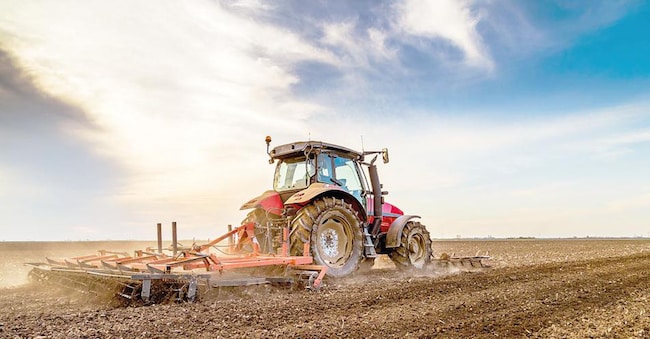
Food security, which has become strategic again in the current geopolitical crisis scenario, also passes in Italia through the alliance between farmers and industry. The instrument of supply chain contracts, created ten years ago with the dual objective of guaranteeing adequate remuneration for producers and the certainty of supplies to industry, has come to cover 15% of the national surface area planted with durum wheat, the raw material that symbolises Italian agriculture, with an increase of 11% in the last year, according to an estimate for Il Sole 24 Ore by the Consorzi agrari d'Italia (Cai), one of the major players in the marketing of wheat, which uses this instrument to convey about one third of its production.
Over the last ten years the sector contracts have benefited from an average allocation of 10 million per year,but the funds guaranteed by the NRP have accelerated in the last two years. Last December the allocation rose from 12 to 22 million and now, as announced by Minister Lollobrigida this week, there is a further doubling of contributions, with 40 million from the Coltiva Italia decree within the food sovereignty fund, to incentivise production, 'give the sector a chance to survive and allow our companies to overcome a difficult market situation', with a 'wheat price that is too low, especially in the south'.
Quality and Sovereignty
The real issue is in fact the protection of quality and the safeguarding of national production, in a context of growing tariffs now aggravated by the fertiliser alarm, also in the light of a structural deficit that can certainly be improved but is difficult to bridge. In the meantime, the increase in the quantities covered by contracts has risen, according tothe estimate quoted, to around 180 thousand hectares last year and is now potentially aiming at 400 thousand, one third of the total areas destined for durum wheat in Italy, amounting to around 1.2 million hectares.
Great success, it should be recalled, has also been achieved by the contracts on soya, pulses and maize, all financed with 25 million a year under the 300 million Coltiva Italia food sovereignty fund and all overbooked in terms of expenditure. Now the willingness to increase the funds for wheat, confirming the functioning of a tool considered central in the strategy that also inspired the new name of the ministry to incentivise national agricultural production, at a time whenthe deficit of raw materials (at 40% for durum wheat, much higher for soft wheat and soya) is also returning to the European tables where the future agricultural policy is being discussed. Without forgetting that in Italia there are, as the last Crea report indicated, one million uncultivated hectares.
"With the supply chain contracts we enhance the distinctiveness of Italian wheat and recognise the right value to the work of our farmers. The challenge today,' stressed Coldiretti President Ettore Prandini, 'is to produce ever higher quality by optimising costs, through the use of innovation, research and new technologies. Sub-irrigation, the use of drones, sensor technology, precision agriculture, and in the future also Tea, can also represent a way to increase yields: we are ready to discuss this with the entire supply chain in order to strengthen and enhance an excellence such as pasta made with 100% Italian wheat".

