

Flu: the economic cost of not getting vaccinated is close to 3 billion
Over 13 million euros in direct costs to the National Health Service and 2.86 billion for lost working days and the decline in consumption and economic activity each year. The figures released at the Siti Congress

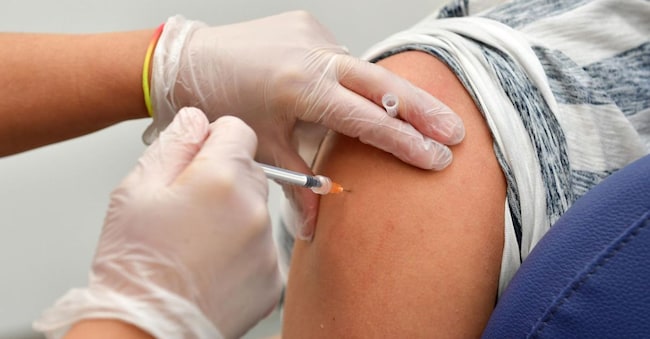
Key points
Over 13 million euros in savings for the National Health Service. These savings relate solely to visits to GPs, hospital admissions and intensive care stays that we would avoid in the coming months if flu vaccination coverage were to increase amongst those aged over 65 or those in a vulnerable condition. These are the latest figures released by Professor Andrea Marcellusi, Department of Pharmaceutical Sciences, University of Milan, and President of ISPOR, International Society for Pharmacoeconomics and Outcomes Research, analysing the difference between the current level of immunisation among at-risk groups – which stands at 52.5 per cent for 2024/2025 – and the 75 per cent target set out in the Ministry of Health’s circular.
These direct costs are in addition to the indirect costs, estimated at 2,86 billion euros a year due to absences from work and a reduction in consumption and economic activity caused by the widespread circulation of influenza viruses amongst the general population, as well as the 11,000 days of sick leave taken by healthcare professionals, which are putting a strain on the entire National Health Service.
Economic savings and reductions in direct and indirect mortality
‘If we were to reach the vaccination coverage target, in addition to the economic benefits, we would see nearly 2,000 fewer ordinary hospital admissions (which account for 70 per cent of expenditure) and 145 fewer admissions to intensive care. Furthermore, taking into account both direct and indirect mortality, we would see nearly 315 fewer deaths per year. We are essentially translating health policy decisions into figures and euros, illustrating the opportunity we are missing by failing to reach certain vaccination levels – and these are very conservative figures compared to what might actually occur each year,” explains Marcellusi.
Dental hygienists attend a conference in Genoa
With the vaccination campaign having just begun, and the first signs of infection emerging in Italia, an update on this crucial public health measure comes from Genoa at the 59th National Congress of the Italian Society of Hygiene (Siti). Among the many topics discussed, attention focused primarily on the change introduced this year by the Ministry of Health, which has lowered the recommended age threshold for the use of adjuvanted flu vaccines to sixty. This is a significant development that is deeply intertwined with the history of research in our country: exactly thirty years ago, in fact, the first adjuvanted vaccine, MF59, was trialled and introduced in Italia, having been authorised for the first time in Italia in 1997. This extraordinary innovation, developed by the scientist Rino Rappuoli, Scientific Director of the Biotecnopolo Foundation in Siena, subsequently spread worldwide, revolutionising preventative medicine.
Research prospects
“Vaccines are undoubtedly one of humanity’s greatest achievements,” Professor Rappuoli himself noted on the sidelines of CSL Seqirus’s “Influenti – Enduring innovation in influenza” event. “Before their introduction, average life expectancy in Italia was around 35–40 years, whereas today, thanks precisely to these fundamental discoveries, we have comfortably reached eighty years. Research has constantly pushed the field of vaccines towards entirely new frontiers, ranging from adjuvants to recombinant DNA and genomics, right up to the potential we now have with artificial intelligence. All these major innovations have enabled us to defeat diseases that once caused thousands of deaths. We researchers play our part through research and development, but vaccines, once authorised and made available, are of no use unless they are used.’

