
Edoardo Serra, startupper and former Apple in Cupertino: what I learnt from the international experience
A story that can help Italians who look to the global dimension not to emigrate, but to find a richer and more satisfying path

5' min read
5' min read
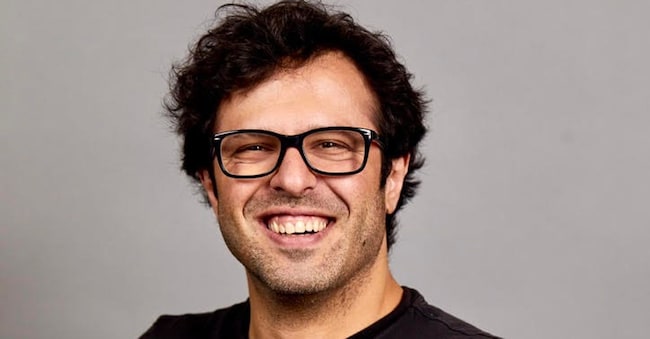
He is on his fourth start-up. He worked nine years in Cupertino, at Apple. He is a flight instructor. An unlikely story, if one cultivates the prejudice that being born in Italy is a limitation for gaining that kind of experience. Yet it is possible. And very satisfying, according to him, Edoardo Serra. The enabling conditions? Nothing too difficult: having found the inspiration to be an entrepreneur, having learnt to live in an international dimension, having a technical background.
Currently, Edoardo Serra is concluding his adventure as CTO of the company he founded with Carl Madi and Tressia Hobeika and for which he is responsible for technology: it is called Stepful and is now one of the largest schools for nurses and healthcare workers in the United States. "During the Covid period, we realised that there was a shortage of healthcare personnel. We thought of a solution. We set up a startup to train people who could work for hospitals and help them find jobs. We tested the idea on 10 people, who found work immediately. We were accepted by Y Combinator, the best-known accelerator in Silicon Valley. We developed a proprietary platform. And an original business model'. Now Stepful is a solid and fast-growing company. Last November it obtained a new funding round of $31.5 million, reports Pulse 2.0. In short, the project has become a solid reality. Which will probably require a little more management and a little less innovation from now on. 'For me, it's time to design something new,' says Serra.
It is not the first time he has reached this state of mind. Edoardo Serra started as an entrepreneur at the age of 16, with a partner of 18 who pushed him to look at the world with curiosity and openness. He was good at programming, Edoardo. And he thought that this ability of his could be exploited. His parents let him do it, only asking him to go on with his studies and graduate. Edoardo did so, at the Polytechnic of Turin, finishing his three-year degree. But then he dropped out. Because he had too much to do. With his partner, who had meanwhile gone to Hong Kong, he developed a start-up called Satisfly: he did the technology from Italy, the partner did the marketing from Asia. It started in 2008, judging by Serra's LinkedIn profile, was redesigned several times, and was eventually sold to a South African company in 2011. And it was during that transitional period, thanks to a friend's referral, that Serra entered Apple's radar of talent seekers.
The Cupertino company, orphaned a few months before by its great leader Steve Jobs, hired him to work on the Italian version of Siri in December 2011. "Up until that moment, I was convinced I wanted to stay in Italy. But the lure of Apple was too strong'. So much so that Serra then stayed at Apple for ten years. 'Over time, my contribution was transformed: from technical it also became managerial. It was a fundamental school'. And Serra left it alone to resume his path as an entrepreneur, with Stepful, in fact, and soon with another start-up: "It will deal with an area I know well, because I am a pilot and flight instructor. I want to do a new start-up to reduce the risks of air accidents, in general aviation. I envision a tool that fits into the flight planning process and maximises awareness of risk reasons'. Serra knows what it takes to get a start-up off the ground. He has the experience and the track record to raise the necessary money. He has the energy and the contacts. He can do it. How did he manage to develop these key resources?
Every biography is unique and yet reveals phenomena common to many people. The story of Edoardo Serra confirms this. What does his path teach us? 'I was lucky. Although over time I have accumulated the preparation needed to seize opportunities'. Wise answer: rather than emphasising his own merits, he is grateful to the conditions that allowed him to leave. He thinks he owes his friend for the inspiration to be an entrepreneur. He knows he owes his international experience to Apple. And he is probably grateful to the other Stepful co-founders for the opportunity to create something great. In his own right, he has certainly demonstrated a talent for technology and for designing technological innovations. But probably the most important gift was his willingness to always learn from all experiences.


