
Eggs, consumers do not reward free-range eggs
Companies invest in innovation and animal welfare, but these efforts are often not recognised by the market

3' min read
3' min read
Theory and reality. A new short-circuit is being generated within the agri-food sector between the demands of a part of the consumer world and the prerogatives of companies. As in so many different areas of animal husbandry from civil society, through animal welfare associations, demands for attention to animal welfare are growing louder and louder. Demands to which companies are responding, in many cases by investing resources in technology and innovation, but unfortunately, when the facts are proven, without seeing these investments recognised by the market.
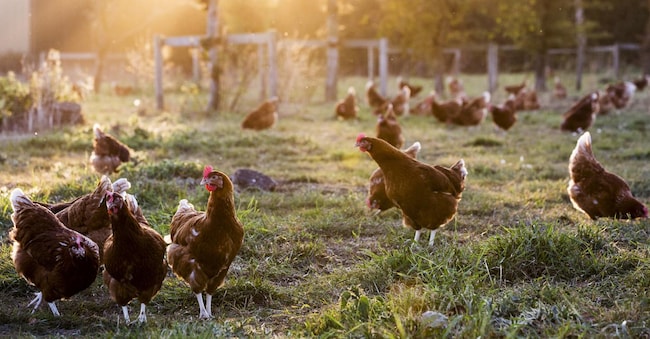
This is what, for example, is happening in two different areas within the poultry sector. One is the strongpush that has been generated to decommission cages and replace them with free-range farming.
"A path that our sector has been pursuing for years,' explains the director of Assoavi (the association of egg producers) Stefano Gagliardi. 'Not many people know that to date the proportion of hens kept in cages has fallen to just 30% of the total. With significant investments by companies. It is estimated that the conversion cost per head to switch from cages to free range is around EUR 30 per head. If we consider that an average small farm has more than 50 thousand hens one can get an idea of the investments that have been made'.
But in the face of these significant efforts, free-range eggs are not rewarded by the market. 'On the contrary,' adds Gagliardi, 'compounding inflation over the past year, consumers have favoured, and in some cases sought out, cage-farmed eggs which cost less and which we now partly have to import.
And a similar short-circuit is in danger of occurring with another issue that is emerging within the poultry sector, that of the innovative ppppsexing in ovo. A technology tried out by several producers in Europe in the wake of animal rights protests over the killing of hundreds of thousands of male chicks in the egg line that are barely a few days old. This is a cruel practice for animals that have no chance of exploitation since they have no role in egg production and are too small and underdeveloped to be converted to the poultry meat production line.


