

‘Egypt is working in Gaza towards a two-state solution’
Cairo is ready to ‘work closely with its main international and regional partners, as well as with the relevant international organisations, to implement the 20-point Peace Plan and the relevant Security Council resolutions’. We publish the remarks made by Egypt’s Ambassador to Rome, Bassam Essam Rady, at the meeting of the Global Alliance for the Two-State Solution held at the Farnesina.

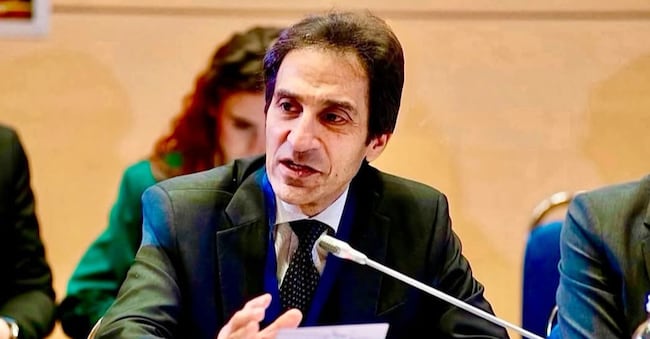
Egypt wishes to express its continued support for the New York Declaration and its Annex, including the Action Plan for Humanitarian Response and Reconstruction. The primary objective of the Declaration is to emphasise the importance of consolidating the two-State solution based on the borders of 4 June 1967, whilst working closely with international and regional partners to improve the catastrophic humanitarian situation in the Gaza Strip and to address the ongoing escalation in the West Bank. It is of paramount importance to ensure the full implementation of the ceasefire agreement in Gaza, including President Trump’s 20-point Peace Plan, Security Council Resolution 2803 and all other relevant Security Council resolutions. As a matter of principle, Egypt categorically rejects any form or type of forced displacement of Palestinians from the Occupied Palestinian Territories. To help achieve this objective, it is essential to improve the humanitarian situation by: increasing the quantity and quality of humanitarian assistance, facilitating the movement of people and goods to and from the Gaza Strip, and launching initial recovery activities, in accordance with the Humanitarian Protocol annexed to the October 2025 ceasefire agreement. Particular attention must be paid to patients, the wounded and other vulnerable groups, such as those requiring medical treatment outside Gaza.
New border crossings
The opening of further crossing points and addressing Israeli restrictions relating to the so-called list of ‘dual-use’ goods remain essential to improving the overall humanitarian situation in the Strip. Although the humanitarian situation in Gaza has improved slightly compared with July 2025 thanks to the implementation of the 20-point Peace Plan, one year on, Palestinians in Gaza continue to face a severe humanitarian crisis. This requires sustained international efforts to preserve the ceasefire, strengthen and support international organisations and humanitarian agencies, and enable them to provide effective assistance to the population. For its part, since 7 October 2023, Egypt has established and maintained a humanitarian corridor through which approximately one million tonnes of aid has been delivered, including food, medical supplies and essential goods. However, over the past year, the volume of aid has decreased significantly. The commitment of other Arab and Islamic countries should also be acknowledged.
Healthcare
In terms of healthcare, over 112,000 Palestinians from Gaza in need of medical treatment, together with their families, were transferred to Egyptian hospitals and temporary field facilities. In collaboration with the World Food Programme (WFP), Egypt has helped avert the risk of a severe famine in 2025 and provided food assistance to around 1.6 million Palestinians, including some 400,000 of the most vulnerable. Unfortunately, the initial stages of recovery and reconstruction have not yet seen significant progress. Egypt maintains that humanitarian issues must not be subordinated to political or security agreements. Egypt therefore urges all parties to commence initial recovery activities without delay, including the clearance of rubble, the restoration of homes, schools and hospitals, and the rebuilding of water, sanitation and energy infrastructure. These measures are essential to pave the way for reconstruction and to meet the urgent needs of the population. […] It is vital to step up international efforts to provide the Palestinian Authority with the political, diplomatic, financial and economic support necessary to enable it to fulfil its responsibilities and meet the needs of the Palestinian people. This meeting represents an opportunity to turn vision into reality and principles into action. Our work must be action-oriented, practical and results-driven. We must work closely with key international and regional partners, as well as with the relevant international organisations, to implement the 20-point Peace Plan and the relevant Security Council resolutions, to empower the Palestinian people, to ensure that Palestinians have control over their national resources, and to support the legitimate Palestinian leadership and its national institutions.
Parties to the proceedings
The active participation of Palestinian stakeholders – including the Palestinian Authority, the private sector and civil society organisations – in the planning and implementation of early recovery, reconstruction and development efforts is essential. These plans must be based on Palestinian priorities and needs and follow a genuine ‘bottom-up’ approach led by the Palestinians themselves. It is our duty to carry out a thorough assessment of the situation on the ground, both in the Gaza Strip and in the West Bank (including East Jerusalem), and to define the respective roles of international and regional actors. Our collective efforts must aim to preserve the viability of the two-state solution. The forthcoming ministerial meeting in New York must reinforce this commitment through concrete results.
Bassam Essam Rady is Egypt’s ambassador to Italia

