
Electric car charging, the differences between AC and DC systems
What changes in slow or fast charging solutions, domestic or public
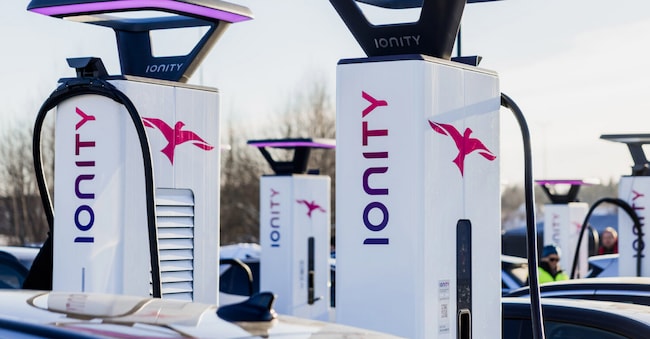
Charging the electric car requires new knowledge, in terms of speed and power. Terms and acronyms such as AC current, DC current, 22 kWh, Hpc or 400 kWh are becoming commonplace for the motorist travelling electrically, because clarity regarding charging stations is crucial to making Bev car use as efficient as possible. Without getting into the head of electrical engineering, it is important to know your car's AC (alternating current) but especially DC (direct current) charging characteristics because this is where the experience at the charging station can change radically.
Difference between AC and DC
Before going into the details of superfast 'columns', it is important to remember the meanings and differences. A "publicly accessible recharging or refuelling point" is defined as a point that can guarantee non-discriminatory access to all users at Union level. It maỳ be a standard power point, i.e. allowing the transfer of electricitỳ to an electric vehicle at a power output of 22 kW or less, or a high power point, i.e. allowing the transfer of electricitỳ at a power output of more than 22 kW. The high power charging point is detailed in legislation in the following types: fast with power greater than 22 kW and equal to or less than 50 kW; ultra-fast greater than 50 kW. The first category (Standard power) includes all AC charging systems (AC - Mode 3) and DC charging systems with power up to 22 kW (DC - Mode 4). The second category (High output) includes all DC charging systems with an output of more than 22 kW.
Electric car charging speed
With the arrival of models capable of accepting power of up to 400kW and 800 volt grids combined with battery management software, filling up with electrons will no longer be a long waste of time but will start to have a similar minute-long life as a traditional diesel car. An example comes from the Bmw iX3, where using a 400 kW charging station, more than 300 kilometres can be achieved in 10 minutes. This time can be reduced even further with the arrival of charging stations with up to 1 Megawatt of power. These times are possible if you arrive at the charging station with the battery at the right temperature, making it essential to use the on-board navigation systems when travelling electrically.

