Cars

Electric supercars: European manufacturers say no, except Ferrari. The challenge with Chinese brands is open

Aston Martin and Lamborghini put development of an electric supercar on hold for the time being. In contrast, Ferrari is ready to launch the Luce. Who will be right? All with Chinese brands ready to surprise.

by Simonluca Pini

4' min read

Translated by AI
Versione italiana

4' min read

Translated by AI
Versione italiana

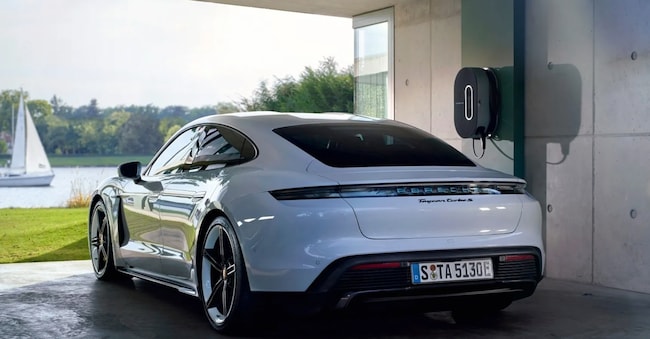
The electric car challenge changes field and moves from SUVs to supercars. Because if on 'everyday' cars nobody has decided to suspend development, when it comes to dream cars the situation is decidedly different. In recent weeks, the major brands have unveiled or confirmed their strategy, starting with Aston Martin and Lamborghini, which have confirmed a suspension of development of electric models, while Ferrari has unveiled the interior of the Luce, the first electric car produced in Maranello. To this list must be added Pagani and Bugatti, which never really entered the game, and Porsche, which seems to have suspended production of the electric Boxster despite the car being practically ready. Tesla had also made big announcements about an electric super sports car; announcements that remained on homepages and in Musk's fanboy groups but never became reality. Added to all this are the Chinese manufacturers, now undisputed leaders in the production of high-performance electric supercars.

Announcements made in the past

To get a clear understanding of what is happening, we need to jump back in time to 2021. The year in which Ferrari announced in June through its president John Elkann the intention to produce its first electric car and in November its CEO Benedetto Vigna confirmed its production with its presentation expected in 2025. Also in 2021 Lamborghini announced its plan christened 'Direzione CorTauri', announcing a fully hybrid range from 2024 and the fourth model to debut in the second half of the decade ready to become the first electric supercar produced in Sant'Agata Bolognese. Other announcements made in 2021 included that of Porsche, set to sell 50 per cent all-electric global deliveries in 2025 and then rise to 80 per cent in 2030, and Bugatti announcing its first lithium-ion hypercar by the end of the decade.

Loading...

Aston Martin chose 2022 to announce its first high-performance electric car, set to be unveiled in 2025.

Statements made in a historical climate where the car in Europe looked as if it could become completely electric as of 2035, not only because of decisions coming from the European Community but also thanks to (or because of) consultancy firms 'automotive experts' paid millions to see electric as the only reality.

Where we are today

The current reality is very different from what was predicted in 2021. The electric car has remained a niche market in all segments, growing among generalist models but far from what was assumed in terms of volume. The situation is even more complex among high-performance models, where the lithium-ion car does not seem to meet the taste of enthusiasts and future customers.

Aston Martin, Bugatti and Lamborghini

As early as 2025, Bugatti confirmed its decision to discontinue production of an all-electric model, leaving the sale of high-performance zero-emission models to Rimac (with whom it shares ownership). The same choice of abandoning electrics for Aston Martin, which is facing a decidedly complex economic period, and also for Lamborghini. If, on the one hand, the brand of Sant'Agata has confirmed the announcement that it will have a fully electrified range from 2024 (to be precise from 2025 with the entry into production of the Temerario), on the other hand, the launch of a fully electric model by the end of the decade has been put on hold, with a Bev version of the Urus. Presented in 2023 in California, the Lanzador was announced as the concept that would anticipate the fourth all-electric model set to debut in 2028. Recently, president Stephan Winkelmann clarified the fourth model, confirming its production with a hybrid powertrain, and put the arrival of an electric on hold. No standstill but a 'let's observe the market and be ready to respond to customer needs'.

Perché agli italiani piacciono le auto cinesi?

Ferrari's challenges

There was no lack of response, indirectly, from Ferrari's CEO Benedetto Vigna, who emphasised that 'leaders are and continue to be leaders only if they dare and try to use new technology, whatever it may be, to arouse new or different emotions in those who use that product'.

For Ferrari, and for Vigna, the Luce (the electric expected in 2026) represents a challenge almost more complex than winning the Formula 1 World Championship again. Leaving aside the investments made, the rumour of a second model bev cancelled in the process and an expected 1,500 cars sold per year (again rumours from well-informed sources), the complexities are many. The first is that of being able to confirm the Ferrari myth, born thanks to qualities such as the V12 engine, the sound capable of creating unique emotions, the benchmark performance, to a car that is not only divisive by definition but must shift the challenge and capture attention by focusing on other qualities.

Comparison with Chinese brands

The second, probably even more complex, is that for the first time a Ferrari will be comparable to a car made in China like the YangWang U9 Extreme. Because despite the fact that the Asian rival lacks Ferrari's history, brand value and a refined design like the one created by ex-Apple Jony Ive, supercars are also confronted with numbers and track times. And here the YangWang U9 Extreme recorded the incredible record speed of 496 km/h and decidedly interesting driving dynamics.

Record performance that also comes from less expensive models produced by brands that until a few years ago made smartphones and household appliances, such as the Xiaomi SU7 Ultra with 1,550 horsepower, less than 2 seconds from 0 to 100 km/h and a price in China of around 110,000 euros at the current exchange rate.

Mercedes-Benz CLA, l’elettrica intelligente che conquista l’Europa

Remaining value and technological innovation

The third critical issue comes from concepts related to residual value and technological innovation. Because an electric car is an object destined to age 'technologically' very quickly, thanks to a much faster, not to say exponential, development of batteries and solutions than the thermal car. An example? A V12 engine produced in Maranello 10 years ago remains a true work of art, even when compared to more modern and more powerful units. The same can be said of a battery pack, which today is extremely high-performance, when in a few years solid-state batteries could arrive that could completely revolutionise the sector. Definitely complex challenges and questions, which will find answers in the sales orders and, also, in the reactions of the share price.

Copyright reserved ©
Loading...

Brand connect

Loading...

Newsletter

Notizie e approfondimenti sugli avvenimenti politici, economici e finanziari.

Iscriviti