Wall Street

Eli Lilly becomes the first pharmaceutical company to join the trillion-dollar club

The pharmaceutical giant's stock has reached a 13-figure capitalisation and now trades at one of the highest valuations in the entire pharmaceutical sector, at around 50 times expected earnings over the next 12 months

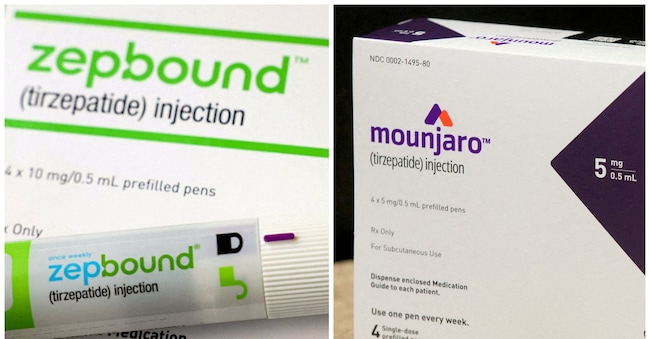
FILE PHOTO: A combination image shows an injection pen of Zepbound, Eli Lilly's weight loss drug, in New York City, U.S., December 11, 2023 (left) and a box of Mounjaro, a tirzepatide injection drug used for treating type 2 diabetes and made by Lilly, at Rock Canyon Pharmacy in Provo, Utah, U.S., March 29, 2023. REUTERS/Brendan McDermid/George Frey/File Photo

3' min read

Translated by AI
Versione italiana

3' min read

Translated by AI
Versione italiana

Pharmaceutical giant Eli Lilly has reached $1 trillion in market capitalisation, becoming the first company in the industry to enter the small club of companies valued at 13 figures, hitherto dominated by technology giants such as Apple, Microsoft, Nvidia, Alphabet, Amazon, Meta, Tesla, Broadcom and Berkshire Hathaway.

'Historically, investors have rewarded stable and predictable earnings growth, and Eli Lilly is the only big pharma that can offer such an earnings profile,' notes Hank Smith, director and head of investment strategy at Haverford Trust, a Lilly shareholder.

Loading...

Lilly trades today at one of the highest valuations in the entire pharmaceutical industry, at around 50 times expected earnings over the next 12 months, according to LSEG data. This multiple reflects investors' belief that demand for anti-obesity drugs will remain strong.

"Lilly enters the coveted trillion-dollar club as the market begins to fully recognise the strong innovative capability the company has brought to patients," said Kevin Gade, chief operating officer of investment firm Bahl and Gaynor, a Lilly shareholder.

The stock also vastly outperformed the US stock market: from the launch of Zepbound to the end of 2023, Lilly rose more than 75 per cent, compared to a rise of just over 50 per cent for the S&P 500 index over the same period.

The analysts' evaluation

The milestone was propelled by the success of Mounjaro and Zepbound, injectables for diabetes and weight loss based on GLP-1 gut hormones, which recorded higher prescription volumes than similar drugs from competitors such as Novo Nordisk (Ozempic and Wegovy). Analysts now estimate that Eli Lilly's annual sales in this category could exceed $100 billion by 2034, well above the $63 billion projected for the entire portfolio in 2025.

"The current valuation reflects investors' confidence in the long-term strength of the company's metabolic health drug platform. It also indicates that, in the race for anti-obesity treatments, investors prefer Lilly to Novo. More generally, we are seeing a rotation of capital into the pharmaceutical sector, perhaps because some investors fear an artificial intelligence bubble,' comments Evan Seigerman, analyst at BMO Capital Markets.

Investors are now looking closely at the oral anti-obesity drug, orforglipron, which is expected for approval early next year. In a note last week, Citi analysts called the latest generation of GLP-1 drugs a 'commercial phenomenon' and stressed that orforglipron is poised to benefit 'from the ground already prepared by its injectable predecessors'.

Lilly should also benefit from the agreement reached with the Trump administration and the billions in planned investments to strengthen production in the US.

According to analysts, the price agreement with the White House may squeeze revenues in the short term, but it significantly expands access to treatment, adding up to 40 million potential US patients eligible for anti-obesity therapy.

"Lilly is coming back to resemble the Magnificent Seven," says James Shin, director of biotech equity research at Deutsche Bank, referring to the tech giants like Nvidia and Microsoft that have driven much of the market returns this year. Lilly had previously been associated with that group, only to fall out of favour with the market after some disappointing news and below-expected results.

Now, however, it seems poised to rejoin that select group - perhaps even as an alternative for investors, given the recent uncertainties surrounding some artificial intelligence stocks.

It remains to be seen, however, whether Lilly will be able to maintain the current pace of growth while Mounjaro and Zepbound prices come under pressure, and whether production capacity, together with a diversified pipeline and an active acquisition strategy, will be able to offset the possible impact on margins.

Eli Lilly's results

In the most recent quarter, Lilly reported more than $10.09 billion in combined revenues from its anti-obesity and anti-diabetes portfolio, accounting for more than half of total revenues, which rose to $17.6 billion.

In October, the company also revised upwards its annual revenue guidance by more than $2 billion in the mid-range, buoyed by strong global demand for its obesity and diabetes drugs.

According to Wall Street estimates, the market for weight-loss treatments could reach $150 billion by 2030, with Lilly and Novo Nordisk set to control most of the projected global sales.

Copyright reserved ©
Loading...

Brand connect

Loading...

Newsletter

Notizie e approfondimenti sugli avvenimenti politici, economici e finanziari.

Iscriviti