
The strategy of the Emilia Romagna Igp pear against the crisis in the sector
The PGI fruit has gone against the tide, growing from 700 hectares in 2016-2017 to around 3,600 hectares in 2025: Periculturists are aiming for it to grow again in the future

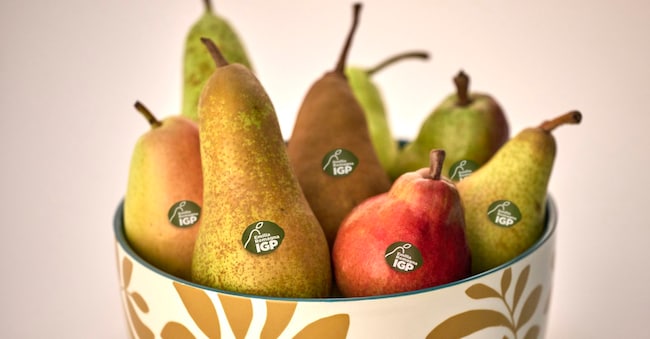
The Pera dell'Emilia Romagna Igp would be enough on its own to cover practically all the national consumption of this fruit, the favourite of 13 Italians out of 100. And, with a few innovations in the field, it would also be possible to obtain a fair amount to sell on international markets. But today this is not (yet) the case. The region that represents the heart of national production (61% of the total) has a production potential of 90 thousand tonnes of PGI pears but sells less than 5 thousand and allocates 34% of the area cultivated with pears. Yet this niche of excellence is the one that has shown itself best able to withstand the recent difficulties experienced by the sector and the one on which the pear growers are betting to return to growth in the future after troubled years all uphill.
The combination of an increase in the number of adverse weather conditions in the field and the impossibility of dealing with them due to the EU tightening of defence measures, the presence of extreme climatic events, the increase in production costs and the consumption crisis has brought Italian periculture to its knees, halving its surface area and production in ten years (today 365 thousand tonnes obtained from 19,600 hectares), making it lose ground on foreign markets (where consumption remains positive) and opening up space to imported fruit, which has reached over 120 thousand tonnes.
A perfect storm that has seriously jeopardised the survival of periculture in Italy. Especially in Emilia Romagna, where of the 18,300 hectares of 2018 today only 10,500 are left and where, in ten years the harvest has decreased by more than 45%, stopping at 226 thousand tonnes.
Meanwhilethe Pera dell'Emilia Romagna Igp has gone against the tide, growing from 700 hectares in 2016-2017 to around 3,600 in 2025 and increasing sales, with the 2025/2026 campaign recording a doubling of quantities sold compared to the previous one.
An achievement that is the result of a systemic effort, launched in 2021 with the birth of Unapera, the association of producer organisations (Aop) that has concentrated the offer and centralised the sector's activities, from marketing to sales. And which has worked hard on agronomic and technical research, also on little-known aspects (such as the use of assisted evolution techniques), to relaunch some varieties and create more resistant plants, also with the economic support of the Emilia-Romagna region.

